Initial Garden Report

Use Elena to help you wish your gardening questions
This report follows a garden visit to Liz’s garden. The visit covered all areas including the front garden, general feeding and maintenance, the back garden lawn and hard areas, plant care and planting, pruning and training, general maintenance, and propagation tasks. Each section below details the work identified and recommended next steps.
Your Gardening Tasks Overview
The following tasks have been identified from the garden visit, organised by area. Links to further information are included where available; where no specific page exists, Helene our AI gardening assistant can help.
Front Garden
Re-point the front wall to repair any crumbling mortar joints and improve the appearance and weatherproofing of the boundary. Repaint the front railings and gate with Hammerite paint, which provides long-lasting rust protection without the need for a primer coat. Re-hang the gate to ensure it closes properly. Apply weedkiller to the drive and hand-weed the front area with particular attention to hairy bittercress, which seeds prolifically if left unchecked. Begin mulching the front beds with cardboard as a base layer to suppress weed growth. For further advice ask Helene.
General Feeding & Maintenance
Feed all areas with Growmore fertiliser at approximately one handful per square metre to provide a balanced general feed before the main growing season gets underway. Follow up with a liquid tomato feed every three weeks to maintain steady growth through spring and summer. It is also worth considering pruning the hydrangeas after flowering and trialling sulphate of iron applied to the soil, which can encourage blue flower colour in suitable varieties by lowering the pH. For further advice see
gardenadvice.co.uk/gardening-how-to/garden-plants/difficult-garden-weeds/ or ask Helene.
Back Garden – Lawn & Hard Areas
Overseed the back lawn with clover to improve resilience, reduce the need for feeding, and maintain colour through dry periods — micro-clover varieties are particularly effective and low-maintenance. Apply Roundup weedkiller to the back drive if persistent weeds are present, ideally on a dry day with four hours free of rain after application. For advice on lawn overseeding see gardenadvice.co.uk/gardening-how-to/lawns/benefits-of-a-micro-clover lawn/.
Back Garden – Plant Care & Planting
Feed and repot the lemon tree using John Innes No. 3 compost, and boost it with Epsom salts — dissolve two teaspoonfuls in two gallons of water and apply as a liquid feed to correct magnesium deficiency and encourage healthy foliage. Pot up the remaining dahlias into fresh compost ready for the season. Sow patches of calendula and aquilegia directly into the borders for easy colour; start sweet peas in pots for summer flowering, and sow night-scented stock in pots for evening fragrance on the patio. For planting advice ask Helene.
Back Garden – Pruning & Training
Prune the roses after flowering, cutting back to an outward-facing bud to encourage an open shape and good air circulation. Install horizontal support wires on the fence for the climbing rose, spacing wires approximately 30cm apart to allow the stems to be tied in as they grow.
For detailed pruning guidance see gardenadvice.co.uk/newsandarticles/supporting-your climbing-plants-its-worth-doing-it-properly-climbing-plants/.
Back Garden – General Maintenance
Weed the back garden thoroughly in preparation for a mulching programme — removing weeds before mulching is essential so they are not trapped beneath and allowed to continue growing. The Christmas tree in the back garden should be moved to a more open position where it has room to develop properly; once repositioned, begin feeding it regularly with a liquid tomato feed to support new growth. For further advice on moving established plants ask Helene.
Propagation & Specialist Tasks
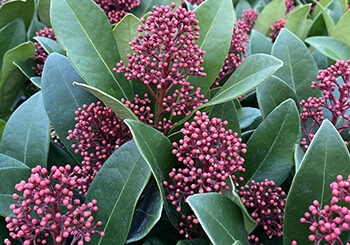
Take skimmia cuttings from semi-ripe shoot tips in summer, inserting them into a free draining compost mix and keeping them in a sheltered, shaded position until rooted. Feed the lonicera (honeysuckle) growing on the fence with Miracle-Gro All Purpose Plant Food to encourage strong growth and a good flush of flowers; honeysuckle is a vigorous feeder and responds well to regular liquid feeding through the growing season. For propagation advice ask Helene.
General Notes
Feeding Your Plants
For general feeding, we recommend applying Growmore fertiliser once a year, in either spring or autumn, at approximately one handful per square metre of soil or container surface. Growmore is a granular fertiliser that can be watered in or left to be absorbed by
rain. Since it is granular, it will bounce off leaves but be washed through weed sheeting or mulch layers to reach the soil.
Growmore is a low-nitrate fertiliser that promotes flower and fruit production without causing excessive green growth. For stimulating green growth, especially after pruning overgrown plants, we recommend an additional spring feed using Miracle-Gro fertiliser, which is high in nitrates.
After the initial Growmore feed, continue feeding your plants every 2 to 6 weeks from March to October using a liquid tomato feed high in potash.
Feeder link:
https://www.bloomling.uk/multikraft/aquamix-fertiliser-mixer-sprayer
Using a hose-end feeder like the one above is easier than mixing fertiliser in a watering can. Your GardenAdvice gardener can help with the correct settings. Miracle-Gro can also be used in this feeder, though it may cause slight leakage.
For acid-loving plants, use ericaceous fertiliser available at most garden centres. Acid Soil-Loving Plants
Plants such as camellias, rhododendrons, azaleas, and magnolias typically grow in forest floor conditions, with fleshy leaves adapted for shady environments. These plants often have upward-growing roots that seek fresh leaf litter rather than growing deep into the soil.
To mimic this environment in your garden, mulch the base with acidic mulch such as well rotted farmyard or horse manure. Well-rotted leaf mould is also ideal.
Caution: Check for weed contamination (e.g. bindweed) in manure or leaf mould before applying.
Weeding Annual Weeds
Annual weeds like chickweed and hairy bittercress grow from seed each year. Control them by applying a clean mulch, such as spent mushroom compost or bark chips, which blocks sunlight and prevents germination. Always cut down annual surface weeds before applying mulch one other option is to apply a layer of used cardboard before applying the mulch to help stop annual weeds.
Weeding Perennial Weeds
For most weeds, mulching and ground sheeting are effective. However, for the top five UK perennial weeds, chemical control or smothering may be needed:
● Couch Grass
● Mares Tail
● Brambles
● Bindweed
● Japanese Knotweed
We recommend spot-treating with Roundup weed killer using a hand sprayer or weed wipe.
More info: https://gardenadvice.co.uk/gardening-how-to/garden-plants/difficult-garden weeds/
Roundup weed killer: https://www.lovethegarden.com/uk-en/roundup
Landscape sheeting: https://www.toolstation.com/heavy-duty-landscape-fabric/p45800 Weed Killer Spot Treatments
Apply Roundup weed killer (gel or liquid via hand sprayer) to weeds like brambles and bindweed. It penetrates through green leaves and travels internally to kill the plant. Be careful not to get it on other garden plants.
Apply on dry days, allowing 4 hours for drying. Safe for pets once dry. Results appear in 4 weeks. Persistent weeds may need 2–3 applications over 6 weeks.
Roundup weed killer: https://www.lovethegarden.com/uk-en/roundup
Weed stick: https://www.progreen.co.uk/weedstick-spot-treat-weeds/
Mulching and Earthworms
Mulching controls annual weeds and improves soil structure. Traditional digging can damage roots and surface more weed seeds (which can remain viable for 20 years). A clean mulch like spent mushroom compost blocks light from seeds.
Earthworms incorporate the mulch into the soil, improving texture and moisture retention without encouraging weeds.
Lawn Care
The GardenAdvice MyGardenTeam service includes a soil test. Your results indicate slightly acidic soil; therefore, we recommend Bio Lime fertiliser to adjust pH and improve grass growth while reducing moss and weeds.
Bio Lime: https://www.amenity.co.uk/shop/viano-green-comfort-bio-lime-organic-fertiliser-20- kg.html
Moss remover: https://www.amenity.co.uk/shop/mo-bacter-organic-lawn-fertiliser-moss remover-20kg.html
Lawn Weeds
Treat lawn weeds using Verdone weed killer with a watering can (fine rose attachment). It targets broadleaf weeds without harming grass.
Verdone (now Weedol for Lawns): https://www.lawnsmith.co.uk/weedol-verdone-lawn-weed killer?
Note: Do not use Weedol for paths (a total weed killer).
Over seeding with Clover on Lawns
With the climate changing another option with the lawn is to use clover which will create a lawn which holds the colour and is useable in both summer and winter months https://gardenadvice.co.uk/gardening-how-to/lawns/benefits-of-a-micro-clover-lawn/
Patios
To restore patios, apply Doff patio cleaner with a watering can, let it soak for a few days, then scrub with a stiff broom or pressure wash.
Doff Cleaner: https://www.doff.co.uk/product/super-concentrate-path-patio-decking-cleaner/ General Pruning Notes
Pruning helps maintain shape and regenerate plants. Rather than trimming, remove full stems. See you online section
Supporting Your Plants
Wires for walls and fences:
● Wire rope: https://www.toolstation.com/galvanised-wire-rope/p89647 ● Turnbuckle: https://www.toolstation.com/turnbuckle/p71374
● Thimble: https://www.toolstation.com/wire-rope-thimble/p70990
● Clamp: https://www.toolstation.com/wire-rope-clamp/p63506
Alternatively Amazon sell some suitable kits online search for – TooTaci 30M Garden Wire for Climbing Plants, 2mm PVC Coated Stainless Steel Cable with M5 Turnbuckles, Fence Wire, Vine Eyes for Climbing Plants, Perfect for Trellis, Outdoor String Light
Frames for Perennials:
● Support tall plants like Phlox with frames. Let plants grow through the frame for a natural look.
● Frames: https://gardenadvice.co.uk/blog/support-your-plants-this-summer/ Garden Irrigation
Borders: Use a leaky hose over mulch/ground sheeting.
● Leaky hose: https://www.hozelock.com/product/porous-soaker-hose/
Pots and Veg Gardens: Use a micro irrigation system (e.g., Gardena drip kit). It increases yield by up to 30% and conserves water.
● Starter Kit: https://www.gardena.com/uk/products/watering/micro-drip/starter-set flower-pots-m-automatic/967039501/
Watering Container Plants
Top tips:
1. Use John Innes soil-based compost.
2. Use clay pots for natural humidity.
3. Tap the pot to gauge moisture.
4. Rinse dust off plants in the shower or outdoors.
More tips: https://gardenadvice.co.uk/gardening-how-to/houseplants/watering-your houseplants/
Composts
We recommend John Innes soil-based composts (1, 2, 3). Higher numbers mean more fertiliser. For acid-loving plants, use John Innes Ericaceous.
Seedlings: Start with No. 1, then re-pot into No. 2.
Be cautious: Avoid “multi-purpose compost with added John Innes” – not the same. John Innes compost: https://www.gardenhealth.com/products/john-innes-compost Seedling Compost
Best for sowing seeds indoors: Coco Coir compost
Coco Coir Compost: https://www.diy.com/departments/bigbudz-5-pack-coco-bricks-9l-each organic-coconut-fibre/3333714182715_BQ.prd
Composting
Use old builders’ pallets to build a simple compost heap:
Guide: https://gardenadvice.co.uk/tomsgarden/creating-a-simple-compost-heap/ Tips:
● Compost should be moist (squeeze to get 2–3 drops of water)
● Add Growmore every two months
● Cover in winter (e.g., with old carpet)
Pest Control
Companion Planting:
● Nasturtium: Attracts pests away from key plants
● Calendula: Repels pests with scent/colour
● Pyrethrum: Natural insecticide
Biological Control:
● Vine Weevil: https://www.nematodesdirect.co.uk/vine-weevil-killer-nematodes/12- nemasys-vine-weevil-killer-nematodes-small
● Slugs: https://gardenadvice.co.uk/gardening-how-to/garden-pests/controlling-slugs/ ● https://www.agricentre.basf.co.uk/en/Products/Product-Search/Biological/Nemaslug 2.0.html
● Ants: https://gardenadvice.co.uk/gardening-how-to/garden-pests/ant-problems-in-
the-garden/
● https://www.nematodesdirect.co.uk/no-ants-nematodes/16-nemasys-no-ants-16-ant nest-treatment
● Leatherjackets:
https://www.nematodesdirect.co.uk/leatherjacket-killer-nematodes/17-nemasys leatherjacket-killer-single-pack-50sqm
● Chafer Grubs: https://www.nematodesdirect.co.uk/chafer-grub-killer-nematodes/21- nemasys-chafer-grub-killer-100-sq-m
Hedges
Feed your hedges once a year with Growmore fertiliser to maintain health and density. Mulching Borders
Mulch helps reduce weeding and improves soil health. Use weed sheeting plus bark for trees/shrubs or spent mushroom compost/well-rotted manure for perennials. Ensure compost is weed-free.
Always fertilise (e.g., Growmore) before applying mulch, as decomposing mulch can deplete soil nutrients.
Important:
● Spent mushroom compost is alkaline (not suitable for acid-loving plants) ● Annual top-up needed
● Spot treat persistent weeds with Roundup