how do i grow amelanchier plants can i do this from seed
9 October 2026
Yes — you **can grow Amelanchier from seed**, but it is a **slow method** and seedlings may not be identical to the parent plant, especially if it is a named variety such as **Amelanchier lamarckii**. If you want an exact match, buying a young plant is more reliable, but growing from seed is very rewarding.
## Growing Amelanchier from seed
### Best time to collect seed
Amelanchier produces small purple-black berries in **early to midsummer**, usually around **June to July** in the UK.
If it’s **October**, you may have missed this year’s berries, so either:
- collect seed next summer, or
- buy seed from a reputable supplier, or
- plant a young bare-root or container-grown Amelanchier this autumn/winter.
---
## How to sow Amelanchier seed
### 1. Collect ripe berries
Pick fully ripe, dark berries from a healthy tree or shrub.
### 2. Clean the seed
Mash the berries gently in water and separate the seeds from the pulp. Remove as much flesh as possible, as fruit pulp can encourage mould.
### 3. Sow fresh if possible
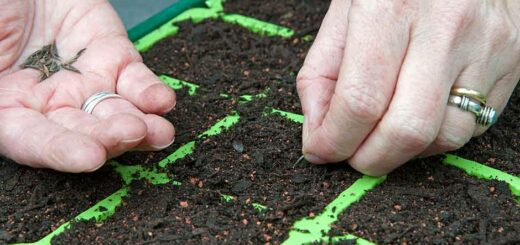
Sow the cleaned seed into pots or trays of free-draining compost.
A good mix would be:
- seed compost
- plus some sharp sand or grit for drainage
Cover the seed lightly with compost or grit.
### 4. Leave outside over winter
Amelanchier seed usually needs a period of cold to break dormancy, so place the pots outside in a sheltered spot or cold frame.
Keep the compost:
- moist
- not waterlogged
- protected from mice and birds with mesh if needed
### 5. Be patient
Germination can be irregular. Some seeds may germinate the following spring, while others may take longer.
Once seedlings are large enough to handle, prick them out carefully into individual pots.
---
## Growing on young Amelanchier plants
### Position
Amelanchier grows well in:
- full sun or partial shade
- woodland-style borders
- lightly shaded areas beneath taller trees
- mixed shrub borders
It is particularly useful in gardens where you want **spring blossom, summer berries and good autumn colour**.
### Soil
It prefers:
- moist but well-drained soil
- neutral to slightly acidic soil
- soil improved with compost or leaf mould
Avoid very dry, poor soil if possible, especially while young.
### Watering
Keep young plants watered during dry spells for the first couple of years. Once established, Amelanchier is usually fairly easy-going.
### Pruning
Very little pruning is needed. In late winter, remove:
- dead wood
- crossing branches
- weak or badly placed shoots
If growing it as a multi-stemmed small tree, keep the best stems and remove any congested growth at the base.
---
## Seed-grown vs bought plants
### Seed-grown plants
Good if you want:
- a low-cost way to raise several plants
- a natural woodland or wildlife-style border
- plants for hedging or informal planting
But they may vary in:
- height
- autumn colour
- blossom quality
- growth habit
### Bought named plants
Better if you want:
- a predictable shape
- reliable autumn colour
- a known variety
- faster results
---
## Best practical advice
For Carmel’s garden, I’d suggest growing Amelanchier from seed as a side project, but also planting one or two young plants if you want quicker impact. Amelanchier is excellent in a woodland-style border, especially with rhododendrons, hydrangeas, hostas, ferns and spring bulbs.
You can read more about using Amelanchier in a layered woodland border here:
https://gardenadvice.co.uk/mygardenteam-demo/transform-your-garden-creating-a-lush-woodland-border-with-rhododendrons-hydrangeas-amelanchier/
A good next step would be to plan where the Amelanchier will go before raising seedlings, as they eventually make elegant small trees or large shrubs and need room to develop naturally.