Possible identification: Physocarpus opulifolius — dark-leaved ninebark, likely ‘Diabolo’ but cultivar not fully certain from the photo alone.
15 October 2026
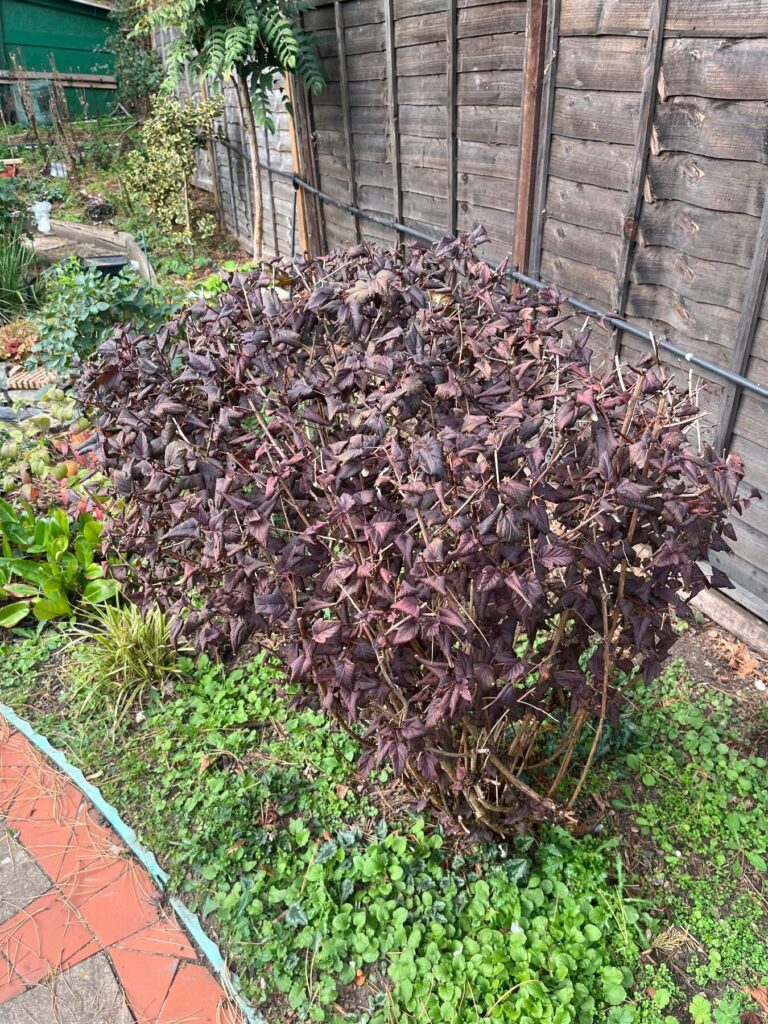
Plant name: **Physocarpus opulifolius** — dark-leaved ninebark, likely **‘Diabolo’** but cultivar not fully certain from the photo alone.
**Common name:** Purple ninebark / dark-leaved ninebark
**Identification confidence:** **High for Physocarpus opulifolius; medium for cultivar ‘Diabolo’.**
## Distinguishing features
- Dense, deciduous shrub with **dark burgundy-purple foliage**
- Leaves are **lobed and toothed**, rather maple-like
- Multi-stemmed woody habit from the base
- Often develops **arching stems** and, on older wood, lightly peeling bark
- In late spring to early summer it usually carries **small white to pale pink flower clusters**, followed by decorative seed heads
The photo shows other plants around it, but the main subject is clearly the dark purple shrub.
## Mature size
- **Height:** about **1.5–2.5 metres**
- **Spread:** about **1.5–2 metres**
- Size depends on cultivar and pruning. ‘Diabolo’ can become quite large if left unpruned.
## Flowering season
- Usually **May to July** in UK gardens
- Flowers are produced on older/ripened wood, so avoid heavy pruning in early spring if you want flowers that year.
## Soil and light
- **Soil:** Most reasonably fertile, well-drained garden soils
- Tolerates clay better than many shrubs, provided it is not waterlogged
- **Light:** Best foliage colour in **full sun**, but will also grow in **partial shade**
- In deeper shade the purple leaf colour may become duller or greener.
## Watering
- Water well during the first year after planting
- Once established, it is fairly drought tolerant
- In dry spells, give a deep soak rather than frequent light watering, especially if growing close to a fence where soil can be dry.
## Feeding
- Apply a **general-purpose fertiliser in spring** if growth is weak
- Mulch around the base in spring with compost or well-rotted organic matter, keeping mulch away from the stems.
## Pruning care
- Best pruned **immediately after flowering**, usually in early to mid-summer
- Remove dead, weak or crossing stems
- To keep it fresh and well-shaped, take out around **one-third of the oldest stems at the base** every year or two
- Avoid regular hedge-style clipping, as it can make the shrub twiggy and congested
- If it has become overgrown, it can usually be renovated by cutting older stems hard back in late winter or early spring, but flowering may be reduced that season.
## Note for this plant
It looks a little congested and has several pale cut stems, suggesting previous pruning. A gentle thinning after flowering next year would help restore a more natural shape and encourage strong new purple growth.