Ceratostigma plumbaginoides
15 October 2026
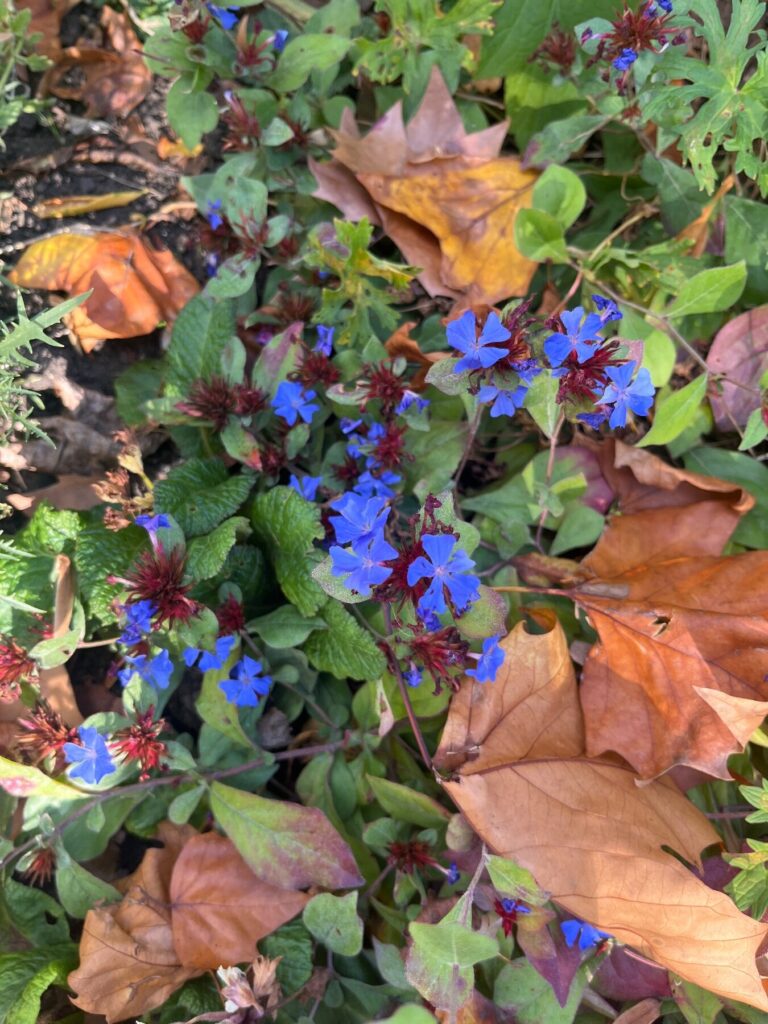
Plant name: **Ceratostigma plumbaginoides**
**Common name:** Hardy plumbago / blue leadwort
**Identification confidence:** **High** — the vivid cobalt-blue, five-petalled flowers with reddish-purple calyces and reddening autumn foliage are very characteristic.
## Distinguishing features
- Bright **gentian-blue, five-petalled flowers**
- Clusters of **red-purple bracts/calyces** around the flowers
- Low, spreading habit, often used as ground cover
- Leaves turn **bronze-red/purple in autumn**
- Flowers late in the season, which matches the appearance in the photograph with fallen autumn leaves
## Mature height and spread
- **Height:** around **25–40 cm**
- **Spread:** around **45–60 cm**, sometimes wider over time as it creeps gently
## Flowering season
- Usually **August to October**, often valuable for late colour in UK gardens.
## Suitable soil and light
- Best in **well-drained soil**
- Tolerates average garden soil, including fairly poor soils once established
- Prefers **full sun to partial shade**
- Flowering is usually strongest in a warm, sunny position
## Watering
- Water well after planting and during dry spells in the first season.
- Once established, it is fairly drought tolerant, but flowering improves if it is not allowed to dry out completely in prolonged summer drought.
## Feeding
- Usually needs little feeding.
- In spring, apply a light mulch of compost or well-rotted organic matter.
- Avoid heavy nitrogen feeding, as this can encourage leafy growth at the expense of flowers.
## Pruning care
- In late winter or early spring, cut back old, tatty stems close to the base before new shoots appear.
- Remove dead leaves and debris around the plant to improve airflow.
- It can be lightly tidied after flowering, but the main cut-back is best left until spring.
## Note on identification
The main subject appears to be **Ceratostigma plumbaginoides** rather than a cultivar. I would not assign a cultivar from this photograph alone. A wider photo showing the whole plant habit would confirm whether it is the low ground-covering species rather than a shrubbier Ceratostigma.