Establishing A Grape Vine In A Greenhouse
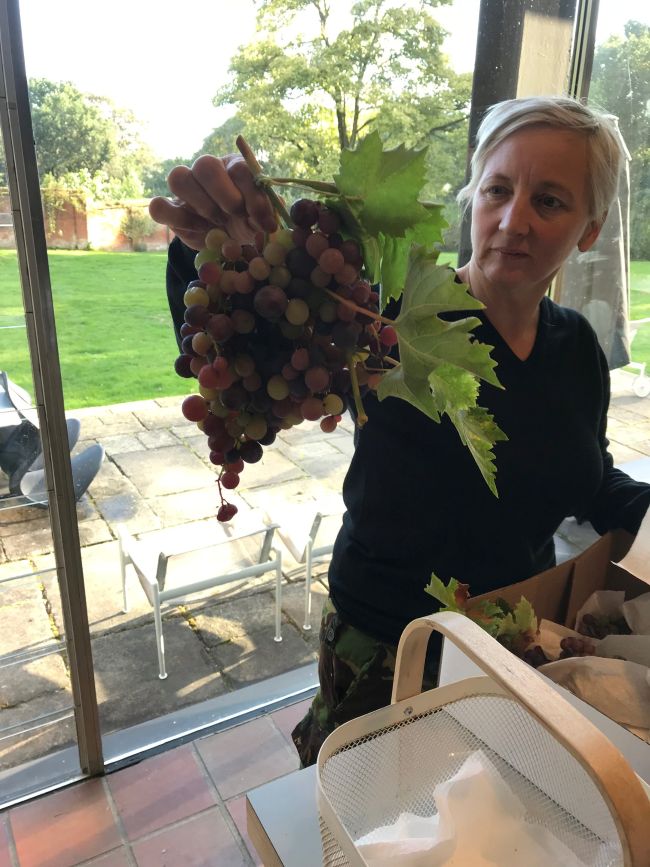
GardenAdvice Client haversting grapes growing in a cold glasshouse
Traditionally in the UK, grapevines have been grown in greenhouses, with the vine trained along the roof ridge. This remains an excellent use of space and offers several additional benefits. A well-established vine provides natural shading during the summer months and, through transpiration, helps maintain humidity inside the greenhouse during the hottest part of the day.
Planting position and training
For greenhouse cultivation, grapevines are best planted in the soil outside the greenhouse, usually at one end. The main stem is then trained through the greenhouse wall, either via a purpose-made hole or by carefully removing part of a glass pane. From there, the stem is trained upwards and along a wire fixed to the inside roof ridge of the greenhouse.
This method allows the roots to benefit from natural rainfall and soil conditions while giving the vine the warmth and protection of the greenhouse for fruiting.
Soil preparation – the key to success
One of the most important factors in successfully growing grapes, whether indoors or outdoors, is good soil preparation. In the wild, grapevines grow on forest floors, so they perform best in open, free-draining soils rich in organic matter.
Organic matter is particularly important for grapes as it helps regulate moisture levels. This steady supply of moisture is essential while the grapes are forming and helps prevent fruit splitting, a common problem in sandy soils or heavy clays that lack organic content.
When planting, dig a generous hole and lightly fork the sides and base to relieve any compaction. Mix well-rotted farmyard manure or garden compost into the soil that will be used for backfilling around the roots. Once planted, apply a mulch of organic matter around the base of the vine to help retain moisture and improve soil structure over time.
Feeding young vines
Young grapevines should not be overfed during their first few years. It’s important to allow them to establish gradually and build a strong framework.
A light feeding regime works best:
-
Apply a small handful of Growmore fertiliser around the vine in late winter.
-
Supplement this with liquid tomato feed two or three times during spring as growth begins.
This approach provides sufficient nutrients without encouraging excessive, soft growth.
Training and pruning
As the main stem grows along the training wire inside the greenhouse, it should be tied in regularly using small tree or standard rose ties. These provide good support and will help carry the weight of the vine once it begins cropping.
When the main stem reaches its desired length, prune back the tip. This encourages the formation of side shoots, which in turn develop into fruiting spurs, similar to those found on trained fruit trees. These spurs are where future crops will be produced.
Varieties to consider
Some grape varieties are particularly well suited to greenhouse growing in the UK:
-
‘Muscat Hamburg’
An early-season black dessert grape with excellent flavour. Performs well in an unheated greenhouse but benefits from assisted pollination. -
‘Black Hamburg’ (also known as Schiava Grossa)
A reliable black grape with very good flavour. Well suited to unheated greenhouses, although the skins can split and rot if the fruit is left hanging too long after ripening. -
‘Chasselas’
A small, early-season white grape with a sweet flavour. Performs well in pots and is ideal for more restricted spaces.