Reviving Your Garden: A Comprehensive Guide to Improving Compacted Soil in Borders
Understanding the Problem of Compacted Soil
One of the most common problems encountered in gardens, especially around newer properties and developments, is compacted soil. This issue arises when soil particles become compressed together, reducing the spaces between them. This compression prevents proper water drainage, restricts root growth, and can lead to poor plant performance. Compacted soil is particularly problematic in clay and silt soils, where building work, machinery, foot traffic, or even years of natural settling create a dense layer beneath the surface, often referred to as a soil pan.
How to Identify Compacted Soil
Recognizing compacted soil is crucial to ensuring the health of your plants. Look out for typical signs such as:
- Water pooling on the surface after rain.
- Soil remaining wet for extended periods.
- Plants struggling to grow despite regular feeding and watering.
- Shallow root systems.
- Poor growth and reduced flowering.
Interestingly, the surface of the soil may appear perfectly healthy, while a compacted layer can exist just 15–30cm below ground level.
Relieving Soil Compaction
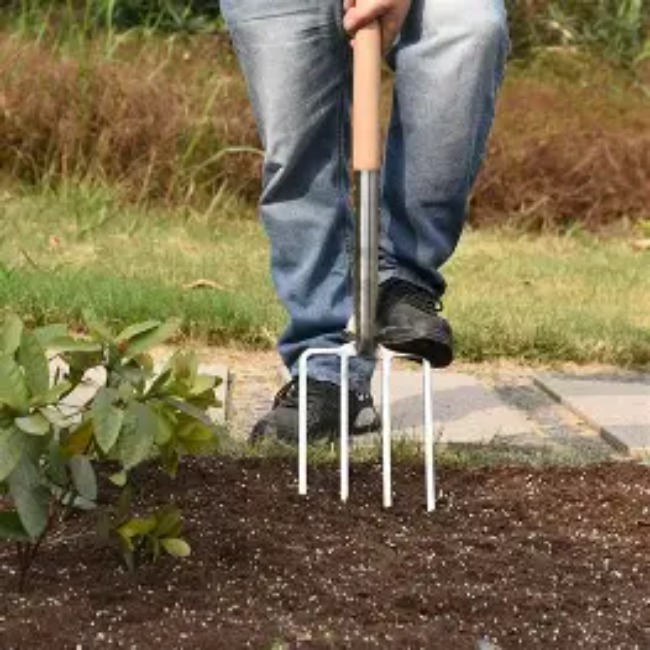
For borders already planted with shrubs and perennials, digging over the entire area may not be practical. Instead, aeration is a recommended approach:
- Using a garden fork, carefully push the fork into the soil to its full depth.
- Gently rock or wiggle the fork backwards and forwards.
- Remove the fork and repeat this process every 15–20cm across the border.
For more severe compaction, you can follow some of the fork holes with a steel crowbar or iron bar to gently break up the compacted layer beneath. The goal here is not to turn over the soil but to create channels that allow air, water, and roots to penetrate deeper into the ground.
Exercise caution when working around established shrubs and trees, as larger roots should be avoided during this process.
The Importance of Organic Matter
Healthy soil isn’t purely composed of sand, silt, and clay. The crucial ingredient that makes soil function effectively is organic matter. Organic matter enhances:
- Drainage
- Moisture retention
- Soil structure
- Root development
- Beneficial soil life
Without adequate organic matter, clay and silt soils can become dense and compacted over time.
Using Mulches to Improve Soil
Once the soil has been aerated, the next step is to apply a generous layer of organic mulch on the surface. Over time, worms and soil organisms will pull this material down into the soil, naturally improving its structure. For established borders, this method is often the safest and most effective long-term solution.
Encouraging Lobworms
Lobworms are particularly beneficial when it comes to improving compacted soils. These larger earthworms have a distinctive saddle-shaped band around their bodies. As they move through the soil, they create channels that enhance drainage and help pull organic matter deeper into the ground. Introducing lobworms into your mulched borders can significantly accelerate the improvement of soil quality.
If you suspect a lack of garden worms, the GardenAdvice Team can assist you in sourcing some lobworms.
Recommended Mulches for Your Garden
For effective results in improving soil conditions, we recommend two specific mulches for different garden borders:
Right-Hand Border (Looking Out from the House)
This border contains a number of plants that thrive in more acidic soil conditions. We suggest using:
- Well-rotted horse manure: This provides valuable organic matter, gradually improves soil structure, and helps maintain slightly acidic conditions suitable for many woodland and acid-loving plants.
Left-Hand Border (Looking Out from the House)
This area is recommended to use:
- Spent mushroom compost: An excellent soil conditioner rich in organic matter, particularly effective for enhancing heavier soils and boosting biological activity.
Long-Term Results
Improving compacted soil is not a process that yields immediate results. However, through:
- Relieving the compaction with a fork and iron bar,
- Applying annual organic mulches,
- Encouraging earthworm activity,
Most borders can show noticeable improvements within one to two growing seasons. As soil structure improves, water drains more effectively, roots grow deeper, and plants become healthier, stronger, and more resilient.
The key to success is patience. Healthy soil is built gradually, but once improved, it lays the foundation for a successful garden for many years to come.
At GardenAdvice, we believe that soil improvement is one of the most beneficial gardening tasks you can undertake. Healthy soil not only leads to healthier plants but also contributes to better flowering and easier maintenance throughout the garden.