Turning Your Garden Into a Home Gym The Complete Guide
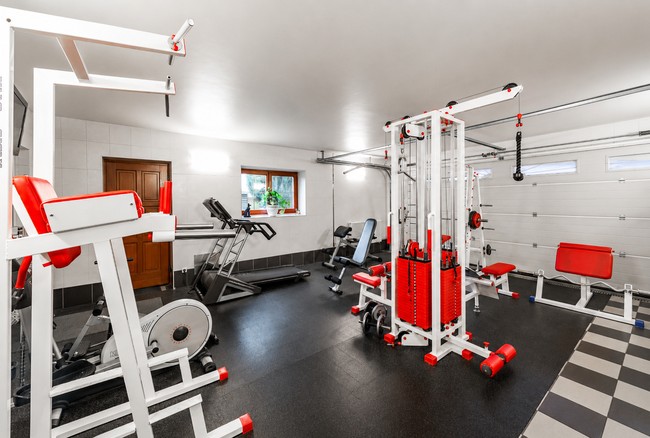
There was a time when a garden gym meant a rusty pull-up bar bolted between two fence posts. Not any more. Over the past few years, thousands of UK homeowners have discovered that the most underused fitness space they own isn’t the spare bedroom or the garage — it’s the patch of grass just beyond the back door.
Whether you’re picturing a fully insulated garden studio with mirrored walls and a squat rack, or simply a level area of decking with a kettlebell and a skipping rope, the garden offers something no commercial gym can: zero commute, zero membership fees, and a workout backdrop that changes with the seasons.
This guide walks you through everything you need to know about installing a home gym in your garden — from choosing the right spot and surface, to powering and securing it, to fuelling your training properly once it’s up and running. Along the way, we’ve included a few tips and unusual facts you probably haven’t come across before.
Why the Garden Beats the Spare Room
Before we get into the practicalities, it’s worth understanding why outdoor and garden-based training has taken off so dramatically.
Researchers have coined the term “green exercise” to describe physical activity carried out in natural environments, and the findings are striking. Studies from the University of Essex found that as little as five minutes of exercise in a green space produces measurable improvements in mood and self-esteem — a faster psychological return than almost any other wellbeing intervention studied. Training with a view of plants, trees and open sky appears to lower perceived exertion too, meaning the same workout genuinely feels easier outdoors.
There are physical advantages as well. Natural light exposure during morning workouts helps regulate your circadian rhythm, improving sleep quality that night — and better sleep means better recovery. Between late March and September in the UK, outdoor training also contributes to vitamin D production, something a windowless spin studio will never do.
And here’s an unusual fact to start us off: the idea of the outdoor gymnasium is far older than the modern fitness industry. Victorian Britain built “open-air gymnasiums” in public parks from the 1850s onwards, complete with climbing frames, parallel bars and vaulting horses, because physicians of the era believed fresh air was as important to health as the exercise itself. In a sense, your garden gym is a return to a 170-year-old British tradition.
Step One: Choose Your Format
Garden gyms broadly fall into three categories, and your budget, space and climate tolerance will determine which suits you.
The open-air training zone
The simplest and cheapest option: a dedicated, level area of the garden set up for training. This might be a section of reinforced decking, rubber-tiled patio or compacted gravel with rubber matting on top. It suits bodyweight training, kettlebells, sandbags, battle ropes and anything weatherproof. Total cost can be under £500.
The covered outdoor gym
A step up: a pergola, canopy or open-sided garden structure that keeps rain off your equipment and your head. This dramatically increases the number of training days you’ll get in a British year (more on our famous weather shortly) while preserving the fresh-air benefits. Expect £1,500–£5,000 depending on the structure.
The garden gym room
The full conversion: an insulated garden building — either purpose-built or a converted quality shed or summerhouse — with power, lighting, ventilation, proper flooring and secure storage. This is a genuine all-year, all-weather facility and typically costs £8,000–£25,000+ for a purpose-built room, though a well-executed shed conversion can come in far lower.
Tip: if you’re undecided, start with an open-air zone for one summer. You’ll quickly learn how you actually train — which equipment you reach for, how much space you genuinely use, and whether you train enough in poor weather to justify a building. Many people over-build first time around.
Step Two: Pick the Right Spot
Location matters more than most people expect. Keep these factors in mind:
Ground conditions. You need a firm, level, well-drained base. Training on a slope is miserable and unsafe under load, and waterlogged ground will destroy both your footing and any structure you place on it.
Orientation. A south-facing spot maximises light and warmth but can become uncomfortably hot in summer — glass-heavy garden rooms in full sun can hit sauna temperatures by midday. Many garden gym owners find an east-facing position ideal: bright morning light for early sessions, shade by afternoon.
Distance from the house. Counterintuitively, further can be better. A gym you can see from the kitchen window nags at you; a gym tucked at the end of the garden creates a short “commute” that psychologists suggest helps the brain switch into training mode. It also keeps noise — dropped weights, music, treadmill hum — away from the house and, crucially, your neighbours’ party wall.
Access. Remember that a 150kg multi-gym, rubber flooring tiles and a treadmill all have to get there. Check gate widths and pathway access before you order anything.
Step Three: Get the Floor Right
If you spend money on one thing, spend it here. Flooring is the unglamorous foundation of every good garden gym.
For open-air zones, interlocking rubber tiles (20mm minimum, 40mm+ if you’ll drop weights) laid over a compacted, level base are the standard. They drain well, protect joints, and stop kettlebells burying themselves in the lawn.
For garden rooms, the build-up matters: a damp-proof membrane, a rigid subfloor, then rubber gym flooring on top. Skip the membrane and you’ll be dealing with condensation, mould and rusting equipment within a year.
Unusual fact: natural grass is actually one of the best surfaces ever measured for impact absorption — studies on playing surfaces show good-quality turf absorbs more shock than most artificial gym floors. The catch is consistency: it becomes slick when wet, rutted with use, and unusable in winter. It’s a wonderful bonus surface for summer sprints, lunges and sled pushes, but a terrible primary one.
Step Four: Power, Light and Air
If you’re going down the garden room route, three services separate a proper gym from an expensive shed:
Power. Running electricity to a garden building is notifiable work under Part P of the Building Regulations in England and Wales, so use a registered electrician. An armoured cable on its own circuit will handle lighting, a treadmill, heating and music comfortably.
Heating and cooling. A small panel heater or infrared heater handles UK winters in a well-insulated room. In summer, ventilation matters more — you generate an enormous amount of heat and moisture when training. Opening windows on opposite walls for cross-flow, plus an extractor fan, prevents the room becoming a condensation box.
Lighting. Bright, cool-white LED lighting (4000K–5000K) keeps energy up for evening winter sessions. Add outdoor lighting along the path from the house — you will not use a gym you have to stumble to in the dark.
A Quick Word on Planning Permission
Good news for most readers: the majority of garden gym buildings in England fall under permitted development rights, meaning no planning application is needed — provided the building is single-storey, kept below 2.5 metres in height if within two metres of a boundary, and doesn’t cover more than half the garden, among other conditions. Rules differ for listed buildings, conservation areas and flats, and Scotland, Wales and Northern Ireland have their own regimes, so always check before you build. The government-backed Planning Portal guidance on outbuildings is the authoritative place to confirm exactly what applies to your property.
Choosing Equipment That Can Live Outdoors
For anything not kept in a sealed, insulated room, weather-resistance is everything. As a rule of thumb:
Happy outdoors (with a cover): cast-iron kettlebells (powder-coated), concrete or sand-filled weights, battle ropes, plyometric boxes, slam balls, galvanised steel pull-up frames.
Needs shelter: barbells and plates (bare steel rusts remarkably fast in British air), adjustable dumbbells with mechanisms, benches with upholstery.
Indoors only: anything with electronics — treadmills, rowers with monitors, exercise bikes, speakers. Damp kills them, and condensation inside an uninsulated shed is just slow-motion rain.
Tip: buy a heavy-duty storage bench or deck box for the open-air zone. Being able to pack equipment away in thirty seconds is the difference between a tidy garden and a permanent obstacle course — and it doubles as a step-up platform and bench for seated presses.
Fuelling the Garden Gym: Nutrition Matters More Than You Think
Here’s something the garden building brochures never mention: the biggest limiting factor for most home gym users isn’t equipment or space — it’s recovery. When the gym is twenty steps from your kitchen, training frequency naturally increases, and your nutrition needs to keep up.
The cornerstone is protein. Current sports nutrition guidance suggests that people doing regular resistance training benefit from roughly 1.4–2g of protein per kilogram of bodyweight per day — noticeably more than the general population needs — spread across the day rather than crammed into one meal. For a 75kg person training in the garden four times a week, that’s somewhere between 105g and 150g daily, which takes genuine planning to hit through food alone.
This is where a good protein supplement earns its place, and the garden gym actually pairs rather neatly with it: your post-workout shake is literally seconds away in your own kitchen, inside the window when your muscles are most receptive to nutrients.
If you train hard and want a clean, straightforward option, a quality grass-fed whey protein powder is the gold standard for most people — whey is rapidly absorbed and rich in leucine, the amino acid that most directly triggers muscle repair. And here’s an unusual fact for your next garden gym session: whey was for centuries considered a worthless by-product of cheesemaking and was routinely poured away or fed to pigs. It took modern nutrition science to reveal that dairies had been discarding one of the most complete proteins in the food supply.
If you’re plant-based, dairy-sensitive, or simply prefer a vegan option, pea protein powder has quietly become the standout alternative — and it carries a pleasing bit of garden symmetry. The humble pea, a staple of British vegetable plots for centuries, is a protein powerhouse: yellow split peas are roughly a quarter protein by dry weight, and once isolated, pea protein delivers an amino acid profile strong enough that research has found it supports muscle growth comparably to whey when total intake is matched. Training in the garden, fuelled by a crop your grandparents probably grew ten feet from where your squat rack now stands, has a certain poetry to it.
Beyond protein, two simple habits make an outsized difference for garden gym users specifically: hydrate more than you think you need in summer (outdoor training in direct sun raises sweat rates dramatically compared with an air-conditioned gym), and don’t skip carbohydrates around training — they’re the fuel that makes the next session possible, not the enemy.
Five Quick Tips From Seasoned Garden Gym Owners
- Mirror placement is a security decision, not just a training one. A large mirror visible from outside advertises exactly what’s in your garden room. Frost the lower half of any windows, fit a decent lock and consider an alarm — garden buildings are a known target for equipment theft.
- Rubber smells fade; plan for it anyway. New rubber flooring off-gasses for a few weeks. Air the room daily after installation and you’ll barely notice it by week three.
- Winter is a condensation battle. Wipe down steel equipment after cold-weather sessions and keep a small tub of silica gel or a mini dehumidifier in any enclosed space. Rust never sleeps.
- Anchor everything tall. Pull-up frames and racks on soft ground need proper anchoring — ground anchors or concrete pads. Wind load on a tall frame in an exposed garden is considerable, and a toppled rack ruins more than the lawn.
- Leave one wall empty. Whatever the temptation to fill every inch, blank wall space is where wall sits, handstand practice, band anchors and stretching happen. The most-used station in many garden gyms cost nothing.
The Long View
A garden gym is one of the few home improvements that pays you back in three currencies at once: money saved on memberships, time saved on travel, and — if you go the garden room route — added property appeal, with well-built garden rooms consistently cited by estate agents as a sought-after feature.
But the real return is subtler. When the barrier to training drops to “walk down the garden”, consistency stops being a battle of willpower. You train more because it’s easy, you recover better because your kitchen and your protein are seconds away, and you get the quiet, compounding benefit of spending more of your week outdoors among your own plants and sky.
The Victorians, it turns out, were onto something. They just didn’t have rubber flooring.