Abelia Grandiflora (×1) A semi-evergreen shrub with arching branches, small glossy leaves, and masses of delicate pink-white tubular flowers from midsummer into autumn. Attractive to bees and butterflies. Care: Thrives in full sun to partial shade in well-drained soil. Prune lightly after flowering to maintain shape. Hardy but benefits from a sheltered spot in colder regions.
Amelanchier Lamarckii (×3) A multi-stemmed deciduous large shrub or small tree offering four seasons of interest: white blossom in spring, bronze-tinged new foliage, edible purple berries in summer, and fiery orange-red autumn colour. Care: Grow in moist, well-drained acidic to neutral soil in full sun or partial shade. Minimal pruning needed — remove crossing branches in late winter. Very hardy and largely trouble-free.
Callicarpa bodinieri ‘Profusion’ (×1) The beauty berry. A deciduous shrub grown for its extraordinary display of vivid violet-purple berries clustered along the stems in autumn and winter. Lilac-pink flowers in summer. Care: Best in full sun for maximum berry production. Tolerates most well-drained soils. Cut back hard in early spring to encourage vigorous new growth and better fruiting. Plant in groups for best berry set.
Ceanothus ‘Skylark’ (×2) A compact, bushy evergreen ceanothus producing rich, deep blue flower spikes in late spring and early summer. Dense, glossy dark green foliage makes it an excellent year-round structural plant. Care: Full sun and well-drained soil are essential. Sheltered from cold winds, preferably against a south or west-facing wall in northern gardens. Trim lightly after flowering — avoid cutting into old wood. Dislikes waterlogging.
Ceanothus thyrsiflorus ‘Repens’ (×2) A low-spreading, ground-covering evergreen ceanothus with a mounding habit. Covered in powder-blue flower clusters in late spring. Excellent for slopes, banks, or front-of-border planting. Care: Full sun and sharp drainage essential. Trim after flowering to keep compact. Hardy for a ceanothus but protect from severe frost and cold, drying winds. Does not respond well to hard pruning.
Cistus ‘Alan Fradd’ (×2) A compact evergreen rock rose with striking pure white flowers marked by a bold crimson blotch at the base of each petal. Flowers continuously through summer. Aromatic foliage. Care: Thrives in full sun and poor, very well-drained soil — ideal for dry, sunny borders or gravel gardens. Drought-tolerant once established. Trim lightly after flowering; avoid cutting into old wood. Resents winter wet.
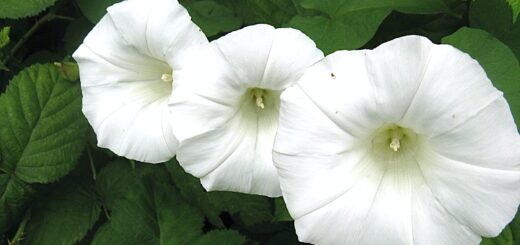
Convolvulus cneorum (×3) A low, domed evergreen shrub with striking silky silver-grey foliage and white, funnel-shaped flowers with a pink flush, produced freely from late spring through summer. Care: Requires full sun and excellent drainage — ideal for raised beds, rockeries, or gravel plantings. Very drought-tolerant once established. Trim after flowering to keep neat. Protect from excessive winter moisture, which is more damaging than frost.
Cotinus ‘Grace’ (×1) A large, spectacular deciduous shrub with rounded, wine-purple leaves and feathery, smoky pink-purple plumes in summer. Stunning scarlet-orange autumn colour. One of the finest foliage shrubs available. Care: Full sun produces the best leaf colour. Tolerates most well-drained soils. For maximum foliage effect, cut back hard (coppice) in early spring every other year, though this sacrifices the flower plumes. Prune lightly otherwise to maintain shape.
Hydrangea petiolaris (×1) The climbing hydrangea. A self-clinging deciduous climber with attractive peeling bark, heart-shaped leaves, and large, flat lacecap flowerheads of creamy white in early summer. Excellent for shady walls. Care: Tolerates north and east-facing aspects — one of the best climbers for shade. Moist, humus-rich soil preferred. Slow to establish but vigorous once settled. Little pruning needed beyond removing wayward shoots after flowering. Hardy and long-lived.
Lavandula stoechas ‘Papillon’ (×1) French lavender with distinctive dark purple flower heads topped by large, butterfly-like pale purple bracts (‘rabbit ears’). Highly aromatic, compact, and long-flowering from late spring into summer. Care: Full sun and well-drained, ideally alkaline soil. Trim after each flush of flowers to encourage repeat blooming. Less hardy than English lavenders — provide shelter or light fleece in cold winters. Avoid waterlogged soil.
Nandina domestica ‘Obsessed’ (Seika) (×2) A compact, clump-forming evergreen shrub with elegantly divided foliage that emerges red-orange in spring, turns green in summer, then flushes brilliant red-orange again in winter. Architectural and long-season interest. Care: Full sun to partial shade in moist, well-drained soil. Shelter from cold, drying winds. Remove oldest stems at the base in spring to encourage fresh growth. Hardy in most UK gardens but appreciates a sheltered position in colder areas.
Physocarpus opulifolius ‘Dart’s Gold’ (×1) A deciduous shrub with striking bright golden-yellow foliage that holds its colour well through the season. Clusters of small white-pink flowers in early summer, followed by attractive reddish seed heads. Care: Full sun brings out the best leaf colour; light shade is tolerated. Unfussy about soil provided it is reasonably moist and well-drained. Cut back up to one third of the oldest stems each spring to maintain vigour and colour. Fully hardy.
Physocarpus ‘Little Angel’ (×2) A compact, well-behaved form of physocarpus with dark burgundy-purple foliage and white blossom clusters in early summer. Tidy habit makes it ideal for smaller borders. Care: Full sun for best foliage colour. Tolerates a wide range of soils including clay, provided drainage is reasonable. Prune in early spring, removing oldest wood at the base. Hardy and low-maintenance.
Pittosporum ‘Silver Ball’ (×1) A compact, rounded evergreen pittosporum with small, neatly held grey-green leaves edged with cream-white variegation. Excellent structure and winter interest. Ideal as a focal or clipping specimen. Care: Best in a sheltered, sunny to partially shaded spot. Well-drained soil preferred. In colder UK regions, a south or west-facing sheltered position is advisable. Can be lightly clipped to maintain its naturally rounded form. Protect young plants from hard frost.
Pittosporum ‘Silver Queen’ (×1) A popular evergreen pittosporum with wavy-edged grey-green leaves broadly margined in creamy white. Upright habit, fragrant small dark flowers in spring, and year-round foliage appeal. Care: Sheltered position in full sun to partial shade. Well-drained soil. Hardy in most of southern and coastal UK; provide wind shelter in colder inland gardens. Minimal pruning — remove any all-green reverted shoots promptly. Suitable for light clipping.
Photinia × fraseri ‘Red Robin’ (×2) A highly popular evergreen shrub with bold, glossy scarlet-red new growth in spring and again after trimming, maturing to dark green. White flower clusters in spring. Excellent as a hedge or standalone specimen. Care: Full sun to partial shade in well-drained fertile soil. Clip or prune in spring and mid-summer to encourage successive flushes of red new growth. Avoid waterlogged conditions. Generally hardy but young growth can be damaged by late frosts.
Sambucus nigra ‘Black Lace’ (×1) A dramatic deciduous shrub with deeply cut, almost black-purple lacy foliage — striking throughout the growing season. Flat-headed pale pink fragrant flowers in early summer are followed by dark berries attractive to birds. Care: Full sun produces the darkest foliage. Tolerates most soils including clay. Cut back hard each spring for the largest, most impressive leaves, though this removes flowers and berries. Alternatively, prune lightly to retain flowering. Fully hardy and vigorous.
Santolina chamaecyparissus (×1) Cotton lavender. A low, mounding evergreen sub-shrub with aromatic, finely divided silvery-white foliage and bright yellow button flowers in midsummer. Excellent as an edging or low border plant. Care: Full sun and well-drained, poor to moderate soil. Cut back to old wood in early spring to prevent the plant becoming woody and open. Deadhead after flowering. Very drought-tolerant once established. Avoid rich, fertile soils which cause lax, untidy growth.
Solanum crispum ‘Glasnevin’ (×1) The Chilean potato tree. A vigorous, semi-evergreen scrambling climber producing clusters of rich violet-blue flowers with a central yellow cone, similar to potato flowers, over an exceptionally long season from summer into autumn. Care: Thrives against a warm, sunny, sheltered wall. Well-drained soil. Tie in stems as it is not self-clinging. Prune in spring to remove frost-damaged and overcrowded growth. Hardy in mild areas but may die back in severe winters, often regenerating from the base.
Aucuba japonica (×1) Spotted laurel. A robust, shade-tolerant evergreen shrub with large, glossy leaves (often gold-spotted depending on variety) and — on female plants — bright red berries in autumn and winter. Tough and architectural. Care: Thrives in shade — one of the best shrubs for deep or dry shade. Tolerates most soils, pollution, and coastal exposure. Little pruning needed; cut back overgrown plants in spring using secateurs rather than shears to avoid browning cut edges. Fully hardy.
Euonymus alatus ‘Compactus’ (×1) A slow-growing, deciduous compact form of the winged spindle. Renowned for its spectacular, vivid crimson-scarlet autumn foliage — one of the finest of all autumn-colouring shrubs. Corky, winged stems add winter interest. Care: Full sun produces the most intense autumn colour, though partial shade is tolerated. Moist, well-drained soil preferred. Minimal pruning needed — shape lightly after leaf fall if required. Fully hardy and largely pest and disease free.
Magnolia stellata (×1) Star magnolia. A slow-growing, deciduous compact magnolia producing a profusion of fragrant, pure white star-shaped flowers with multiple strap-like petals on bare branches in early spring. One of the best magnolias for smaller gardens. Care: Full sun to light partial shade in moist, humus-rich, well-drained soil. Neutral to slightly acidic conditions preferred. Shelter from cold winds and late frost, which can damage the early blossom — avoid east-facing sites. No regular pruning required; remove damaged wood in midsummer only. Slow to establish but long-lived.