How to Level Your Lawn Effectively with Top Dressing
Download by lawn topdressing guide
A perfectly level lawn is often seen as the hallmark of a well-maintained garden. However, many lawns develop slight dips, hollows, and undulations over time due to factors like settlement, drainage work, foot traffic, pets, or natural changes in the soil. Fortunately, most uneven lawns with depressions of around 15–20mm can be improved successfully using a process known as top dressing.
What is Top Dressing?
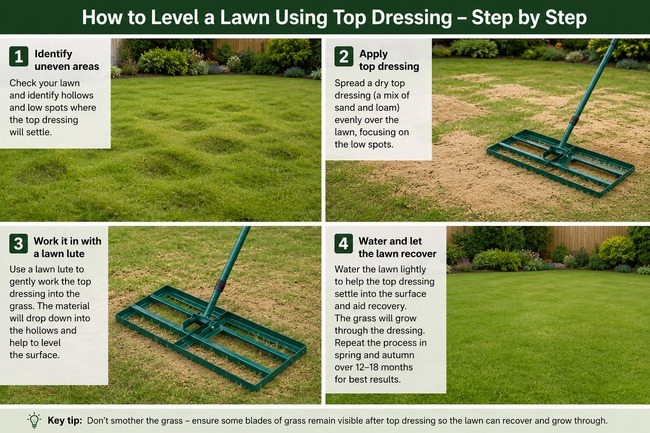
Top dressing is a specially blended mixture of sand and loam that is applied to the surface of a lawn. This material is worked into the grass using a lawn lute or landscaping rake, allowing it to settle into low spots and gradually improve the lawn’s level. Instead of digging up the lawn and starting from scratch, top dressing allows for gradual improvements while keeping the existing grass intact.
How Effective is Top Dressing?
Top dressing works extremely well for correcting minor dips and undulations across a lawn. However, it is crucial to understand that levelling a lawn is a gradual process. Most lawns require several applications over a period of 12 to 18 months before they become noticeably flatter. Attempting to achieve perfect levels in a single application can damage the grass and create more work in the long term.
The Most Important Rule: Don’t Smother the Grass
When filling hollows, it can be tempting to fill the depression completely with top dressing. However, adding too much material in one go can bury the grass beneath the surface. To ensure successful application:
- Fill shallow depressions gradually.
- Ensure grass blades remain visible after dressing.
- Allow the lawn to recover before applying further top dressing.
- Repeat the process over several seasons until the desired level is achieved.
When Should You Apply Top Dressing?
The best times to level a lawn with top dressing are:
- Spring (March to May)
- Autumn (September to October)
These periods provide ideal growing conditions, allowing the grass to recover quickly and grow through the dressing. Avoid applying top dressing during periods of drought, extreme heat, or when the ground is frozen.
Preparing the Lawn
For best results, carry out some basic lawn maintenance before applying the top dressing.
Scarify the Lawn
Scarifying removes moss, thatch, and dead grass, allowing the top dressing to reach the soil surface more effectively.
Spike or Aerate the Lawn
Aeration improves drainage and creates channels that help the top dressing integrate into the upper soil layer.
Mow the Grass
Cut the lawn slightly shorter than normal before dressing. This makes it easier to see the low spots and work the material into the turf.
Applying the Top Dressing
Spread the top dressing across the lawn using a shovel or wheelbarrow. Using a lawn lute or landscaping rake, work the material across the surface, focusing on low areas. The dressing should naturally fall into hollows while leaving higher areas relatively untouched.
The ideal top dressing should be reasonably dry. Bagged top dressing is often suitable straight away, but bulk-delivered material may benefit from being stored under a plastic sheet for a couple of weeks to dry out before use. Dry material is much easier to spread evenly and work into the grass.
Aftercare
Once the dressing has been applied:
- Brush or rake any excess material from the grass leaves.
- Water the lawn lightly if conditions are dry.
- Continue mowing as normal once the grass begins growing through the dressing.
- Monitor low spots and plan further applications as required.
A light watering after application can help wash the dressing down into the turf and encourage quicker recovery.
Patience Produces the Best Results
Lawn levelling is not a one-weekend job. The secret is to make gradual improvements over time while ensuring the grass remains healthy. By applying top dressing in spring and autumn, avoiding the temptation to bury the grass, and repeating the process over several seasons, most lawns with minor dips and hollows can be transformed into a considerably smoother and more attractive surface.
For lawns with depressions deeper than 20–30mm, additional techniques such as lifting and relaying turf may be required. However, for the majority of domestic lawns, regular top dressing remains one of the most effective and least disruptive methods for achieving a level lawn.