The Essential Guide to Deadheading Rhododendrons for Vibrant Blooms
Deadheading Rhododendrons – A Simple Job That Improves Flowering
Many gardeners overlook deadheading rhododendrons, but it is one of the simplest maintenance tasks you can carry out and can make a real difference to the plant’s growth and future flowering.
Why Deadhead a Rhododendron?
Once a rhododendron has finished flowering, the petals fall away, leaving behind a seed head at the end of the stem. If left in place, the plant will divert energy into producing seed. In most garden situations, these seeds are not required, so it is better for the plant to use that energy for new growth and the formation of next year’s flower buds.
Removing spent flower heads can:
- Encourage stronger vegetative growth.
- Help the plant produce more flower buds for the following year.
- Improve the plant’s overall appearance.
- Prevent unnecessary energy from being wasted on seed production.
- In some varieties, occasionally encourage a small secondary flush of flowers.
How to Deadhead a Rhododendron
Deadheading is easy and requires no tools.
- Wait until the flowers have faded and the petals have dropped.
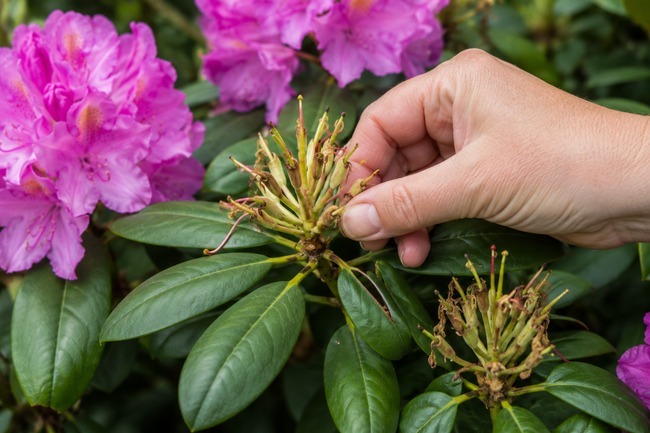
- Locate the spent flower truss (the seed head) at the end of the stem.
- Hold the spent flower head gently between your finger and thumb.
- Carefully bend or push it sideways rather than pulling directly upwards.
- The old flower head should snap cleanly away from the stem.
Take care not to damage the young shoots or developing buds directly beneath the old flower head, as these will become next year’s flowering stems.
When Should You Deadhead?
The best time is as soon as possible after flowering has finished. This allows the plant to concentrate on producing new growth during the summer months.
Most rhododendrons form their flower buds on the current season’s growth, which will flower the following spring. The earlier deadheading is carried out, the more time the plant has to produce strong shoots and flower buds.
Mulching After Deadheading
Once deadheading is complete, it is an ideal time to mulch around the base of the plant.
Many gardeners assume rhododendrons have deep roots, but in reality, they have a very shallow, fibrous root system that often grows close to the soil surface. These roots benefit enormously from mulching.
Suitable mulches include:
- Ericaceous compost.
- Leaf mould.
- Composted bark.
- Well-rotted horse manure.
- Garden compost made from acidic materials.
Apply a layer approximately 5–8 cm (2–3 inches) thick around the base of the plant, keeping it clear of the main stem.
Mulching helps to:
- Retain moisture during dry weather.
- Keep roots cool in summer.
- Improve soil structure.
- Add organic matter.
- Maintain the slightly acidic conditions rhododendrons prefer.
Feeding Rhododendrons
If your rhododendron appears pale or is producing weak growth, an application of ericaceous fertiliser after flowering can be beneficial. Avoid high-nitrogen feeds late in the season, as these can encourage soft growth that may be damaged by winter frosts.
Additional Tips
- Water thoroughly during dry periods throughout summer, as drought can reduce flowering the following year.
- Remove any dead, damaged or crossing branches when deadheading.
- Watch for signs of yellowing leaves, which may indicate nutrient deficiencies or unsuitable soil pH.
- Larger rhododendrons that have become overgrown can often be renovated with careful pruning after flowering.
Deadheading rhododendrons is a quick task that takes only a few minutes but can have a significant impact on the health and flowering performance of the plant. Simply remove the spent flower heads once the blooms have faded, mulch around the base to protect the shallow roots, and ensure the plant receives adequate moisture through the summer. These simple steps will help produce stronger growth and a better display of flowers the following spring.