
Creating a Wildlife Pond – Construction Guide & Practical Notes
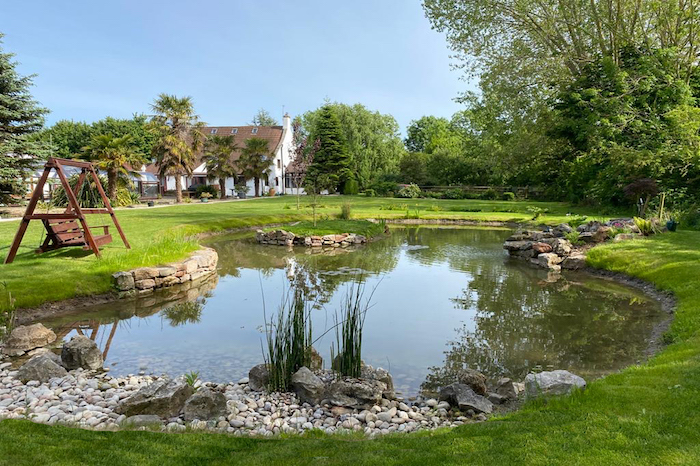
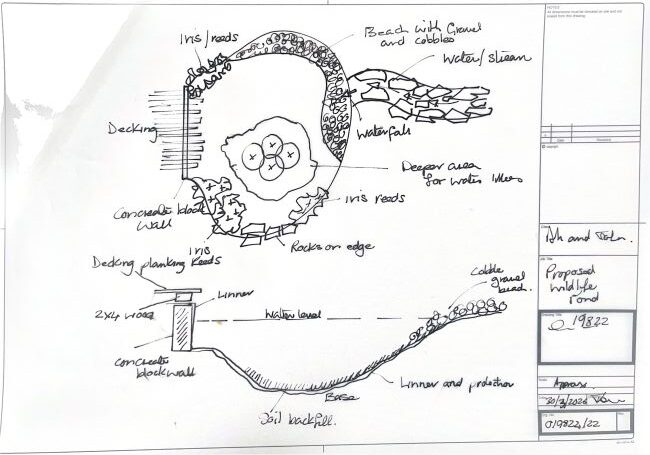
A wildlife pond is one of the most valuable features you can add to a garden. When designed and built correctly, it quickly becomes a balanced ecosystem, supporting insects, amphibians, birds, and plant life.
This guide outlines the construction process along with key principles to ensure the pond establishes quickly and remains low maintenance.
1. Planning the Pond Shape & Levels
Start by marking out the shape using a hosepipe or rope.
- Include wide, shallow margins – essential for wildlife access
- Aim for gradual sloping sides rather than steep drops
- Incorporate shelving levels for planting
- Add a deeper section (approx. 60–120cm depending on size)
Shallow areas are particularly important, as most pond wildlife prefers these zones, while deeper water helps regulate temperature and prevents overheating.
2. Excavation
- Remove turf and keep it aside (useful for finishing edges)
- Dig shelves first, then the deeper section
- Regularly check levels across the pond
A simple shape is best—overly complex edges make lining more difficult and don’t improve wildlife value.
3. Preparing the Base
Before installing the liner:
- Remove all sharp stones and roots
- Add a protective underlay (old carpet, sand, or similar)
This prevents punctures and extends the life of the liner.
4. Installing the Liner
- Use a flexible liner (butyl or EPDM works well for natural shapes)
- Lay it loosely into the hole—do not stretch it tight
- Allow natural folds to form
Start filling with water slowly so the liner settles into position.
5. Creating a Natural Pond Base (Key Step)
To encourage the pond to establish quickly and become wildlife-friendly:
- Add a layer of topsoil directly over the liner, particularly at the base
- Backfill planting areas with a mix of topsoil and gravel
- Add additional gravel or pebbles where needed
This is important because:
- Soil introduces microorganisms and beneficial bacteria
- Gravel creates structure and habitat for aquatic life
- The combination helps the pond reach a natural biological balance faster
In wildlife ponds, covering the liner with soil or mud is standard practice, as it allows plants to root and supports pond life from the outset.
Gravel layers also protect the liner and provide habitat for microorganisms.
6. Filling the Pond
- Ideally fill using rainwater where possible
- If using tap water, allow it to stand before adding plants
As the pond fills:
- Materials may float initially
- They will settle as they absorb water
- Use stones if needed to hold layers in place temporarily
7. Edging & Finishing
Edges can be finished in two ways:
Natural finish
- Soil, turf, or stone edges
- Pebble “beach” areas to allow wildlife easy access
Structured finish (e.g. near decking)
- Low block wall
- Liner overlapped and secured
- Timber fixed on top for decking
Shallow edges or “beach” areas are particularly important for wildlife to safely enter and exit the pond.
8. Adding Water Movement (Optional)
If adding a stream or circulation system:
- Use a dirty water sump pump (more robust than standard pumps)
- These handle debris such as silt and gravel more effectively
It’s best to:
- Build the pond first
- Add streams or features afterwards once levels are finalised
9. Establishing the Pond
Once filled:
- Add aquatic plants (oxygenators, marginals, lilies)
- Avoid overstocking early on
- Allow the pond to naturally balance
A well-constructed wildlife pond will begin attracting life very quickly—often within weeks.
10. Key Principles for Success
- Prioritise shallow areas and access for wildlife
- Ensure adequate depth for temperature stability
- Always protect and cover the liner
- Use topsoil and gravel to create a living base
- Build in stages—pond first, stream later
The most important step in creating a successful wildlife pond is not just digging the hole—it’s creating the right conditions for life.
By combining:
- Good depth and shape
- Proper liner protection
- A natural base using topsoil and gravel
you allow the pond to establish quickly, remain clear, and become a thriving, low-maintenance feature in the garden.