Pond Planting Ideas
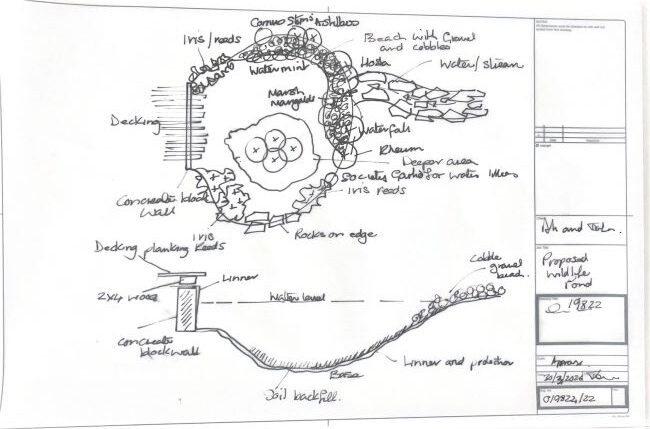
Creating a Balanced Wildlife Pond Planting Plan
A simple guide to planting zones, plant choice, and positioning around your pond
A successful wildlife pond isn’t just about digging a hole and filling it with water—it’s about creating a balanced planting scheme that supports wildlife, helps keep the water clear, and looks good throughout the year.
The key is to divide your pond into planting zones and select plants suited to each area: deep water, floating, marginal (shallow water), and damp ground around the edge.
1. Floating & Deep Water Plants
These plants sit on or in deeper water and help oxygenate the pond while providing shelter for aquatic life.
Water Soldier (Stratiotes aloides)
A distinctive floating plant with spiky, aloe-like leaves. It floats on the surface in summer and sinks in winter, naturally helping to maintain water balance. It’s particularly useful for keeping water clear and providing habitat for insects.
Position: Free-floating in mid to deep water (30–100 cm). No planting basket required.
2. Marginal Plants (Shallow Water)
Marginal plants grow in shallow water and are essential for softening pond edges, filtering water, and supporting wildlife.
Water Mint (Mentha aquatica)
A fast-growing, fragrant plant with soft purple flowers that attract pollinators. Great for natural-looking pond edges.
Planting depth: 0–10 cm of water over the crown.
Iris (e.g. Iris pseudacorus)
Tall, structural plants with bold flowers in late spring and early summer. Excellent for adding height and habitat.
Planting depth: 0–15 cm of water over the crown.
Marsh Marigold (Caltha palustris)
A bright, early-flowering plant producing cheerful yellow flowers in spring—ideal for early pollinators.
Planting depth: 0–5 cm of water over the crown.
3. Pond Edge & Damp Soil Plants (Not Submerged)
These plants are positioned around the pond edge in moist soil. They are not planted in the water but help blend the pond into the surrounding garden.
Rheum (Ornamental Rhubarb)
Large, dramatic leaves create a bold, architectural backdrop and give a lush, almost tropical feel.
Position: Damp soil at the back or sides of the pond. Not submerged.
Hosta (including variegated forms)
Broad-leaved plants ideal for shade, with variegated types adding brightness. Excellent for softening edges.
Position: Moist soil at the pond edge. Not submerged.
Veronica (Speedwell)
Produces upright spikes of flowers through summer, attracting pollinators and adding vertical interest.
Position: Damp but well-drained soil near the pond edge. Not submerged.
Astilbe
A moisture-loving perennial with feathery plumes of flowers in pinks, reds, and whites. Excellent for adding texture and lightness.
Position: Damp, humus-rich soil at the pond edge. Not submerged.
Cornus (Dogwood – red and yellow stem varieties)
Grown for their colourful winter stems, providing strong seasonal structure and interest when other plants have died back.
Position: Slightly back from the pond edge in moist soil. Not submerged.
4. Damp Edge Accent Plants
These plants sit right on the edge of the pond or in nearby damp soil, adding seasonal colour and diversity.
Society Garlic (Tulbaghia violacea)
An elegant plant with narrow leaves and delicate purple flowers, giving a mild garlic scent.
Position: Moist soil just above water level. Not submerged.
Primrose (Primula vulgaris)
A native favourite with soft yellow spring flowers, ideal for naturalising around damp, shaded pond edges.
Position: Damp soil at the pond edge. Not submerged.
Bringing It All Together
A well-planted pond combines all four zones:
- Deep water and floating plants to maintain water quality
- Marginal plants to soften edges and support wildlife
- Edge plants to blend the pond into the garden
- Damp border plants to add seasonal interest and structure
By layering plants in this way, you create a pond that not only looks natural but also becomes a thriving habitat for insects, amphibians, and birds.