Planting Ali’s Wildlife Pond: A Guide to the Best Pond Plants by Zone
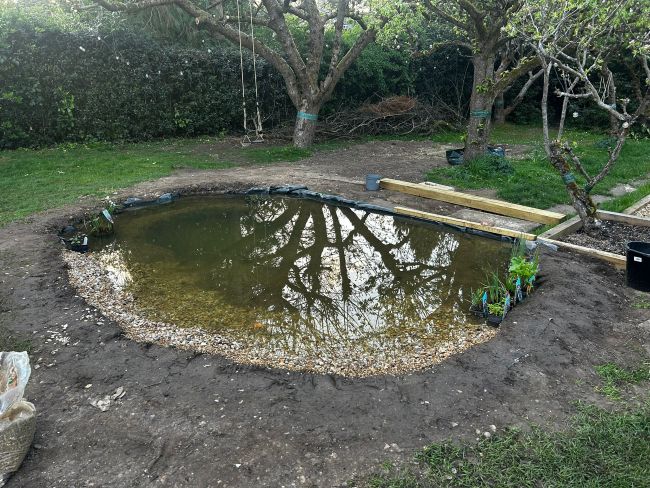
A well-planted wildlife pond is one of the most rewarding features in any garden. The key to getting it right is understanding that pond planting works in zones — from the water’s edge outwards — with different plants suited to each level of moisture. This guide sets out the best plants for each zone, drawing on GardenAdvice’s experience of planting and managing garden ponds across the UK.
We’ve divided the planting into three zones: true marginals and wet-edge plants, damp bank and bog-garden plants, and the slightly drier upper edge and backdrop.
Zone 1: True Marginal and Wet-Edge Plants
These plants thrive in very shallow water or at the waterlogged edge of the pond. They provide structure, shelter for wildlife, and some of the most dramatic seasonal flowers.
Yellow Flag Iris — Iris pseudacorus
An excellent choice for wildlife ponds, with strong upright sword-like foliage and striking yellow flowers in early summer. It provides superb structure at the water’s edge, though it can be vigorous in smaller ponds and may need managing to prevent it from taking over.
Iris laevigata
A lovely water-edge iris for shallow margins, with good vertical foliage and rich blue flowers. GardenAdvice recommends it for water depths of 5 to 15 cm, making it ideal for the gentle shelving edge of a wildlife pond.
Iris ensata — Japanese Water Iris
Useful for elegant foliage and blue, red or white flowers around damp pond edges. It is slightly less tolerant of permanently wet conditions than Iris laevigata, so it works best at the very edge rather than in open water.
Acorus calamus ‘Argenteostriatus’
A strong marginal foliage plant for very shallow water, with creamy variegated leaves that catch the light and provide contrast alongside irises and rushes.
Acorus gramineus ‘Variegatus’
A smaller, grass-like foliage plant with yellow variegation, useful to brighten and soften the pond edge without taking up too much space.
Carex elata ‘Aurea’ — Bowles’ Golden Sedge
A golden sedge that gives a warm, bright edge to the pond. It works particularly well combined with irises and primulas, providing a gentle contrast of colour and texture.
Juncus effusus f. spiralis — Corkscrew Rush
The twisted, spiralling stems of this rush provide excellent textural interest and good wildlife cover in shallow margins. It is a reliable, unfussy plant that suits a naturalistic pond planting scheme.
Pontederia cordata — Pickerel Weed
Glossy, attractive foliage with blue late-summer flowers that are especially valuable for pollinators. Best in very shallow water at the pond margin.
Caltha palustris — Marsh Marigold
One of the best early-season pond-edge plants, with lush rounded leaves and golden yellow spring flowers that are among the first of the year to open. It is included in GardenAdvice’s core pond-margin recommendations and is excellent for wildlife ponds.
Veronica beccabunga — Brooklime
A softer, native-style marginal that provides good wildlife cover and produces small blue flowers over a long season. It is a useful, unshowy plant that stitches naturally into a wildlife planting scheme.
Zone 2: Damp Bank and Bog-Garden Plants
These plants are ideal around the pond edge but are not planted in standing water. They thrive in consistently moist, humus-rich soil and provide the lush, layered planting that frames a wildlife pond at its best.
Hosta — especially large-leaved varieties such as Hosta ‘T-Rex’
Hostas are among the best plants for lush pond-side foliage, particularly in partial shade. GardenAdvice specifically recommends Hosta ‘T-Rex’ for pond margins where a bold, dramatic effect is needed. Do keep an eye out for slugs, which are drawn to hostas and can be especially active in the damp conditions around a wildlife pond. Good companions include ferns, astilbes and primulas.
Rheum — Ornamental Rhubarb
Superb architectural foliage for a damp, humus-rich pond bank. Ornamental rhubarb produces very large leaves and tall flower spikes, working well as a bold backdrop plant in partial shade. It gives a sense of tropical luxuriance that suits a large wildlife pond setting.
Rodgersia
One of the best bold foliage plants for damp shade. Large, horse-chestnut-like leaves, strong structure, and a naturally waterside character make Rodgersia an ideal choice beside a wildlife pond. It pairs well with Hosta and ferns.
Darmera peltata
Big umbrella-like leaves for a dramatic, almost tropical effect on the pond bank. It produces its flowers on bare stems in early spring before the leaves emerge, which adds interest at a quiet time of year. Best in consistently moist soil.
Ligularia
Bold, rounded or jagged foliage depending on variety, plus yellow or orange flowers in mid to late summer. Excellent in moist, sheltered, partly shaded positions at the pond edge. The variety ‘The Rocket’ is particularly good for strong vertical flower spikes.
Astilbe
Good ferny foliage and elegant summer plumes in pink, red, white or purple. Works especially well in moist shade alongside the pond. GardenAdvice notes Astilbe as a valuable plant for damp, shaded streamside and pondside planting.
Trollius — Globe Flower
A very useful plant for moist, cool conditions around ponds, stream banks and bog gardens. The rounded, globe-shaped flowers in yellow or orange shades are produced in late spring and attract pollinators. Trollius chinensis ‘Golden Queen’ is a particularly reliable variety for pond-edge planting.
Primula denticulata — Drumstick Primula
Excellent for damp, shaded margins and very useful as early seasonal colour before many foliage plants have reached full size. The round ball-shaped flowers in purple, lilac or white appear in early spring.
Primula vialii
An unusual primula with vertical flower spikes — red in bud, opening to lilac — that suits pond-margin planting beautifully. It combines well with other moisture-loving primulas and with Caltha.
Persicaria affinis ‘Darjeeling Red’
Dense ground-cover foliage with reddish-pink flower spikes over a very long season. It is excellent for covering the damp bank and suppressing weeds, and the foliage colours well in autumn.
Ferns
Ferns are natural streamside and pondside plants and are particularly useful in shade or dappled shade. GardenAdvice recommends them as reliable companions for damp, shaded areas. Good choices for a wildlife pond setting include:
- Lady Fern (Athyrium filix-femina) — light, graceful and moisture-loving
- Ostrich Fern (Matteuccia struthiopteris) — bold, shuttlecock-shaped and strongly architectural
- Maidenhair Fern (Adiantum) — for sheltered, humid positions with good shade
Aruncus — Goat’s Beard
Elegant, ferny foliage with tall white plumes in early summer. Good for a naturalistic pond-side scheme and very attractive to insects and other wildlife.
Filipendula — Meadowsweet
Native in character, wildlife-friendly and well suited to damp soil, with frothy creamy flowers that are powerfully scented. Meadowsweet has a relaxed, naturalistic habit that suits a wildlife pond planting very well.
Chelone — Turtlehead
A tidy, reliable plant for damp soil with unusual hooded flowers in late summer and early autumn when little else is at its best. Good for extending the season of interest at the pond edge.
Zantedeschia aethiopica — Arum Lily
Works well in damp, mild, partly shaded pond-edge positions and GardenAdvice includes it for water depths of 15 to 30 cm in sheltered gardens. In colder areas it is best used as a damp-margin plant in a sheltered spot rather than planted in open water, where it may not be fully hardy.
Lobelia cardinalis
Strong scarlet flowers and purplish foliage make this one of the most striking plants for wet, sunny or partly shaded conditions at the pond margin. It is also suitable for very shallow water and provides excellent late-season colour.
Zone 3: Slightly Drier Upper Edge and Backdrop
These plants help blend the pond naturally into the rest of the garden and provide interest in the areas where the soil is still reasonably fertile but no longer permanently wet.
Acanthus mollis
Big, deeply cut architectural foliage that makes a strong statement at the back of a pond planting scheme. Use where the soil is fertile and reasonably well-drained rather than boggy.
Pachysandra terminalis ‘Green Carpet’
Useful evergreen ground cover for shaded upper pond edges, especially where the soil is moist but not waterlogged. It provides year-round coverage and suppresses weeds well in difficult shaded areas.
Hellebores
Good for nearby shaded areas, especially if you want winter and early spring interest. They associate well with ferns and hostas in the shadier parts of the pond-edge planting.
Bergenia
Tough evergreen foliage that works well on the drier outer edge, especially in partial shade. Bergenia is particularly useful as a transitional plant between the lush pond-side planting and drier garden areas beyond.
A Suggested Planting Combination for Ali’s Wildlife Pond
Bringing the three zones together, here is how we would approach the planting:
At the wettest edge: Yellow Flag Iris, Iris laevigata, Caltha palustris, Acorus calamus ‘Argenteostriatus’, Carex elata ‘Aurea’, Juncus effusus f. spiralis and Pontederia cordata. These give structure, early and late-season flower, and excellent cover for frogs, insects and other pond life.
On the damp bank: Hostas (including Hosta ‘T-Rex’ for bold effect), Rheum, Rodgersia, Darmera peltata, Ligularia, Astilbe, Trollius, Primula denticulata, Persicaria affinis ‘Darjeeling Red’ and a selection of ferns. This combination gives strong foliage contrast, layered height, and interest from early spring through to autumn.
At the upper edge and backdrop: Acanthus mollis, Bergenia, Hellebores and Pachysandra, with perhaps Aruncus or Filipendula for a naturalistic, wildlife-friendly finish.
For the best wildlife results, aim to mix emergent, submerged, floating and marginal plants in the pond itself — they all play different roles in providing shelter, oxygenation, shade, and breeding sites for frogs, dragonflies, insects and other pond creatures. GardenAdvice’s pond planting guidance recommends this mixed approach to make the most of a wildlife pond throughout the year. It is also worth avoiding fish if wildlife is the main priority, as fish will readily consume eggs, larvae and small pond organisms.
For more GardenAdvice pond planting guidance, visit our full pond planting guide: Creating a Lush Oasis: Planting Your Large Garden Pond in the UK.