
Apple Ermine Moth Caterpillars on Apple Trees – What Are They and How Do You Control Them
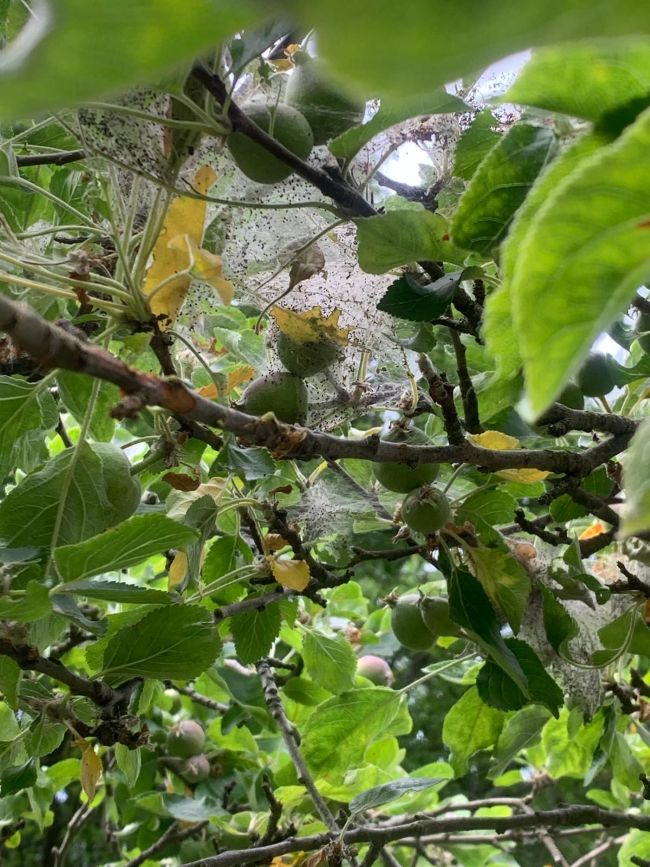
If you discover large sheets of white webbing covering branches of your apple tree during late spring or early summer, the culprit is often the apple ermine moth caterpillar. The damage can look alarming, with entire sections of the tree appearing wrapped in silk, but fortunately the problem is usually manageable and rarely causes long-term harm to established trees.
How to Identify Apple Ermine Moth Caterpillars
The most obvious signs include:
- Large white sheets or tents of silk webbing covering branches and leaves.
- Leaves tied together and being eaten inside the web.
- Numerous black specks trapped within the webbing – these are caterpillar droppings.
- Clusters of pale caterpillars feeding together within the silk nests.
- Damage occurring on apple trees, one of the caterpillars’ preferred host plants.
The webbing protects the caterpillars from predators and weather while they feed on the foliage.
What Should You Do Now?
Remove the Webbing by Hand
The best first step is to physically remove the nests and caterpillars.
- Wear gloves and pull away the webbing by hand.
- Use secateurs to remove heavily affected shoots if necessary.
- A stick can be useful for pulling down larger webs from higher branches.
- Place all webbing, caterpillars and affected leaves into a sealed bag and dispose of them.
- Avoid composting the material, as some caterpillars may survive.
Inspect the Entire Tree
After removing the main nests:
- Check sheltered inner branches for smaller developing webs.
- Remove any new infestations as soon as they appear.
- Continue monitoring the tree for several weeks during the growing season.
Early intervention is far easier than dealing with large established colonies.
Biological Control
If the infestation is severe, a biological caterpillar treatment containing Bacillus thuringiensis (Bt) can be used.
This naturally occurring bacterium specifically targets caterpillars and has minimal impact on beneficial insects. It works best when applied to young, actively feeding caterpillars, so treatment should be carried out as soon as possible after they are discovered.
Always follow the manufacturer’s instructions when applying biological controls.
Avoid Broad-Spectrum Insecticides
Apple trees support a wide range of beneficial insects including:
- Ladybirds
- Hoverflies
- Lacewings
- Bees and other pollinators
Broad-spectrum insecticides can harm these helpful insects. In most cases, physical removal combined with biological control provides a more environmentally friendly solution.
Will Apple Ermine Moth Caterpillars Kill My Tree?
Generally, no.
Although the damage can look dramatic, established apple trees usually recover well once the caterpillars have finished feeding. A severe infestation may temporarily reduce the tree’s vigour and affect fruit size, but healthy trees often produce a fresh flush of leaves later in the season.
Young trees or trees already weakened by drought, disease or poor nutrition may suffer more stress and should be monitored more carefully.
Feeding Apple Trees After Caterpillar Damage
Trees recover much more quickly when they are well fed.
Apply a generous mulch of well-rotted organic matter around the base of the tree, such as:
- Well-rotted horse manure
- Garden compost
- Leaf mould
- Spent mushroom compost
During the growing season, feed with a balanced fruit tree fertiliser or a high-potash feed such as liquid tomato food to encourage strong growth and fruit production.
Healthy, vigorous trees are much better able to tolerate occasional pest damage and recover rapidly.
Winter Washing to Prevent Future Infestations
One of the most effective ways to reduce future problems with apple ermine moth caterpillars is to target the overwintering eggs.
The adult moths lay their eggs on the bark and young stems of apple trees during the summer. These eggs remain on the tree throughout autumn and winter before hatching the following spring.
Applying a winter wash can help smother many of these eggs before they hatch.
Products such as Vitax Organic Winter Tree Wash can be applied during the dormant season between late autumn and late winter.
For best results:
- Apply after leaf fall and before bud burst in spring.
- Choose a dry, frost-free day.
- Thoroughly wet the trunk, branches and bark crevices.
- Pay particular attention to sheltered areas where eggs may be hidden.
- Follow the manufacturer’s instructions for dilution and application.
Winter washing can also help reduce other overwintering pests and their eggs, making it a useful part of a regular fruit tree maintenance programme.
Future Prevention
The easiest way to control apple ermine moth is to catch the problem early.
From April through to June:
- Inspect young shoots regularly.
- Look for small clusters of webbed leaves.
- Remove any developing nests immediately.
- Monitor the tree every couple of weeks during spring.
Combining regular inspections with an annual winter wash treatment can dramatically reduce future infestations.
If you find large white webs on your apple tree, the problem is most likely apple ermine moth caterpillars rather than spiders. Remove the webbing and caterpillars as soon as possible, inspect the rest of the tree for further nests and consider using a biological caterpillar control if numbers are high.
Fortunately, established apple trees usually recover well from the damage. Regular monitoring during spring, good feeding throughout the growing season and an annual application of Vitax Organic Winter Tree Wash during the dormant season can help keep future infestations under control and maintain a healthy, productive apple tree.