
Soft Fruit Plants and Canes to Plant in October and November
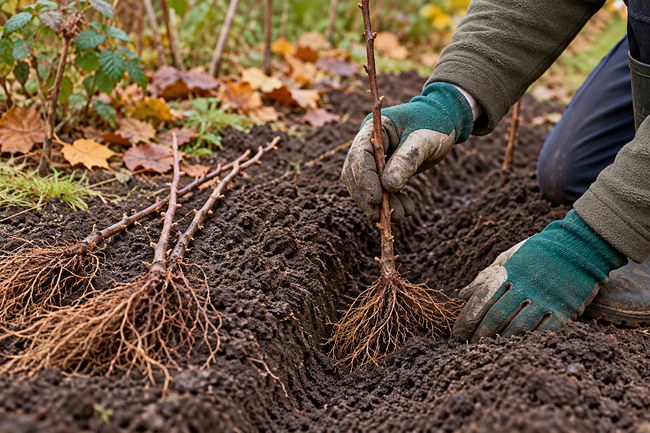
Planting bare root fruit canes
October and November are excellent months to start a soft fruit garden or add to an existing fruit patch. Raspberries, currants, gooseberries and blackberries can provide crops for many years, and autumn planting gives them time to settle before the demands of spring growth.
The important distinction is between pot-grown plants, which can be planted during October and November when conditions are suitable, and bare-root plants, which should be planted once dormant. Bare-root raspberry canes usually become available from November onwards. Always avoid planting into frozen or waterlogged soil. RHS Guide
Raspberry canes
Raspberries are a rewarding choice for a sunny fruit patch. Give them fertile, moisture-retentive soil with good drainage: they dislike having their roots sitting in wet ground over winter.
Choose between summer-fruiting and autumn-fruiting varieties, or plant a separate row of each to extend the picking season.
- Summer-fruiting raspberries produce their main crop on canes grown the previous year. They generally need posts and supporting wires.
- Autumn-fruiting raspberries produce fruit on the current season’s growth. Their straightforward pruning makes them particularly useful for beginners.
Plant dormant bare-root canes from November, spacing them approximately 45–60cm apart, with around 1.8m between rows. Spread out the roots and plant shallowly, following the nursery’s planting-depth instructions. Buy healthy, certified stock where available. RHS Guide
Blackcurrants
Blackcurrants are useful for summer puddings, jam, sauces and freezing. They grow best in a sunny position with fertile soil that holds moisture without becoming waterlogged.
Late October and November are suitable planting months once plants become dormant. Allow approximately 1.5–1.8m between bushes, depending on the variety.
Bush blackcurrants are an exception to the usual planting-depth rule: plant them about 5cm deeper than their previous soil level to encourage new shoots from the base. Newly planted bushes normally need their stems cut back hard; follow the supplier’s instructions. Standard-trained blackcurrants require different treatment and should remain at their previous planting depth. RHS Guide
Redcurrants, whitecurrants and gooseberries
These fruits deserve a place in more gardens. Redcurrants are excellent for jelly and summer desserts, while whitecurrants have a gentler flavour. Gooseberries can be picked early for cooking or allowed to ripen for eating fresh.
Plant them in a sunny position or light shade, in moisture-retentive but well-drained soil. Bush forms need room to develop, while cordon-trained plants offer an option where space is limited.
Pot-grown plants can go in during October or November, with dormant bare-root stock following as it becomes available. Plant at the previous soil level and leave enough space for access, pruning and picking. GardenAdvice.co.uk
Blackberries, tayberries and loganberries
A fence or a row of posts and wires can provide growing space for blackberries and hybrid berries such as tayberries and loganberries.
These plants need more room than their small nursery pots suggest. Check the mature spread before planting and install supports at the start, so new growth can be tied in as it develops. Thornless blackberries make picking and training easier, particularly beside a frequently used path.
Choose a sunny position for the best crops and soil that drains freely while retaining some summer moisture. GardenAdvice.co.uk
Blueberries
Blueberries are a useful choice for gardens and patios, but they need different soil conditions from most other soft fruit.
They require acidic soil, ideally around pH 4.5–5.5. If your garden soil is unsuitable, grow them in generous containers filled with peat-free ericaceous compost.
Autumn is a good time to plant pot-grown blueberries. Keep the compost moist but never waterlogged, and use collected rainwater where possible, especially in hard-water areas. Two compatible varieties flowering at the same time can improve cropping.
Avoid adding lime or mushroom compost around blueberries, as these can raise the pH. For more information, see the GardenAdvice guide to growing blueberries in pots or containers. RHS Guide
Prepare the ground before planting
Spend time clearing perennial weeds before planting. Removing couch grass and bindweed becomes much harder once they are tangled among fruit roots.
Improve poor soil with well-rotted garden compost, working across the planting area. If the ground stays saturated after rain, address the drainage or choose a raised planting area before putting in fruit bushes.
Water pot-grown plants thoroughly before removing their containers. Keep bare roots protected from drying winds, spread them naturally in the planting hole and firm the soil gently around them. Water after planting, then mulch the surrounding ground, keeping the mulch clear of stems and crowns.
There is usually no need to encourage soft new growth with a strong nitrogen feed at this time of year.
Plan for future harvests
Choose fruit your household enjoys eating, and balance early, summer and autumn crops where space allows. A few well-positioned plants are easier to manage than an overcrowded fruit patch.
Keep labels and record which raspberry rows are summer-fruiting and which are autumn-fruiting, because their pruning differs. Allow young plants time to establish: the first season’s harvest may be modest, with better crops as the plants develop.
For more ideas, explore the GardenAdvice guide to popular soft fruits for UK gardens.