
The Gold Under Your Grass: How to Turn Turf Strips into Premium Loam
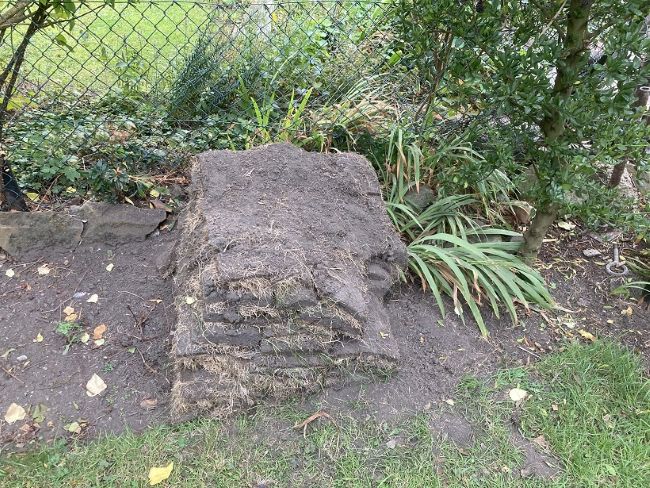
Small Loam stack for use as lawn top dressing or creating compost
When you’re carving out new garden borders or stripping away lawn edges, you’re holding one of the most valuable materials in horticulture. Instead of heading to the tip with those grass-covered strips, savvy gardeners know to stack and rot them down into what’s known as turf loam—a high-quality, fibrous growing medium that’s perfect for making John Innes-style compost and professional lawn topdressing.
Building Your Turf Stack
The secret to a great loam stack lies in using the turf strips themselves—that root-dense top layer of your lawn—rather than the bulk soil from deep underground. The method is wonderfully simple.
The Green Sandwich Technique
Place your first layer of turf grass-side up. Then place the next layer grass-side down on top of it. This “green-to-green” contact traps nitrogen and moisture, accelerating the breakdown of the grass and roots. Continue alternating layers like a brick wall—this keeps the stack stable and ensures even decomposition throughout.
Once built, cover the pile with a black tarp to exclude light and prevent rain from washing out nutrients. In about 6 to 12 months, you’ll be left with dark, crumbly “gold”—rich, fibrous loam ready for use.
Creating DIY John Innes Potting Compost
Professional John Innes compost is soil-based, making it far superior to cheap, peat-free alternatives because it holds water and nutrients more effectively. By using the loam from your stack, you can mix your own premium potting media at a fraction of the cost.
The Classic Home-Made Ratio:
- 7 parts sifted loam (the “body” of the compost)
- 3 parts peat alternative (coir or leaf mould for aeration)
- 2 parts sharp sand (for drainage)
This creates a balanced, moisture-retentive growing medium that rivals anything you’ll find in a garden centre.
The Ultimate Lawn Topdressing
There’s no better way to treat a lawn than by giving it back its own goodness. Using your rotted loam as a topdressing helps level out bumps, improves soil structure, and introduces beneficial local microbes that are already adapted to your garden.
How to Apply:
First, sieve your rotted loam through a 6mm garden riddle to remove any remaining fibre or stones. For the best results, mix 3 parts loam with 6 parts sharp sand, then rake this into your lawn. Unlike store-bought dressings, this is “live” soil that will integrate perfectly with your existing grass, improving both drainage and structure over time.
The Reality Check: Managing Weeds
It’s worth being honest about one small downside: weed seeds. Because commercial compost is steam-sterilised, it’s completely weed-free. Your home-grown loam stack is a natural, biological process that doesn’t reach those same extreme temperatures, so you may find a few volunteers—grass or clover shoots—popping up in your pots or on the lawn after application.
The good news? Because the loam is so light and friable, these weeds are incredibly easy to pluck out. On a lawn, regular mowing will take care of them before they ever settle. For the sake of a few minutes of weeding, you’re saving a fortune and gardening in a truly sustainable, circular way.
Pro Tip: Build your stack in autumn or winter when you’re doing your heavy digging—it will be ready to sieve and use by the following spring.
Turning waste into wealth has never been so satisfying. Your turf strips aren’t rubbish—they’re the foundation of better gardens.