
So this is my hedge that got burnt in the summer heat can you tell me what type of hedge it is and how I can get it to r
6 October 2026
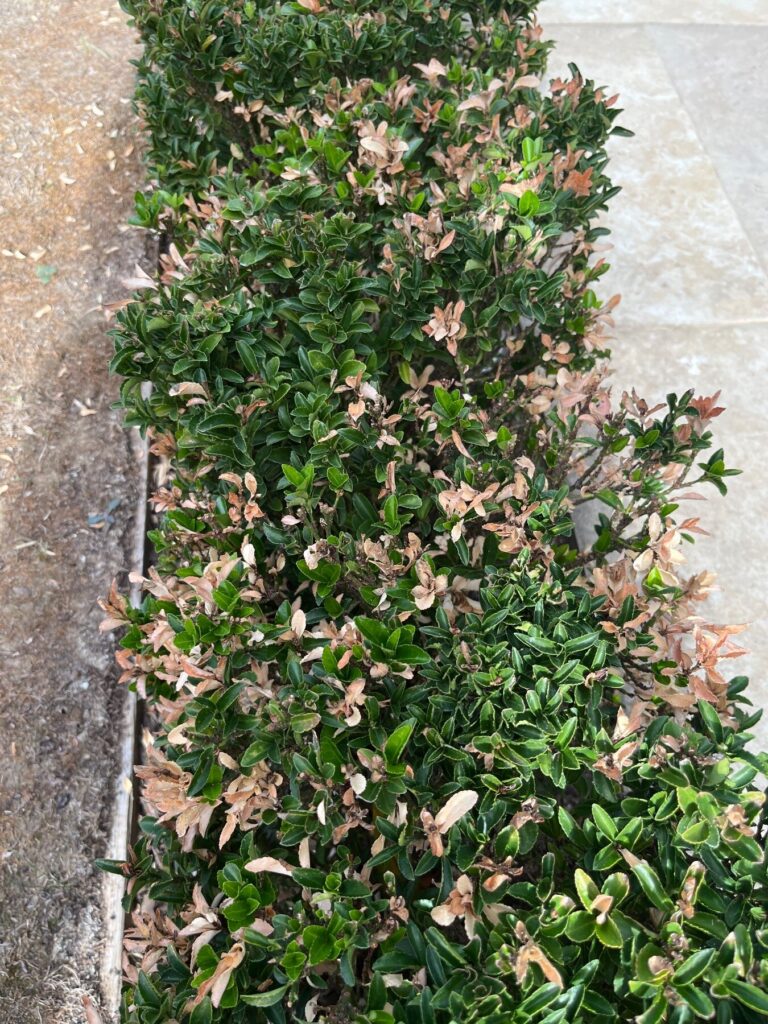
Yes — the hedge in the last photo looks most likely to be **Euonymus**, probably **Euonymus japonicus** or a small-leaved variegated/green form often used for low hedging.
It is **not box** and **not conifer**. The good news is that Euonymus is usually quite resilient and can recover from heat scorch if the stems are still alive.
The other photos also show:
- **Hypericum / St John’s wort** in the second photo
- **Tulbaghia violacea / society garlic** in the third photo
- The damaged climber/tangle in the first photo looks separate from the Euonymus hedge
## What has happened?
The pale brown, crispy leaves on the hedge look like **summer scorch and drought stress**. This often happens when plants are next to paving, walls, brickwork or reflected heat, because the roots dry out faster and the leaves lose moisture faster than the plant can replace it.
The green growth underneath is a good sign — it means the hedge is still alive.
## What to do now — October
### 1. Lightly trim off the worst burnt tips
You can give it a **light tidy now**.
- Snip or lightly shear off the brown, crispy outer leaves.
- Don’t cut it very hard at this time of year.
- Try to cut back to just above healthy green leaves or buds.
This improves appearance and removes dead material, but avoids forcing lots of soft new growth before winter.
### 2. Check whether stems are alive
Do a quick **scratch test** on any badly damaged stems:
- Scratch the bark gently with your thumbnail.
- **Green underneath = alive**
- **Brown and dry underneath = dead**
If a whole twig is dead, cut it back to a living side shoot or main stem.
### 3. Water it deeply if the soil is dry
Even in autumn, soil beside paving can stay surprisingly dry.
Give it a **deep soak**, not just a light sprinkle. The aim is to get water down to the roots.
For recovery:
- Water slowly at the base.
- Avoid wetting the leaves too much.
- If dry weather continues, soak once a week.
### 4. Mulch around the base
Add a mulch of compost, leaf mould or well-rotted manure around the roots.
Keep it about **5cm away from the stems** to prevent rotting.
Mulch helps by:
- Holding moisture in the soil
- Reducing temperature swings
- Improving soil structure
- Helping the hedge cope better next summer
## Do not feed heavily now
Avoid strong fertiliser now in October. Feeding too much now can encourage soft growth that may be damaged by frost.
Instead, feed in **spring** with a general-purpose fertiliser, then water it in well.
## Main recovery pruning — spring
In **April or May**, once frost risk has mostly passed, you can be firmer.
If there are still dead-looking sections:
- Cut out dead shoots.
- Lightly reduce the hedge to encourage fresh shoots.
- Shape it so the top is slightly narrower than the base, allowing light to reach the lower growth.
Euonymus usually responds well to pruning and can break from older wood better than conifers, so recovery is much more likely.
## How to prevent it happening again next summer
Because this hedge is near paving, I’d do the following:
1. **Mulch in spring**
- Helps keep roots cool and moist.
2. **Water deeply during heatwaves**
- One deep soak is better than frequent shallow watering.
3. **Avoid trimming during hot dry weather**
- Freshly cut leaves scorch easily.
- Trim on a cool, cloudy day if possible.
4. **Do a spring feed**
- A balanced feed in spring will help it produce strong new growth.
5. **Watch for pests**
- Euonymus can sometimes get scale insects. Look for tiny brown or white shell-like bumps on stems and leaves. If present, that can weaken the plant and make scorch worse.
## In short
Your hedge is most likely **Euonymus**. The brown leaves are mainly **heat and drought scorch**. Lightly tidy it now, water deeply, mulch the base, and leave any harder pruning until spring. It should recover well if the stems are still green underneath.