
So this is my lawn which is quite a fine lawn it’s now October unfortunately it’s not really recovered so I’m wondering
6 October 2026
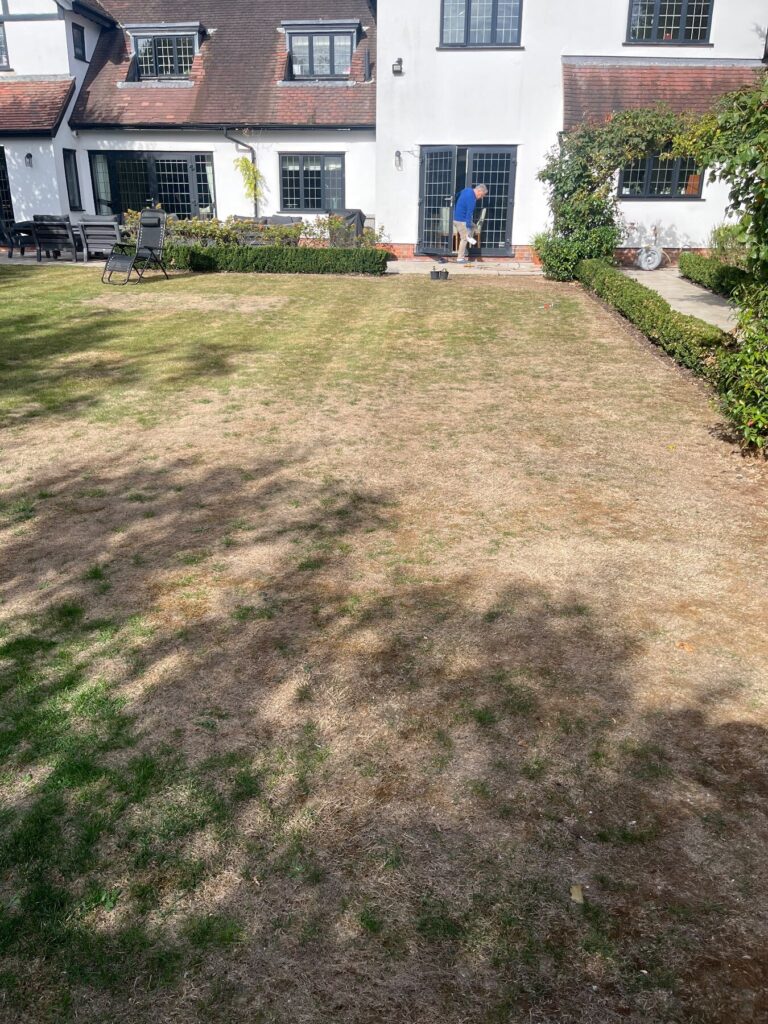
Yes — from the lawn photo, this looks like **drought/heat scorch from summer**, with some areas recovering green and other patches still straw-brown. By October, if parts still haven’t greened up after rain, some of the fine grass may have died rather than just gone dormant.
And yes, **clover is worth considering**, especially with hotter, drier summers — but whether to use it depends on whether you want a traditional fine lawn look or a more resilient green lawn.
## First: check what is dead and what is dormant
Do this simple test:
- Gently rake a brown area with a spring-tine rake.
- If the brown grass **lifts away easily like straw**, it is dead.
- If it is still rooted and you can see green at the base, it may still recover.
From your photo, I suspect you have a mix: some areas are recovering, but the paler straw patches will probably need overseeding.
---
## What to do now in October
Because you’re still under a **hosepipe ban**, I would only overseed if rain is forecast and the soil is moist. Grass and clover seed both need steady moisture to germinate.
### 1. Mow high, not short
Set the mower fairly high — around **40–50mm**.
Don’t scalp it. Fine lawns under stress need leaf area to recover and rebuild roots.
### 2. Rake out the dead material
Lightly rake the brown areas to remove loose dead grass and thatch.
Don’t be too brutal if the lawn is weak. The aim is to expose some soil so seed can make contact, not to rip the whole lawn apart.
### 3. Spike/aerate the lawn
Use a garden fork:
- Push it in 100–150mm if you can.
- Wiggle it slightly to open holes.
- Focus on compacted, dry, or high-use areas.
This helps rain get down into the root zone rather than running off the surface. It also encourages deeper rooting, which matters more and more with hotter summers.
### 4. Top-dress thin patches
Brush in a light top dressing over bare/thin areas.
For a fine lawn, use a thin layer only — roughly **3–5mm** — so you don’t smother surviving grass. A sandy loam lawn dressing is ideal.
### 5. Overseed only when rain is coming
If the ground is damp and rain is forecast, overseed now.
For a fine lawn, use either:
- A **fine lawn grass seed mix** if you want to keep the traditional look
or
- A **microclover/fine grass mix** if you want better drought resilience
After sowing, lightly rake or brush the seed in so it contacts the soil.
---
## Should you overseed with clover?
### Yes, if you want a more climate-resilient lawn
Clover, especially **microclover**, is a good option because it:
- Stays greener in dry weather
- Fixes nitrogen naturally, feeding the lawn
- Tolerates lower fertility better than fine grasses
- Helps reduce the need for high-nitrogen fertilisers
- Can keep the lawn usable in both summer and winter
With changing UK summers, clover lawns are becoming a very sensible option.
### But be aware:
Clover will slightly change the appearance of a fine lawn. It gives a softer, more natural look rather than a perfect bowling-green finish.
Also:
- Clover may flower if not mown regularly.
- Bees like the flowers, which is good for wildlife but worth considering if children play barefoot.
- Lawn weedkillers for broadleaf weeds will usually also kill clover.
So if you want a **formal fine lawn**, stick mainly with fine grass seed.
If you want a **greener, tougher lawn with less watering**, add microclover.
My practical recommendation for your lawn would be:
**overseed with a fine grass and microclover mix**, rather than pure clover.
---
## Timing: October vs spring
October can still work if the soil is warm enough, but germination slows as temperatures drop.
### Overseed now if:
- Soil is damp
- Rain is forecast
- Temperatures are still mild
- You can keep the surface moist without using a hose
### Wait until spring if:
- The soil is dry
- The hosepipe ban means you cannot water seedlings
- Frosts are expected soon
- The lawn surface is dusty or hard
If seed germinates and then dries out, you’ll waste time and money. With the hosepipe ban, I’d let the weather decide.
---
## Feeding now
Use an **autumn lawn feed**, not a spring/summer high-nitrogen feed.
An autumn feed supports root growth and strengthens the lawn before winter. Avoid strong nitrogen now because it pushes soft leafy growth, which is more vulnerable to frost and disease.
Longer term, I’d move away from heavy high-nitrogen feeding. It can weaken soil biology and contribute to thatch and moss problems over time. A more soil-based lawn care approach — aeration, pH correction if needed, biological activity, and slow-release organic feeding — is better for recovery and drought resistance.
There’s more on that approach here:
https://gardenadvice.co.uk/harry/modern-lawn-care/
---
## If your soil is acidic or mossy
If you have moss or the lawn has been declining for a while, it may be worth doing a **soil pH test**. Many UK lawns become slightly acidic, especially where high-nitrogen feeds have been used.
If it is acidic, applying a suitable lawn lime in autumn or spring can help grass compete better and reduce moss pressure. But don’t lime blindly — test first if you can.
---
## Watering during the hosepipe ban
If hosepipes are banned, you may still be allowed to use a **watering can**, but check your local water company’s rules.
For new seed, the key is light, regular moisture. If you can’t keep it damp, delay seeding until reliable rain arrives.
Useful options:
- Sow just before several days of rain.
- Use water from butts if available.
- Prioritise the worst bare patches rather than the whole lawn.
- Avoid over-raking unless you can follow with seed and moisture.
---
## Simple recovery plan for your lawn
### Now, in October:
1. Mow high.
2. Lightly rake out dead grass.
3. Spike/aerate with a fork.
4. Top-dress thin patches.
5. Overseed only if rain is forecast.
6. Use autumn lawn feed if the lawn is actively growing.
### Spring:
1. Reassess bare areas.
2. Overseed again if needed.
3. Consider microclover if you want better drought tolerance.
4. Feed lightly with a balanced/organic lawn feed.
5. Start mowing high rather than very short.
### Next summer:
- Keep the lawn slightly longer.
- Avoid cutting during hot dry spells.
- Don’t feed heavily with nitrogen in summer.
- Deep watering, if allowed, is better than frequent sprinkling.
In short: **yes, overseeding with microclover is a good idea if you want a more resilient lawn**, but because you’re still under a hosepipe ban, I’d only sow now if rain is due. Otherwise, prepare the lawn now and do the main overseeding in spring.