Summer Perennials – Care Tips & Slug Watch
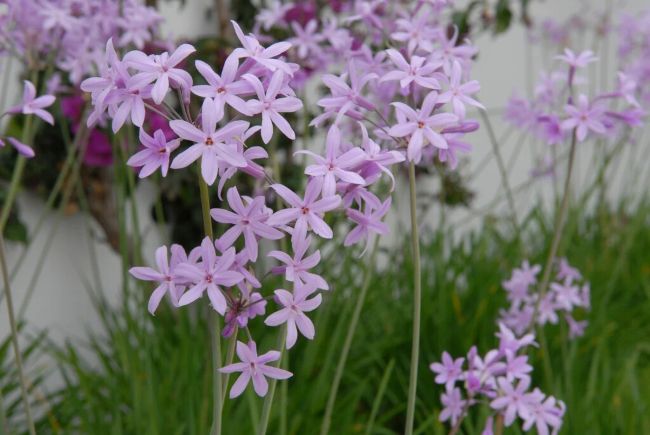
Tulbaghia violacea
As we move into late summer, many herbaceous perennials are at their peak, and it’s the perfect time to give them a little extra attention. One issue to watch out for is slug damage, especially on plants like Hostas, Phlox, and Lupins. These pests can quickly undo all your hard work. If you notice signs of slug activity, such as chewed leaves or slime trails, consider applying slug nematodes (biological control) to the soil—an effective and wildlife-friendly solution.
Below are care notes for our current batch of summer-flowering perennials, covering feeding, pest and disease control, support, and propagation.
Achillea ‘Paprika’
- Feeding: Light spring feed with a balanced fertiliser.
- Pests/Disease: Powdery mildew in dry spells; generally pest-free.
- Support: May need staking in rich soils.
- Propagation: Divide in spring or autumn.
Agapanthus (africanus ‘Albus’, ‘Big Blue’, ‘Midnight Star’)
- Feeding: Use a high-potash fertiliser (e.g. tomato feed) during flowering.
- Pests/Disease: Slugs/snails may attack young growth. Avoid soggy soil to prevent rot.
- Support: Not required.
- Propagation: Divide clumps in spring or sow seed (slow to flower).
Alstroemeria ‘Inca Rio’
- Feeding: Fortnightly feed with high-potash fertiliser in season.
- Pests/Disease: Slugs, aphids, and root rot in wet soil.
- Support: May benefit from light staking.
- Propagation: Divide rhizomes in early spring.
Campanula persicifolia alba
- Feeding: Minimal; a spring feed is sufficient.
- Pests/Disease: Slugs and snails; rust may occur in humid weather.
- Support: Taller varieties may need light support.
- Propagation: Divide or sow seed.
Coreopsis verticillata ‘Moonbeam’
- Feeding: Light spring mulch or feed.
- Pests/Disease: Few issues; mildew in overcrowded conditions.
- Support: Usually self-supporting.
- Propagation: Divide or take basal cuttings.
Gaura ‘Flamingo Pink’
- Feeding: General-purpose feed in spring.
- Pests/Disease: Rare issues; may suffer in waterlogged soils.
- Support: Light support in exposed spots.
- Propagation: Softwood cuttings in spring.
Helenium ‘Sahin’s Early Flowerer’
- Feeding: Compost or liquid fertiliser during growth.
- Pests/Disease: Susceptible to mildew and occasional aphids.
- Support: Often needs staking.
- Propagation: Divide in spring.
Hosta ‘Sum & Substance’
- Feeding: Apply slow-release fertiliser in spring.
- Pests/Disease: Highly susceptible to slugs—apply nematodes early in the season.
- Support: None needed.
- Propagation: Divide clumps in spring/autumn.
Liatris spicata
- Feeding: Balanced spring fertiliser.
- Pests/Disease: Rot in overly wet soils.
- Support: May need light staking.
- Propagation: Divide corms in spring.
Lupin ‘Noble Maiden’
- Feeding: High-potash feed encourages flowering.
- Pests/Disease: Slug and aphid-prone—especially lupin aphids.
- Support: Flower spikes benefit from staking.
- Propagation: Sow fresh seed or take basal cuttings.
Phlox paniculata (Blue Paradise, David, Rijnstroom)
- Feeding: Balanced spring feed and compost mulch.
- Pests/Disease: Powdery mildew, slugs, and spider mites. Consider nematodes early on.
- Support: Tall stems require staking.
- Propagation: Divide or take stem cuttings.
Rudbeckia fulgida ‘Deamii’
- Feeding: Light spring feed or compost mulch.
- Pests/Disease: May suffer from leaf spot or slugs.
- Support: Generally self-supporting.
- Propagation: Divide or sow seed.
Salvia nemorosa ‘Dark Matter’
- Feeding: Spring fertiliser; low maintenance.
- Pests/Disease: Mostly disease-free; may get mildew.
- Support: Compact habit—no staking needed.
- Propagation: Divide or use softwood cuttings.
Tulbaghia violacea
- Feeding: Occasional balanced feed.
- Pests/Disease: Rarely troubled by pests; dislikes wet feet.
- Support: None needed.
- Propagation: Divide clumps in spring.
By keeping an eye on your plants now—especially for early slug signs—and using effective controls like slug nematodes, you can maintain a healthy, vibrant border right through to autumn.