January Gardening Task Calendar – England (UK)
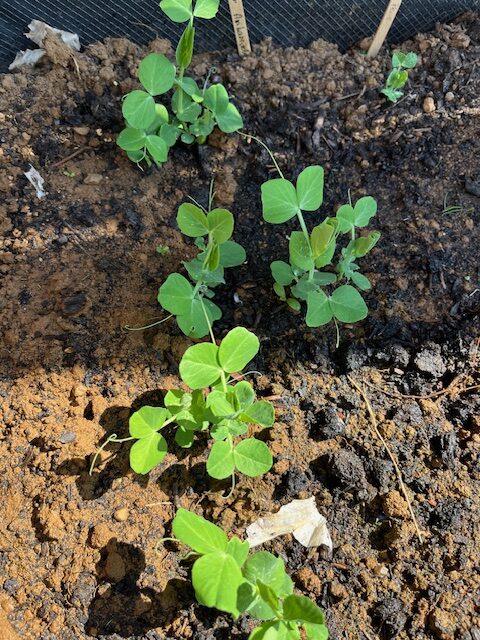
Peas just starting to shoot late winter
Focus for January
Planning, protection, pruning, soil care, and preparing for early sowings under cover. Outdoor growth is minimal, but this month sets the foundation for the whole year.
Gardening Tip: January is ideal for structural work and maintenance. With deciduous plants bare, you can clearly see the ‘bones’ of your garden, making it easier to identify pruning needs and plan improvements.
Seasonal Sowing & Planting (Fruit & Vegetables)
Under cover / indoors
- Broad beans (early varieties) – Sow in pots or modules in a cold greenhouse or porch to get a head start. These hardy legumes can tolerate cold and will be ready to transplant in March. Choose varieties like ‘Aquadulce Claudia’ for early sowing.
- Peas (early types) – Sow in pots or guttering under cover; transplant later. Guttering makes transplanting easy as you can slide the whole row into a prepared trench without disturbing roots. Try ‘Kelvedon Wonder’ or ‘Meteor’.
- Onions (from seed) – Sow in trays or modules under cover for strong early plants. Module sowing produces better-sized bulbs than direct sowing. Keep at 10-15°C for germination. Varieties like ‘Ailsa Craig’ work well from January sowings.
- Salad leaves (winter lettuce, spinach) – Light sowings in the greenhouse for early harvesting. Choose bolt-resistant varieties and sow successionally every 2-3 weeks for continuous supply. ‘Winter Density’ lettuce is reliable.
- Herbs (parsley, coriander) – Sow lightly indoors; slow germination, but worthwhile. Parsley can take 3-4 weeks to germinate – pre-soaking seeds overnight helps. Keep compost consistently moist but not waterlogged.
Planting
- Garlic – Finish planting cloves if not already done; push into soil with tips just below surface. Garlic needs a cold spell (vernalisation) to form good bulbs. Space 15cm apart in rows 30cm apart. Mulch after planting to suppress weeds.
- Fruit trees & bushes (bare-root, weather permitting) – Plant only if soil is not frozen or waterlogged. Bare-root stock is cheaper and establishes better than pot-grown plants. Heel in temporarily if conditions aren’t suitable. Water well after planting even in winter.
Gardening Tip: Always check weather forecasts before ordering bare-root stock. If severe frost is predicted, delay delivery or be prepared to heel plants into a sheltered trench until conditions improve.
Pruning & Plant Care
- Apple & pear trees – Prune now while dormant to shape, remove crossing branches, and encourage fruiting. Feed lightly after pruning and apply winter wash if needed. Cut to outward-facing buds to create an open goblet shape. Remove the “3 Ds”: dead, diseased, and damaged wood first. Clean tools between cuts to prevent disease spread.
- Currants & gooseberries – Remove old, congested wood to improve airflow and cropping. Blackcurrants fruit on young wood, so remove up to one-third of old stems at ground level. Red and white currants fruit on old wood, so just thin and shape. This reduces disease risk and improves fruit size.
- Roses (if mild) – Remove dead or diseased wood only; main prune later. January pruning is light – save major work for March. Cut any stems with die-back to healthy white pith. Burn or bin diseased material; don’t compost it.
- Climbers (wisteria, grapes) – Winter prune to control size and improve flowering/fruiting. Wisteria needs January pruning to reduce long summer growth to 2-3 buds – this encourages flower formation. Grapevines can be pruned now while fully dormant; expect “bleeding” sap if you wait until March.
Gardening Tip: Prune on dry days when possible to reduce infection risk. Make clean cuts just above a bud at a slight angle to prevent water collecting on the wound.
Planting & Propagation
- Hardwood cuttings – Take cuttings of currants, dogwood (Cornus), willow and grape vines. Cut healthy, pencil-thick stems from this year’s growth into 20-30cm lengths. Insert two-thirds into soil or a sheltered trench. These slow-rooting cuttings need 12 months but are a free way to propagate shrubs.
- Check stored tubers and bulbs – Inspect dahlias and cannas for rot or drying out. Store in barely damp compost or newspaper in a cool, frost-free place. Remove any showing signs of rot immediately to prevent spread. If tubers are shrivelling, mist lightly with water.
- Plan new planting areas – Finalise decisions on trees, hedging, and spring borders while the structure is visible. Measure spaces accurately, check mature plant sizes, and consider year-round interest. Order now for planting in February-March when conditions improve.
Gardening Tip: Keep a garden journal noting what worked well last year and what didn’t. Review it now while planning your spring garden to avoid repeating mistakes.
Lawn Care
- Stay off frosty or waterlogged lawns – Prevent compaction and damage. Walking on frozen grass breaks the cell structure, leaving brown footprints visible for weeks. Waterlogged soil compacts easily and squeezes out oxygen needed by grass roots.
- Clear debris and leaves – Reduce moss and disease risk. Leaves block light and trap moisture, encouraging fungal diseases. Use cleared leaves for leaf mould or add to compost in thin layers.
- Mower maintenance – Clean, sharpen blades, and service mower ready for spring. A sharp blade cuts cleanly; a blunt blade tears grass, leaving brown edges that are entry points for disease. Change oil and air filters, check spark plugs, and test the mower runs smoothly.
- Plan improvements – Consider clover integration or overseeding plans for spring. Micro-clover lawns need less mowing, fertilising, and watering than pure grass. Plan any levelling work or new lawn areas while ground is visible.
Gardening Tip: Never mow when frost is forecast – it stresses grass severely. First mows of the year should be on the highest setting to avoid scalping.
Soil Preparation
- Improve soil structure – Spread well-rotted compost or manure on empty beds (do not dig frozen soil). A 5-7cm layer improves soil structure, feeds soil life, and suppresses weeds. Let worms incorporate it naturally – digging destroys soil structure. Only spread on frost-free days when soil isn’t waterlogged.
- Cover vegetable beds – Use cardboard, compost, or mulch to suppress weeds and protect soil. This no-dig method preserves soil structure and beneficial organisms. Cardboard (weed-suppressing layer) topped with compost (feeding layer) works excellently for new beds.
- Compost heap management – Turn if conditions allow; add greens/browns evenly to keep decomposition active. Aim for 50:50 green (nitrogen-rich) to brown (carbon-rich) materials. Turning adds oxygen needed by decomposer organisms. Add a compost activator or urine if the heap is too dry or slow.
Gardening Tip: Never work soil when it’s waterlogged or frozen – you’ll destroy the structure and create hard clods. Test by squeezing a handful: if water drips out, it’s too wet; if it forms a solid ball, wait longer.
Maintenance & Infrastructure
Greenhouse jobs
- Clean glass to maximise light – January light levels are already low; dirty glass reduces them by 30-40%. Clean inside and outside with warm water and eco-friendly detergent. Good light is essential for healthy seedling growth.
- Wash pots, trays, and tools – Use hot water and horticultural disinfectant. Dirty pots harbour pests and diseases. Stack clean containers by size for easy access during busy spring sowing.
- Check heaters, vents, and staging – Test heaters work and thermostats are accurate. Clean automatic vent openers and ensure they move freely. Repair loose staging before it’s loaded with seedlings.
Supports & structures
- Inspect tree ties, wires, and stakes – Loosen any ties that are cutting into bark as trees grow. Check stakes are still firm and haven’t rotted at ground level. Winds are often strongest in January-February, so secure everything now.
- Repair fencing and trellis while plants are dormant – It’s much easier to work on structures before climbing plants leaf out. Treat wooden supports with plant-safe preservative. Replace weak sections rather than patching if they’ve rotted.
Tools
- Clean, oil, and organise hand tools – Remove rust with wire wool and oil, then coat metal parts with vegetable oil or WD-40. Sharpen spades, hoes, and secateurs for clean cuts. Repair or replace broken handles now.
- Restock seed trays, labels, fleece, and netting – Check what you have before buying more. Wash and save old labels. Order seed compost, vermiculite, and propagating supplies before the spring rush.
Gardening Tip: Create a “spring sowing station” in your greenhouse or shed with everything you’ll need within easy reach: compost, trays, labels, pencil, dibber, and watering can with fine rose.
Wildlife & Winter Protection
- Feed birds regularly – Use high-energy foods; keep feeders clean. Birds need fat-rich foods (suet, sunflower hearts, peanuts) to survive cold nights. Clean feeders weekly with dilute disinfectant to prevent disease spread. Provide fresh water daily.
- Check wildlife shelters – Leave hedgehog homes, log piles, and compost heaps undisturbed. Hedgehogs and other wildlife may be hibernating. Resist tidying these areas until March-April when hibernation ends.
Pond care
- Keep a small area ice-free – Use a floating ball or kettle of hot water – never smash ice. Smashing ice sends shock waves that can harm fish and hibernating amphibians. An ice-free area allows toxic gases to escape and oxygen to enter.
- Remove fallen leaves if safe to do so – Leaves decompose and create toxic gases. Use a net or pond rake if you can reach safely. Don’t walk on frozen pond edges.
Plant protection
- Check fleece and wraps on tender plants – Ensure fleece hasn’t blown off or torn. Check underneath for pest problems. Replace damp or damaged wraps. In very cold snaps, add extra layers or move pots to even more sheltered spots.
- Move vulnerable pots closer to walls or under cover – South-facing house walls provide several degrees of frost protection. Group pots together – they insulate each other. Stand on pot feet or bricks to prevent waterlogging and root freezing.
Gardening Tip: Wildlife gardening in winter pays dividends in summer. Birds that survive winter in your garden will stay to eat aphids and caterpillars in spring and summer.