Heating a Garden Room Through Winter: The Options, and What They Really Cost to Run
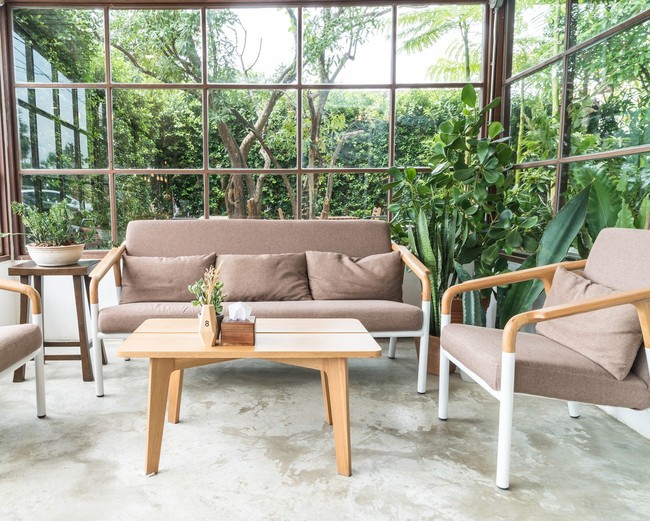
Garden rooms have quietly become one of the most useful additions a British garden can have. Home offices, studios, gyms, potting rooms doubling as somewhere to sit with a coffee when the weather turns: the buildings themselves have improved enormously, and plenty are now built to a standard that would not embarrass a house extension.Heating, however, is nearly always the afterthought. The building goes up in spring, gets used happily through summer, and then some time in late October the owner discovers that a plug-in fan heater running eight hours a day is an expensive way to keep a small room at twenty degrees. Getting this right at the planning stage costs very little. Retrofitting it afterwards costs considerably more.
Insulation comes before heating, every time
This is the least interesting advice in the article and by far the most important. A garden room is a small building with a very high ratio of external surface to internal volume, which means it loses heat far faster per square metre than a room inside your house. Whatever heating system you choose is fighting that.
Look at the floor first, because it is the element most often skimped on and the one you cannot fix later without taking the room apart. Then the roof, then the walls. Airtightness matters as much as insulation thickness: gaps around the door, an ill-fitting window and an uninsulated service penetration will undo a lot of good work.
Glazing is usually the biggest single weak point. Those full-width bifolds that make garden rooms look so appealing in the brochure are also the route by which most of your heat leaves. Double glazing with a decent thermal break is the minimum worth considering if you intend to use the building in January.
Get this right and a small garden room may need only a kilowatt or two of heat. Get it wrong and you will be feeding three kilowatts into it and still feeling a draught.
Option one: electric panel and infrared heaters
The default choice, because it is the easiest. Fix a panel to the wall, wire it in, done.
Every electric heater converts essentially all the electricity it draws into heat, so you will sometimes see them advertised as one hundred per cent efficient. That is technically true and slightly misleading, because the number that matters to you is the price per unit. Electricity costs roughly three to four times as much per kilowatt hour as mains gas, so an electric heater delivering the same warmth as a gas-fed radiator will cost several times more to run.
Infrared panels are a variation worth knowing about. Rather than warming the air, they warm the surfaces and people in their line of sight, which can feel comfortable at a lower air temperature and works well in a room that is used intermittently. They are still resistive electric heating, so the running cost caveat applies in full.
Verdict: sensible for a room used a few hours a week. Expensive as a primary heat source for a garden office occupied every weekday.
Option two: an air-to-air heat pump
This is the option most people overlook, largely because it usually arrives labelled as air conditioning. A wall-mounted split unit with an outdoor condenser will both heat and cool, and for a garden room it is often the single best all-round answer.
The reason is efficiency. Rather than converting electricity directly into heat, a heat pump moves existing heat from outside to inside, and typically delivers around three to four units of heat for every unit of electricity it consumes. That transforms the running cost arithmetic compared with a panel heater, even accounting for the higher price of electricity.
It also solves the summer problem. A well-insulated, heavily glazed garden room facing south can become genuinely unpleasant in July, and a system that reverses to cooling earns its keep twice a year.
The trade-offs are the outdoor unit, which needs somewhere sensible to sit and does make some noise, a higher installation cost, and the fact that the work must be done by an installer qualified to handle refrigerants.
Option three: electric underfloor heating
Thin heating mats laid under the floor covering give a very even, comfortable warmth with no wall-mounted units and nothing taking up space in what is often a small room. Build-up height is minimal, which matters when the floor is already sitting on a raised frame.
The catch is the same as with any resistive electric system: running cost. In a small, genuinely well-insulated garden room used for a few hours at a time, that is manageable. Across a larger building in constant use, it adds up quickly.
It is worth understanding how the technology differs between electric mats and water-fed systems before committing, since the running costs are not remotely comparable. There is a useful overview of both types here: https://plumbheating.co.uk/underfloor-heating/.
One practical point: decide the floor covering before the system is specified. Thick carpet over an underfloor system insulates the room from its own heating.
Option four: extending the house heating system out to the building
For a garden room used daily, particularly one close to the house, running a wet circuit out from the existing boiler is often the best long-term answer. You get the lowest running cost of any option, because you are heating with gas rather than electricity, and a radiator or wet underfloor loop in the garden room behaves exactly like any other room on the system.
It is also the most involved installation. Pre-insulated underground pipework has to be trenched from the house to the building at a sensible depth, well away from anything you might later dig up. The building needs its own zone valve and thermostat so it is not being heated on the same schedule as your bedrooms. And critically, someone has to confirm that the existing boiler and pump have the spare capacity to serve the additional load. Adding a radiator to a system that is already working at its limit simply means everything heats up more slowly.
That capacity question is the one homeowners most often skip, and it is the reason this job belongs with a heating engineer rather than a general builder. Plumb Heating Ltd, which handles central heating installation and system alterations across Hertfordshire, will assess the existing system before quoting rather than simply pricing up the extra radiator. If the boiler cannot support it, you want to know that before the trench is dug.
One thing to rule out early: running a gas supply to a detached outbuilding is a specialist job involving flue and ventilation requirements that rarely make sense for a small garden room. Extending the wet circuit from the house is almost always the practical route.
What about a wood burner?
Charming, and occasionally the right answer for a studio or workshop. But small stoves start at outputs that will comfortably overheat a well-insulated garden room, and they bring a flue, a hearth, clearances to combustibles, ventilation requirements and a fuel store into a building where space is already tight. They also need someone present to light them, which rather defeats the purpose for a home office. Consider it a lifestyle choice rather than a heating strategy.
Do not forget the pipework and the frost
If your garden room has a sink, a loo, or a wet heating circuit, you have water sitting in pipes in a building that may be unheated for days at a time. That is a burst waiting for the first hard frost.
Pipework running outdoors or through unheated voids needs proper insulation, and a wet system should have a frost thermostat that fires the heating when temperatures approach freezing regardless of the programmer. If the building will genuinely stand empty over winter, draining down is the safer option.
The same applies to your outside tap, which is worth isolating and draining every autumn. A burst supply pipe under a lawn is not an obvious failure. It is often noticed only as a soggy patch of grass that never quite dries out, or a water bill that has crept up for no apparent reason.
Regulations worth knowing about
Electrical work supplying a detached outbuilding is notifiable, so the cable run and consumer unit need to be done by a competent electrician who can certify the installation. Depending on floor area, distance from boundaries and how the building is used, building regulations may also apply. Anything involving a gas appliance or the gas supply must be carried out by a Gas Safe registered engineer, and you are entitled to see the card.
For work that ties into your existing central heating, it is worth having a qualified heating engineer look at the whole system rather than treating the garden room as an isolated project. Adding load to a system that is already sludged or undersized tends to expose problems that were previously just about tolerable.
A short checklist before you commit
- Insulate the floor, roof and walls properly, and take airtightness seriously. Everything else depends on it.
- Work out honestly how many hours a week the room will actually be occupied. That single number drives the whole decision.
- Occasional use: electric panels or infrared are fine and cheap to fit.
- Daily use: an air-to-air heat pump or a wet circuit from the house boiler will cost far less to run.
- Heavily glazed and south facing? Prioritise something that can cool as well as heat.
- Extending the house system? Confirm boiler and pump capacity before anything else happens.
- Any water in the building means frost protection, or a plan to drain it down each autumn.
- Give the garden room its own thermostat and schedule. Heating an empty office all morning is the most common waste of all.
A garden room that is genuinely comfortable in February is a different building from one that is only usable between April and September. The difference is rarely the heater itself. It is the insulation underneath it and the decision, made early, about how the building will actually be used.