Proposed Stream Planting – Enhancing Privacy, Structure and Seasonal Interest
This proposed stream planting scheme shows how new planting can be carefully woven into the existing landscape to enrich the stream corridor, improve privacy, and introduce a greater range of seasonal colour — all while respecting what is already working well on site.
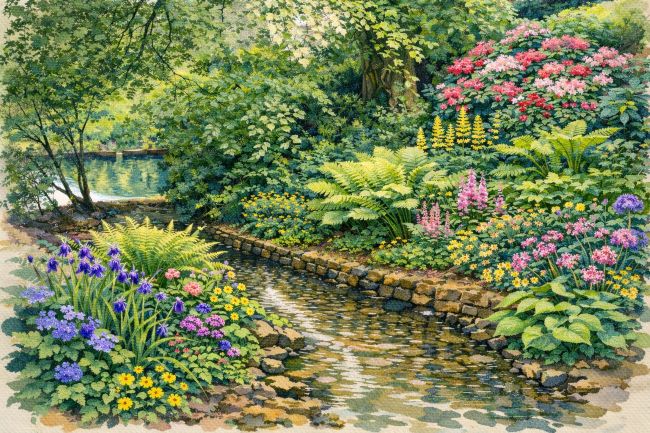
Looking down the stream
1. View Looking Down the Stream
The first illustration shows the stream when viewed from above, with additional planting gently mixed in amongst the existing plants.
The intention here is not to overwhelm the space, but to soften the banks, add depth and texture, and create a more natural, layered feel as the stream flows through the garden. New plants are selected to complement the current planting, enhancing movement and interest throughout the year.
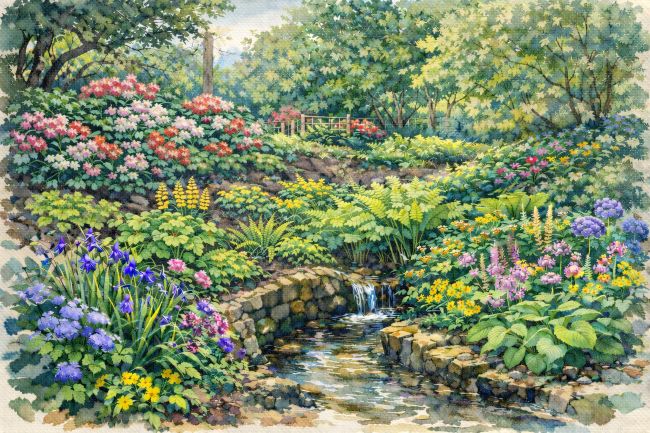
Looking up the stream to the bridge
2. View Looking Up Towards the Waterfall
The second illustration looks upstream towards the waterfall. Existing gunneras are retained as key structural plants, anchoring the scene with their bold foliage.
On the right-hand side, azaleas and rhododendrons are introduced to increase privacy and bring a strong burst of flowering interest in spring and early summer. This area becomes richer, more enclosed, and visually engaging, while still feeling integrated with the rest of the stream planting.
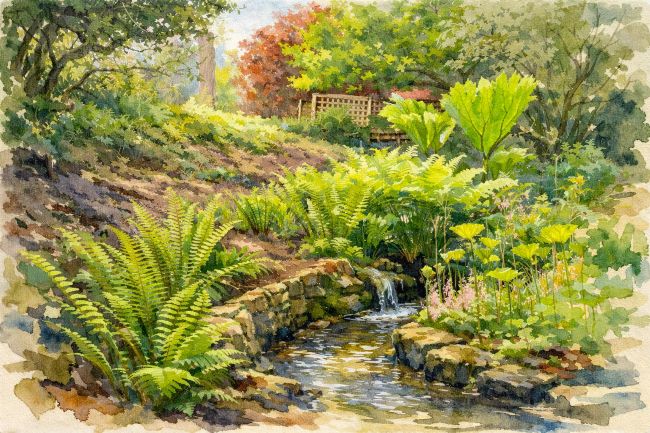
Stream as it is now
3. Existing Stream – Before Planting
The final illustration shows the stream as it currently stands, prior to any new planting. This includes the established gunnera and the trellis bridge at the top of the stream.
This view provides a clear reference point, highlighting how the proposed planting builds on the existing framework rather than replacing it.
Overall Design Approach
The aim of this scheme is to enhance the stream setting by:
- Retaining strong existing plants where they already work well
- Introducing additional flowering shrubs for colour and seasonal impact
- Improving privacy without creating heaviness
- Maintaining a natural, cohesive flow through the landscape
The result is a stream garden that feels more immersive, colourful, and private, while still sitting comfortably within its surroundings.
Overall Planting Logic (Top → Stream)
Tall shrubs at the top, transitioning through bold perennials and ferns, down to moisture-loving plants at the water’s edge. This mirrors how woodland naturally grades.
1. Upper Bank Structure (Shrub Layer)
(Drier than the stream edge, acidic soil, dappled shade)
- Rhododendron (compact to medium forms rather than huge hybrids)
- Deciduous Azalea (excellent light, autumn colour, and spring flowers)
- Hydrangea (macrophylla or serrata, woven between shrubs)
- Fothergilla
- Viburnum (opulus, plicatum, or davidii)
💡 Underplant these heavily with epimedium, hellebores, and ferns to avoid bare soil.
2. Mid-Bank (Main Woodland Perennial Layer)
(Moist but free-draining, broken shade)
Structural & Foliage Plants
- Rodgersia
- Ligularia
- Astilboides tabularis
- Darmera peltata
- Filipendula
Ferns
- Polystichum setiferum
- Dryopteris filix-mas
- Athyrium niponicum ‘Pictum’
- Osmunda regalis (towards damper pockets)
These form the visual “body” of the bank and hold it together year-round.
3. Flowering Woodland Perennials
(Threaded through mid-bank and edges)
Spring → Early Summer
- Primula candelabra
- Primula denticulata
- Pulmonaria
- Brunnera macrophylla
- Epimedium
- Helleborus
Summer → Early Autumn
- Astrantia
- Actaea (Cimicifuga)
- Thalictrum
- Anemone (spring and autumn types)
These provide seasonal rhythm without competing with the shrubs.
4. Stream Edge & Lower Bank
(Consistently moist soil)
- Iris sibirica
- Caltha palustris
- Darmera peltata
- Rodgersia
- Filipendula
Let these blur into the water’s edge so the stream feels embedded, not edged.
5. Groundcover & Binding Plants
(Crucial for stability and cohesion)
- Epimedium
- Tiarella
- Geranium phaeum
- Waldsteinia ternata
These are the “glue” that makes the whole scheme read as woodland rather than individual plants.