Low Soil pH and Bare Patches in Your Lawn – Causes and Solutions
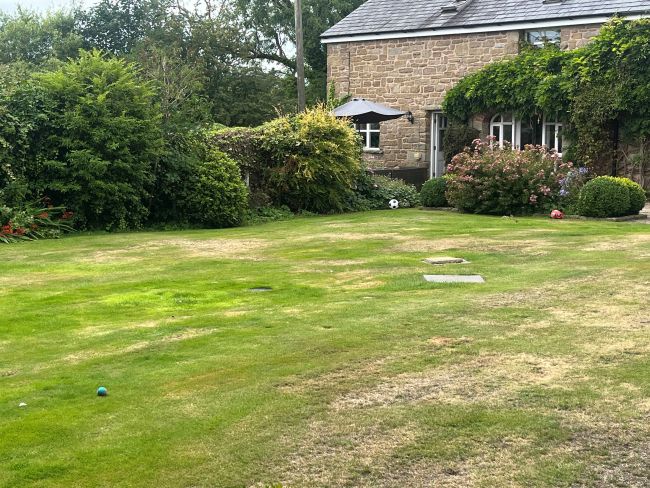
If your lawn is suffering from bare patches, thatch build-up, and ant problems, one of the underlying issues may be that the soil pH is too low (too acidic). Grass prefers a slightly acidic soil, ideally around pH 6.0 to 6.1, and when the pH falls below this range, growth weakens, weeds and moss creep in, and bare patches appear.
Here’s a step-by-step guide to getting your lawn back on track.
1. Addressing Soil pH
- Test the Soil: Start with a soil test kit to check the exact pH level. This will tell you if acidity is the root of the problem.
- Apply Bio-Lime Fertilizer: If the soil is too acidic, apply a Bio Lime product to raise the pH.
- Application rate: Around one handful per square metre.
- Water in: Either water it in gently or allow rainfall to help it absorb.
- Application rate: Around one handful per square metre.
By adjusting the pH, you create a healthier environment for grass roots and reduce the conditions that encourage moss and weeds.
2. Managing Thatch and Ant Problems
Thatch Control
Thatch is the layer of dead roots and stems that builds up between the soil and the green grass blades. Too much thatch prevents water and nutrients from penetrating the soil and creates a dry, fibrous environment that ants love.
- Apply beneficial fungi and bacteria to naturally break down the thatch.
- These come in liquid or granular form and work best on moist lawns.
Ant Control
Ants thrive in dry, thatch-rich lawns. Reducing thatch is the first step, but you can also:
- Use wetting agents: A light spray of water mixed with a few drops of washing-up liquid or baby shampoo helps keep the surface moist.
- Introduce nematodes: Specifically, Steinernema feltiae, a biological control that targets ants safely.
3. Alternative Solution – Clover Lawn
If you want a low-maintenance alternative, consider overseeding your lawn with microclover. This creates a green, tough surface that needs less feeding and naturally suppresses weeds.
👉 Learn more about the benefits of a microclover lawn here.
4. Additional Lawn Care Tips
- Aeration: Spike or hollow-tine aerate the lawn to improve drainage and reduce compaction.
- Fertilisation: Use a balanced, slow-release fertiliser to strengthen the grass.
- Regular Maintenance: Mow regularly, repair bare patches quickly, and keep weeds under control.
The Outcome
Once the soil pH has been raised, the grass will recover, thatch will break down naturally, and the ants will find the environment less attractive. Within a season, your lawn should start to thicken and look much healthier.