Reversion on shrubs
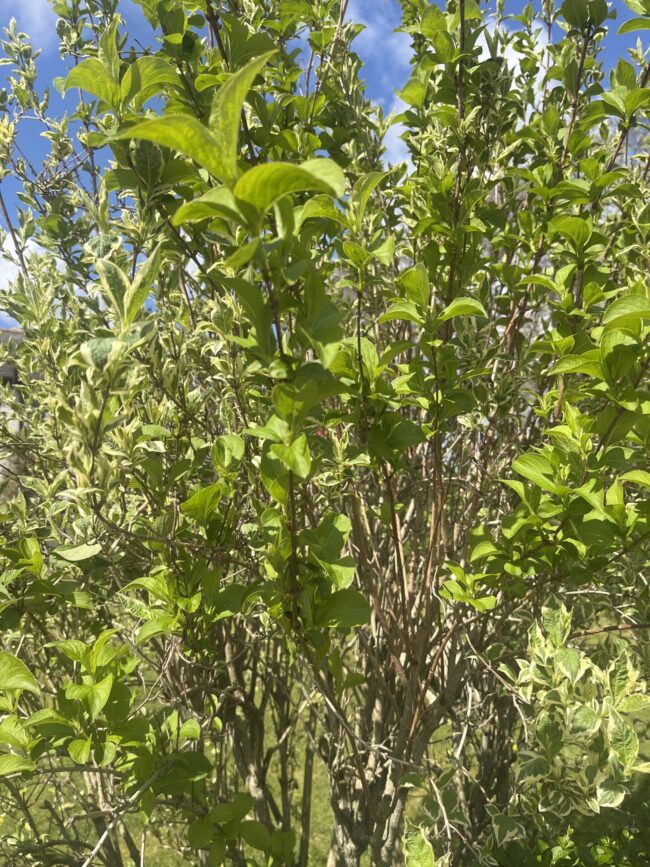
Reversion in Variegated Shrubs – Why Green Shoots Appear and What to Do
Variegated shrubs are popular in gardens because of their attractive foliage—typically a mix of green with white, cream, or yellow markings. A common example is a variegated weigela, where the leaves provide colour and contrast even when the plant isn’t in flower. However, from time to time you may notice strong, plain green shoots emerging from the plant. This is known as reversion.
What is Variegation?
Variegation occurs when parts of a leaf lack chlorophyll (the green pigment responsible for photosynthesis). These areas appear white, cream, or yellow. In most garden shrubs, this is due to a genetic mutation within the plant, meaning different parts of the same plant can behave slightly differently.
Because the pale sections of the leaf contain less chlorophyll, they are less efficient at producing energy compared to fully green leaves.
Why Reversion Happens
Occasionally, a shoot will revert back to its original, non-variegated (fully green) form. This happens because:
- The plant naturally tries to maximise energy production
- Fully green shoots contain more chlorophyll
- These shoots grow faster and more vigorously than variegated ones
In a variegated weigela, these green shoots can quickly become dominant if left unchecked.
Will All Green Shoots Stay Green?
Not always. On some plants, new growth can emerge green initially and then develop variegation as the leaves mature.
However, in cases like your weigela—where the shoots are clearly strong, fully green, and showing no signs of variegation—these are true reverted shoots and will remain green permanently.
Why It Matters
If green reverted shoots are not removed:
- They will outgrow and overshadow the variegated parts
- Over time, they can take over the entire shrub
- The plant may eventually lose its variegation altogether
This is because the stronger green growth diverts the plant’s energy into itself.
What to Do
The solution is simple but important:
- Remove green shoots as soon as you spot them
- Cut them right back to their point of origin, ideally at the base or where they join a main stem
- Don’t just trim the tips—this will encourage more vigorous regrowth
Regular checking during the growing season will keep the plant true to type.
Reversion is a natural process where variegated plants produce stronger, fully green shoots. While interesting from a botanical point of view, it’s something that needs managing in the garden. With prompt pruning, you can maintain the decorative variegation and keep shrubs like weigela looking as intended.