Keeping a wildlife pond clear: planting, prevention and practical algae control
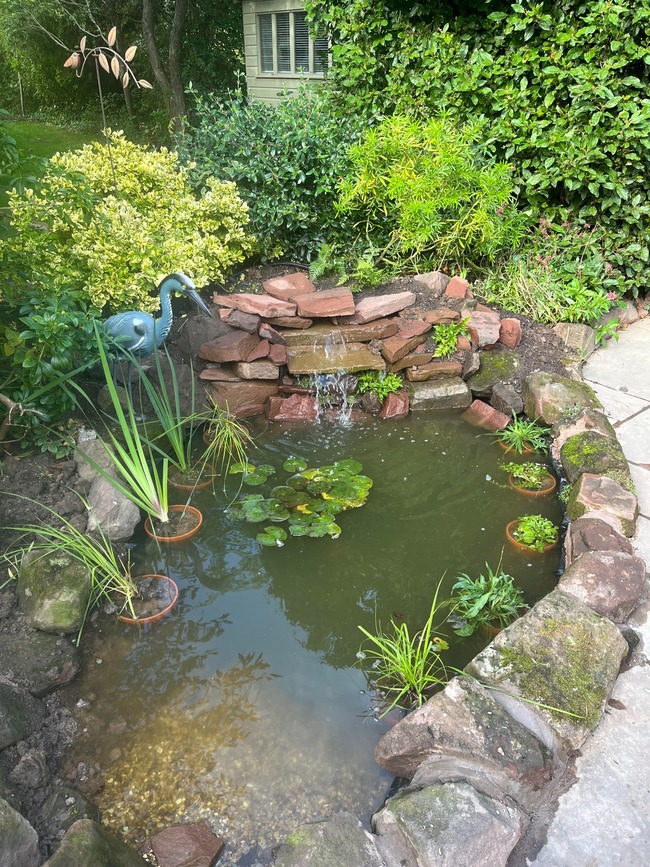
Green water and tangled strands of blanket weed can take the shine off a newly built pond. However, keeping them manageable begins with the way the pond is constructed and planted, followed by a few regular maintenance tasks.
At GardenAdvice, we normally build wildlife-style ponds. In our experience, their generous planting areas, natural margins and varied depths make them easier to manage, including controlling excessive algae growth.
Start with a pond that supports healthy planting
Our designs combine shallow planting shelves, gently sloping beaches and deeper sections of water. We also use suitable topsoil or loam in the base after construction to provide rooting areas for aquatic plants.
The material needs to be low in nutrients and suitable for pond planting. Soil enriched with fertiliser, manure or compost can feed algae by releasing nutrients into the water.
Beaches provide easy access for wildlife, while planted margins give aquatic plants room to establish. Together, these features create a range of habitats and allow planting to play a substantial role in managing the pond.
Make nutrients work for plants
Algae flourish when conditions suit them, particularly when plenty of light and nutrients are available. Nitrogen, including nitrate, and phosphorus can both contribute to excessive growth.
A well-developed planting scheme helps absorb these nutrients. Suitable reeds and other vigorous marginal plants can be particularly useful, although their spread needs managing. Choose plants appropriate to the pond’s size rather than introducing something that will eventually dominate it.
Submerged oxygenating plants also have a place, alongside plants that shade part of the surface.
As planting becomes established, thin excessive growth and remove dying foliage. Taking that material out of the pond removes the nutrients stored within it, rather than leaving them to return to the water as the vegetation decomposes.
Watch what washes in from the garden
Even a thoughtfully planted pond can develop problems if it receives a steady supply of fertiliser from outside.
Take care when spreading Growmore, lawn feed or other fertilisers nearby. Keep granules away from the water and think about what happens during heavy rain: dissolved fertiliser and loose soil can wash down from neighbouring beds or lawns.
Constructing the edges to divert this runoff helps prevent the pond from becoming a collection point for nutrients from the surrounding garden.
Give the water some depth
A shallow pond with a small volume of water can warm rapidly on a sunny day. Where conditions allow, we prefer to include deeper areas around a metre or more, even when the pond has a relatively modest surface area.
These deeper sections complement the shallow shelves needed by marginal plants. A greater volume of water changes temperature more slowly, while deeper areas can provide cooler conditions.
Depth is only one part of the design, however. It will not prevent algae on its own, and small ponds can still work well with appropriate planting and nutrient control.
Pumps can circulate water through planting or filtration, but circulation mixes the water already present. It does not provide a continuous source of cold water, so shade and planting remain important.
Check new plants before introducing them
New aquatic plants can carry small strands of blanket weed around their stems, roots or baskets. This can happen with plants purchased from aquatic nurseries, and the strands may be difficult to spot at the time of purchase.
At GardenAdvice, we normally keep new plants in separate buckets or suitable containers of water for at least two to three weeks before introducing them to a pond.
Keep them at an appropriate water depth and inspect them regularly. This observation period gives any existing blanket weed a chance to become more noticeable.
If strands appear, remove them and continue checking the plants before planting them out. Avoid tipping the holding water into the pond.
Quarantining plants reduces the chance of introducing unwanted algae, although it cannot guarantee that every plant is completely algae-free.
Choose the treatment to match the problem
Green water and blanket weed are both caused by algae, but they behave differently.
Green water contains microscopic algae floating throughout the water. A heavy bloom can make the pond look like pea soup.
Blanket weed forms long green threads. These cling to plants, rocks and pond surfaces, becoming tangled masses that can spread across the water.
Recognising which problem you have prevents wasted effort, particularly when considering filtration or UV equipment.
Wind blanket weed out regularly
For established blanket weed, one of our most useful tools is a simple cane or stick. Around 1.5 metres long is suitable for many ponds, although the length should match the reach you need.
Put the end into the strands and rotate it slowly. As the weed winds around the cane, gather a manageable amount and lift it out.
Be patient around pond plants. If strands are tightly caught around stems, ease them free instead of pulling hard. Check each clump for pond animals and return any to the water.
During strong summer growth, we may repeat this every day or two. Frequent, gentle removal can be easier than tackling a large mass after it has become tangled throughout the planting. Reduce the frequency as growth slows.
Consider barley straw as a supporting measure
Barley straw comes in bags, mesh socks and pads, with liquid extracts also available.
As straw decomposes, it may release substances that inhibit the growth of some algae. Results vary, and the precise mechanism is not fully understood. It should not be regarded as something that removes all the nitrates or rapidly kills existing blanket weed.
Use it as a possible preventative aid, following the supplier’s instructions for placement, quantity and replacement. Continue managing nutrients and physically removing excessive weed.
Use UV clarification for suspended algae
Where green water persists, a UV clarifier can help treat the suspended algae responsible.
A pump sends water through an enclosed chamber containing a UV lamp, usually working with a filtration system. Water can return through a waterfall or another outlet, depending on the pond’s layout.
Established blanket weed is a different matter. Because it remains attached to plants and other surfaces rather than passing through the unit, UV clarification does not directly remove it.
A pond may therefore need UV clarification for green water alongside manual removal and nutrient management for blanket weed.
Let the pond establish its planting
A new pond takes time to develop. Some algae during establishment do not necessarily mean the design has failed.
Give aquatic plants room to grow, monitor new introductions, prevent nutrient-rich runoff and remove excessive growth regularly. These habits support the wildlife-style ponds we build and help keep maintenance manageable.
The aim is a thriving pond with healthy plants and wildlife, where algae remain part of the habitat without taking over.