Ali’s Garden – January Action Plan
This month marks an exciting shift in Ali’s garden strategy, with a stronger focus on early-season preparation, soil health, and sustainable growing practices. Here’s what we’re working on together.
Overview: What’s Changing This Year
No runner beans will be grown this season – we’re making space for other crops and rethinking the layout. Instead, the focus is on:
- Early-season crops such as salad and potoatoes etc but also chillies, leeks, asparagus, peppers, and broccoli
- Sourcing young plants from Gardener’s Kitchen where it makes sense
- Growing most crops from seed – a cost-effective and rewarding approach
- Soil health improvements including composting, mulching, and strategic feeding
What The GardenAdvice Team Doing This Month
I’ll be handling the essential winter maintenance tasks:
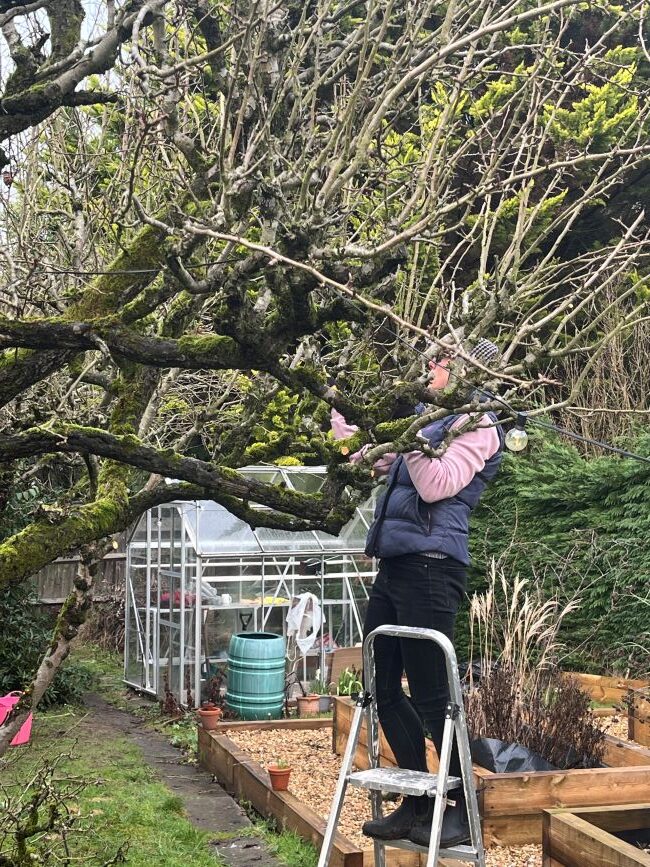
- Finishing all pruning work across the garden
- Supplying and applying grease bands to protect fruit trees
- Applying winter wash to tackle overwintering pests
- Chipping accumulated branches and prunings with my chipper
- Installing pheromone traps for pest monitoring
- Setting up a glasshouse smoker to control greenhouse pests
- Delivering spent mushroom compost (timing to be confirmed with Ali)
Ali’s Focus: Greenhouse & Growing
Ali is getting the greenhouse ready for the season ahead:
- Finishing the greenhouse clean – essential for disease prevention
- Installing temporary wires for training a new grapevine (more on that below)
- Seed sowing using peat pots, seed trays, and seed beds
We’re sourcing some crops as young plants from Gardener’s Kitchen – including chillies, leeks, asparagus, peppers, and broccoli – while everything else will be grown from seed, plus extras such as young celery plants later in the year.
Big Decision: Composting Area
We’re planning to build a proper compost heap or create a simple composting area in the shed zone but this depends on the summer house/office developement. This will:
- Support pumpkin growing (if we proceed with pumpkins this year)
- Increase overall compost output for better soil health
- Be lined with wire mesh at the base as a precaution against rodents
The compost will be fed with spent mushroom compost and green garden waste. More details on composting methods can be found in our composting guide.
Crops & Planting Notes
Key Decisions:
- Pumpkins: Only if the compost heap goes ahead
- Tomatoes: We’re using disease-resistant varieties this year
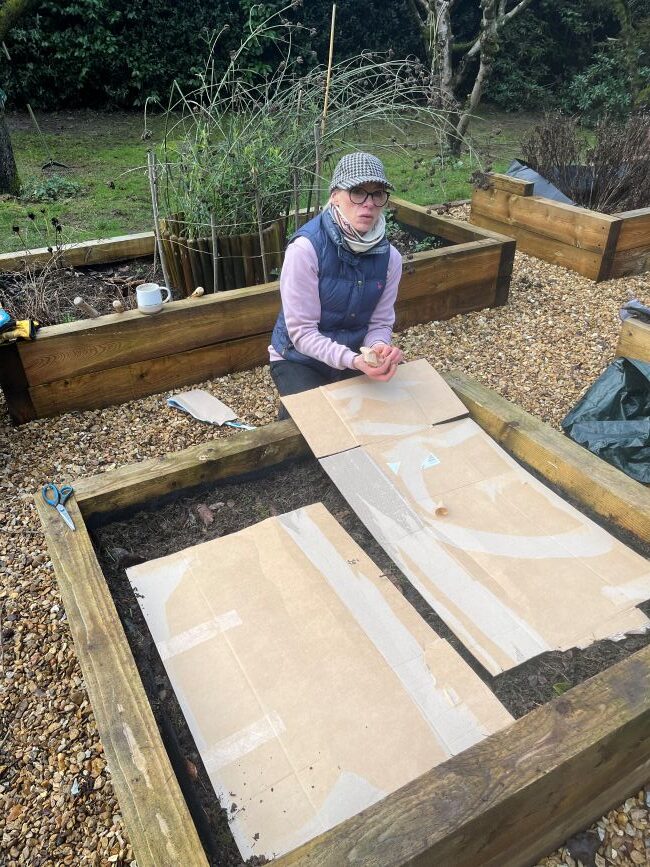
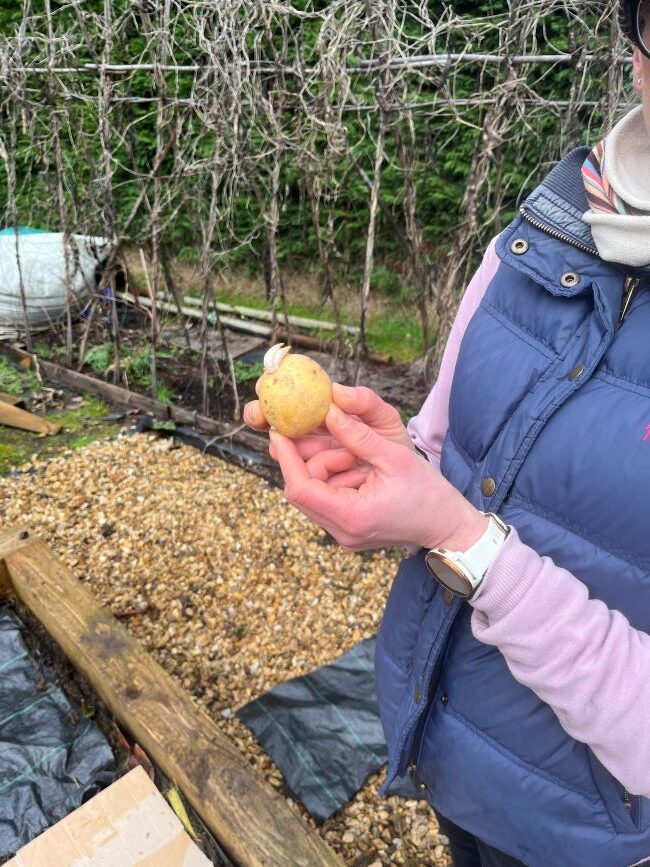
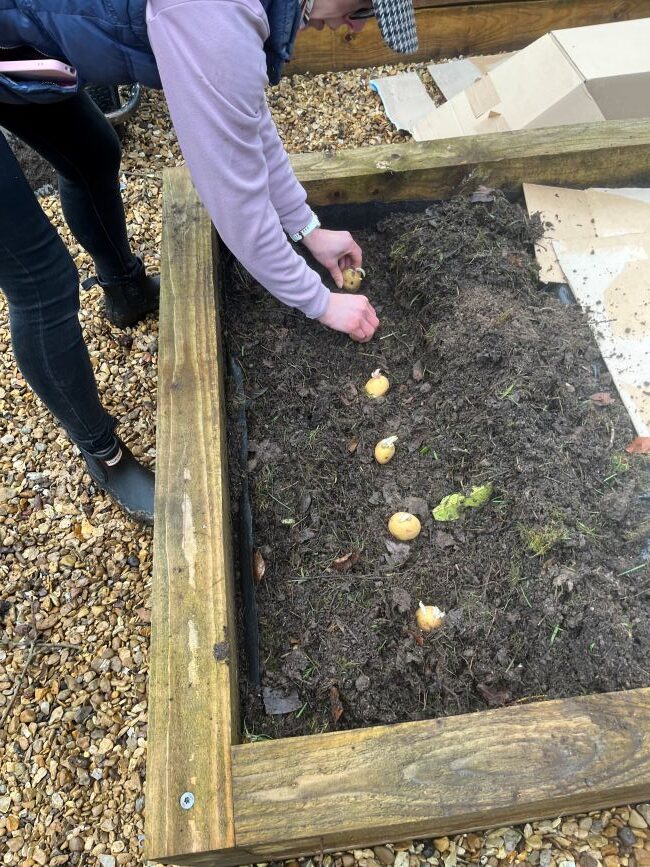
- Potatoes: Will be chitted before planting, grown through cardboard mulch
- Snowdrops: Sorting and replanting “in the green” for best results
- Raspberries & blackcurrants: Considering reintroducing them where the runner beans grew last year
Grapevine Plan
We’re buying a grapevine in a large container, training it on removable wires in the greenhouse. This gives flexibility to relocate it later if needed.
Pest Management & Biodiversity
We’re taking a balanced approach to pests:
- Creating Toad habitats within crops
- Developing a snail action plan (ongoing)
- Encouraging frogs as natural pest control – learn more about wildlife-friendly gardening
- Monitoring rodents incidentally rather than actively managing (currently low concern)
Soil Health & Disease Prevention
Every bed will be fed with Growmore fertiliser at a rate of 1 handful per square metre.
We’re also using cardboard mulch over raised beds – a fantastic technique to:
- Suppress weeds
- Retain moisture
- Reduce mildew (which was linked to last year’s compost)
- Allow planting or sowing straight through the cardboard
This is especially important for potatoes. More on cardboard mulching here.
Ornamental Care: Shrubs & Structure
Early-season work (“first light”) will focus on borders, shrubberies, and overall garden structure:
- Hydrangea (front): Check and prune if needed
- Lavender: Light pruning – never cut into dark, dead wood
- Weigela: Prune back as required
- Yucca: Check for green, active growth
- Euonymus: General condition check
We’re also reviewing crop rotation across the beds to maintain soil health and reduce disease pressure.
Lawn Care: Clover Overseeding
Ali’s lawn will be overseeded with clover this year. This simple change:
- Improves soil health through nitrogen fixation
- Reduces the need for feeding
- Increases resilience and supports biodiversity
More on lawn care and clover lawns.
Special Project: Tree Growing
Ali is involved in our Young Gardeners Tree Project, where young people grow trees from seed. It’s a brilliant long-term investment in the environment and a rewarding educational activity.
👉 Learn more about the Young Gardeners Tree Project
Summary
January is all about preparation, structure, and soil health. From greenhouse readiness to composting plans, pest balance to early pruning, Ali’s garden is being set up for a productive and sustainable growing year.
If you’d like personalized advice for your own garden, or help planning your growing season, get in touch.
Related Resources: