
Quick Guide to Carnivorous Plants
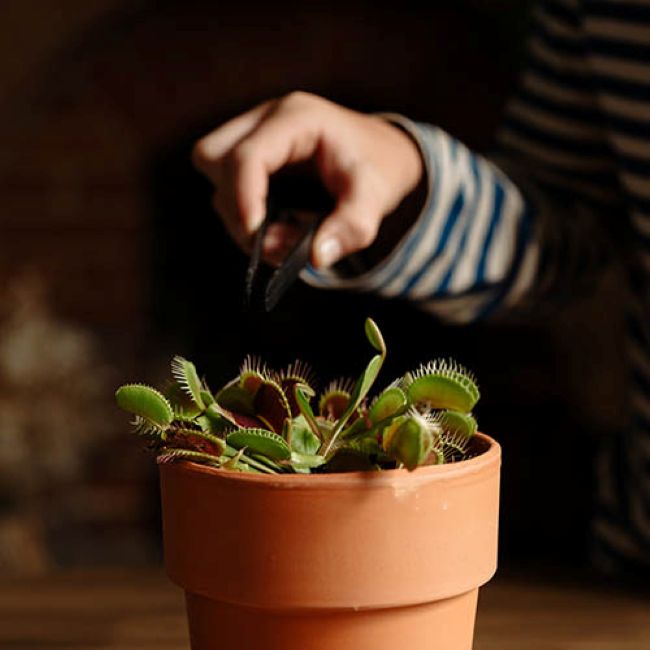
Why Carnivorous Plants?
These fascinating plants don’t just sit there looking pretty – they actively trap and digest insects! Perfect for windowsills, conservatories, and adding a touch of the exotic to any space. Despite their dramatic appearance, they’re surprisingly easy to care for once you understand their simple needs.
Venus Flytrap (Dionaea Muscipula)
The Celebrity
The iconic snap-trap that everyone recognises. Each trap can close in under a second when triggered by unsuspecting prey. Kids and adults alike are mesmerised watching these in action.
Care Essentials:
- Light: Bright, sunny spot – south-facing windowsill ideal
- Water: Rainwater or distilled water only (tap water kills them)
- Soil: Keep very moist but not waterlogged
- Feeding: They’ll catch their own flies, but don’t overfeed or trigger traps for fun
- Winter: Dies back naturally – this is normal, it’ll return in spring
Sarracenia (Pitcher Plants)
The Architectural Statement
Stunning vertical pitchers in reds, greens, and burgundies. These dramatic trumpets lure insects in with nectar and colour, then trap them in a pool of digestive enzymes. A real showstopper.
Care Essentials:
- Light: Full sun brings out the best colours
- Water: Stand in a tray of rainwater/distilled water year-round
- Soil: Keep boggy wet – they’re native to marshes
- Feeding: Very efficient hunters, no manual feeding needed
- Winter: Hardy! Can stay outdoors in UK winters
Nepenthes (Tropical Pitcher Plants)
The Exotic Climber
Hanging pitchers that dangle like exotic lanterns. These Southeast Asian beauties are slightly more tender but incredibly rewarding, producing pitcher after pitcher throughout the year.
Care Essentials:
- Light: Bright indirect light (not scorching sun)
- Water: Keep moist with rainwater/distilled – slightly less boggy than Sarracenia
- Humidity: Loves bathroom or kitchen humidity
- Temperature: Keep above 10°C – prefers warmth
- Winter: Keep indoors, maintains pitchers year-round
Golden Rules for All Carnivorous Plants
✓ Never use tap water – minerals will kill them
✓ No fertiliser – they get nutrients from insects
✓ Don’t repot often – they like being snug
✓ Use carnivorous plant compost only – peat-free mixes available
✓ Let them hunt – resist the urge to hand-feed