The Triangle Bed Through the Seasons
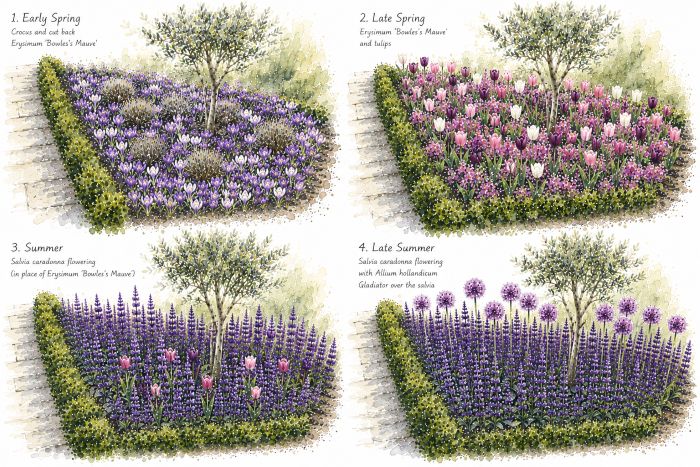
The “Triangle Bed” is designed to provide interest throughout the year using a simple combination of structural planting, seasonal bulbs, long-flowering perennials, and a small olive tree as a focal point. The planting works particularly well in a sunny, well-drained border alongside paving, where the low hedge creates a formal edge while the flowers soften the space through the seasons.
The planting scheme is based around four main seasonal displays, allowing the border to change naturally as the year progresses.
Early Spring – Crocus and Cut Back Erysimum
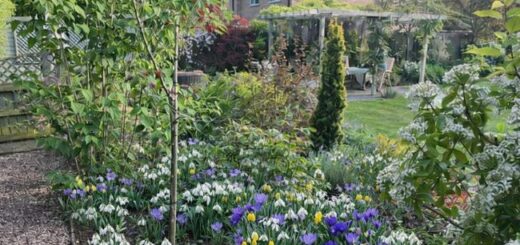
In late winter and early spring, the bed begins to wake up with large drifts of crocus flowering through the border. At this stage the old stems of Erysimum ‘Bowles’s Mauve’ have been cut back hard, creating a lower framework that allows the bulbs to dominate the display.
The crocus provide one of the earliest sources of nectar for pollinating insects and work particularly well planted densely through the front and middle of the border. Planting bulbs in large groups rather than individually creates a much stronger visual effect.
The clipped low hedge helps frame the display while the olive tree provides evergreen structure during the quieter months.
Late Spring – Erysimum ‘Bowles’s Mauve’ and Tulips
As temperatures rise, the Erysimum ‘Bowles’s Mauve’ comes into flower, filling the bed with soft mauve-purple tones. Mixed through the planting are tulips in shades of pink, purple and white, creating height and contrast above the wallflowers.
Tulips are planted generously throughout the bed rather than in rows, allowing them to weave naturally through the planting. White tulips help lift the darker tones and brighten the border in evening light.
Erysimum ‘Bowles’s Mauve’ is particularly useful because it flowers over a very long period and acts as a bridge between the bulb season and the summer perennials.
Summer – Salvia Caradonna Takes Over
By early summer the salvias begin to dominate the border. Salvia nemorosa ‘Caradonna’ produces upright purple flower spikes which rise above the lower planting and create a much stronger vertical effect.
At this stage the salvias gradually replace much of the earlier Erysimum display, creating a more dramatic and contemporary look. The deep purple stems and flowers contrast beautifully with the silver foliage of the olive tree and the evergreen hedge.
The salvias are excellent for bees and pollinating insects and continue flowering for a long period if deadheaded regularly. Cutting the flower spikes back after the first flush often encourages a second display later in the season.
Late Summer – Salvias and Allium hollandicum ‘Gladiator’
In late summer the border reaches its peak with flowering Salvia ‘Caradonna’ combined with the architectural flower heads of Allium hollandicum ‘Gladiator’.
The rounded purple allium flowers float above the salvias, adding height and structure without making the bed feel overcrowded. Keeping the alliums slightly shorter than traditional planting styles helps maintain balance within the relatively compact border.
At this point the planting has a much softer prairie-style appearance while still retaining the formal structure created by the hedge and paving.
Planting Notes
Key plants used in the Triangle Bed include:
- Crocus varieties for early spring colour
- Erysimum ‘Bowles’s Mauve’
- Tulips in pink, purple and white
- Salvia nemorosa ‘Caradonna’
- Allium hollandicum ‘Gladiator’
- Olive tree
- Low evergreen hedge for structure
Maintenance Tips
- Cut back Erysimum lightly after flowering to keep plants compact.
- Deadhead tulips once flowering has finished.
- Allow bulb foliage to die back naturally before removing.
- Feed the border in spring using a general fertiliser such as Growmore.
- Apply a high-potash liquid feed during the flowering season to encourage prolonged blooming.
- Cut salvias back after the first flush of flowers to encourage repeat flowering.
- Mulch annually to help retain moisture and suppress weeds.
This style of planting works particularly well in smaller front gardens and paved seating areas where year-round interest is important without creating excessive maintenance.