Dave and Helen – June Gardening Tasks and Garden Review
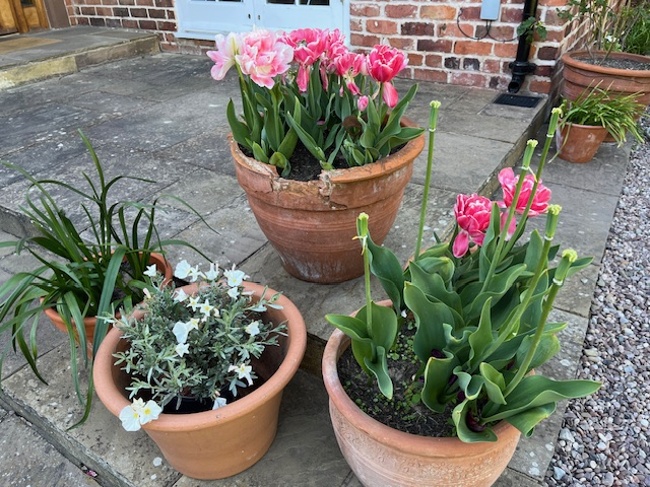
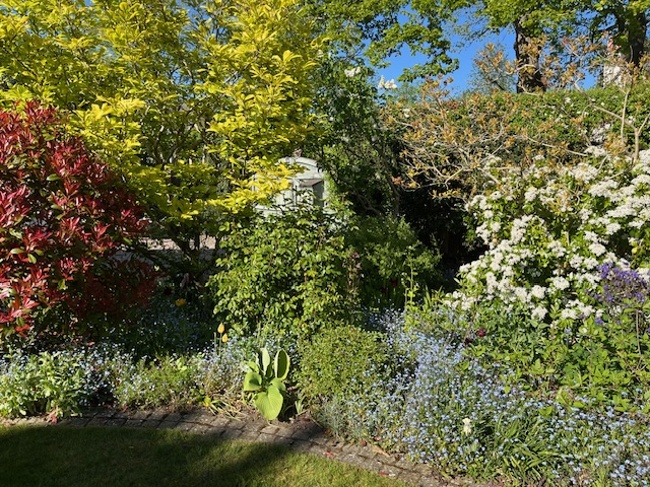
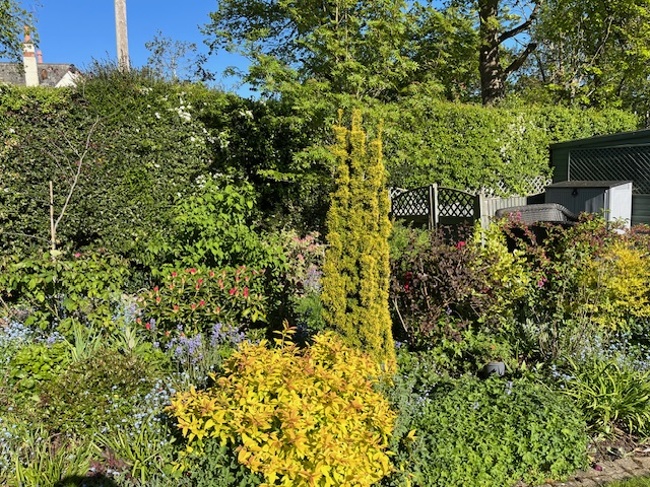
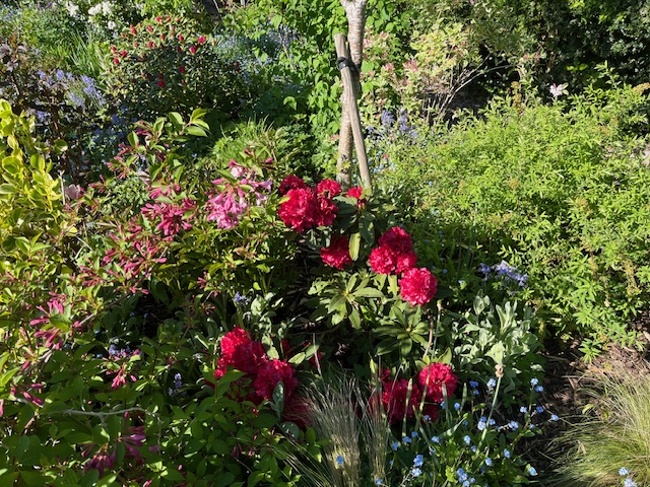
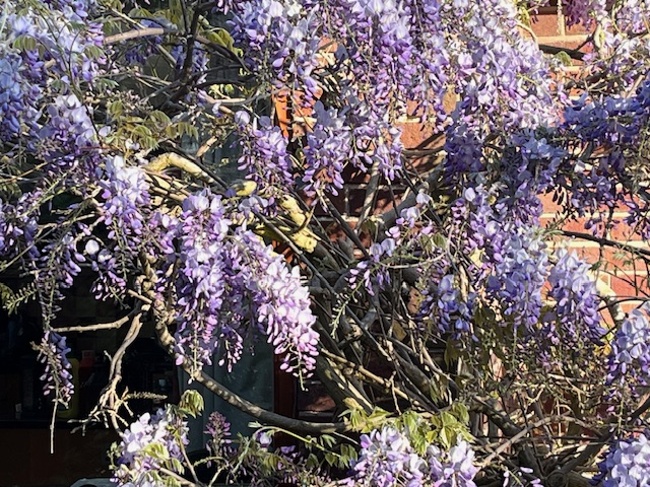
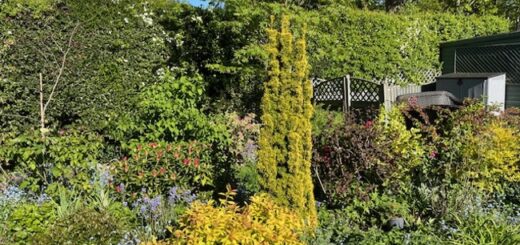
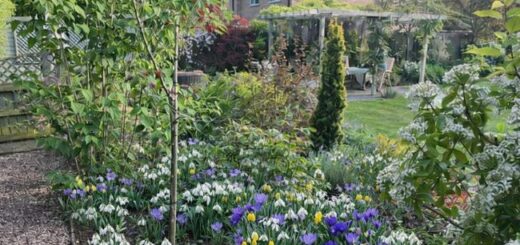
Helen and Daves Garden In April
June is an important month in the garden for maintaining flowering plants, training climbers, feeding, and preparing for the main summer display. The borders are now filling out well, and this is a good time to guide plants, review planting areas, and keep on top of feeding and maintenance.
Bulbs and Spring Flowering Plants
Remove the old flower heads and seed heads from spring bulbs as they finish flowering. In the containers and triangle bed, allow the foliage to die back naturally before lifting and dividing the bulbs later in the summer. Once divided, the bulbs can be replanted further back in the borders and between shrubs and perennial plants to improve the spring display next year.
Feeding Programme
Continue feeding every three weeks using a high-potassium liquid fertiliser such as tomato food. This encourages strong flowering and healthy summer growth. Pay particular attention to containers, climbers, dahlias, sweet peas, and flowering shrubs, as these quickly use up nutrients during warm weather.
Slug Control
Apply nematodes for slug control during damp or mild conditions. Water the soil before and after application to help the nematodes move effectively through the soil and target slug activity around vulnerable plants.
Climbers and Wall Plants
Continue tying in new growth from the wisteria, solanum on the fence, and other climbers before the stems become woody. Store or direct new wisteria growth onto supports and wires to improve future coverage and flowering.
Keep climbers evenly spaced to avoid congestion and maintain airflow through the plants.
Check clematis regularly as they grow through surrounding shrubs. Gently weave and guide the stems through the shrubs to create a natural flowering effect without damaging the new growth.
Sweet peas should also be tied in regularly to supports or canes. Continue picking flowers frequently to encourage continued flowering throughout the summer.
Border Maintenance and Planting Review
Thin out and remove myosotis (forget-me-not) as it finishes flowering and begins to die back. Compost healthy material and clear areas ready for later summer planting.
Review the borders and identify gaps where additional planting could improve the garden, particularly for winter structure, evergreen interest, scent, and early spring colour.
Possible additions could include:
- Hellebores
- Sarcococca
- Winter flowering honeysuckle
- Additional spring bulbs
- Evergreen grasses and shrubs
Shrub Pruning
Once flowering has finished, lightly trim and shape the early spring flowering shrubs including:
- Mahonia
- Philadelphus
- Spiraea
These plants flower mainly on growth produced during the previous year and spring, so pruning shortly after flowering helps encourage strong growth and better flowering next year.
Avoid cutting too heavily into old woody growth unless rejuvenation pruning is needed.
Dahlias
Dahlias should now be ready for planting into borders or patio containers. Use a rich compost and continue feeding regularly through the season.
Strong young shoots can also be used for stem cuttings. Remove the lower leaves and place the cuttings into moist compost in a sheltered propagator or lightly shaded area.
Pests and Diseases
Watch for capsid bug damage, which usually appears as ragged holes or damaged edges on young leaves and distorted soft growth. This is commonly noticed on roses, dahlias, and soft ornamental plants.
Vine weevil should also be monitored, particularly in pots and containers. Symptoms include wilting plants, poor growth, and root damage caused by larvae in the compost. Check containers regularly and consider vine weevil nematode treatments if activity increases.
General June Tasks
Continue deadheading flowering plants regularly to prolong flowering displays.
Deadhead the rhododendrons as flowers finish by holding the flower head gently and pushing it to one side so it snaps cleanly from the stem. This prevents the plant putting energy into unnecessary seed production and encourages stronger growth and flowering.
Water containers thoroughly during dry periods, particularly feeding containers and patio pots.
Keep tying in climbers and tall perennials as they grow, and continue reviewing any areas needing additional mulch, feeding, or late summer planting.