Using Heated Propagators for Seeds and Cuttings
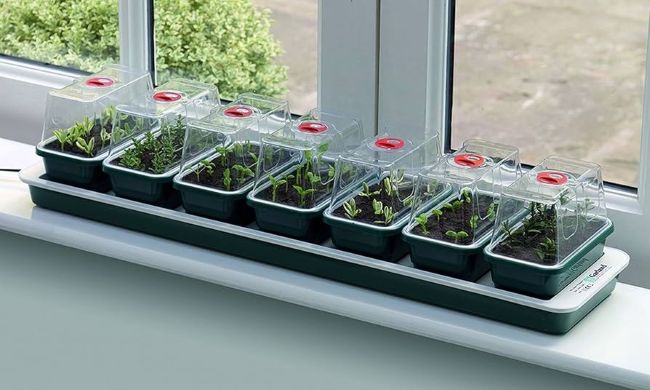
Heated propagators are one of the most useful tools for raising seeds and rooting cuttings, particularly during cooler months or when trying to speed up plant production. They create a warm, protected environment that encourages faster germination and quicker root development while helping maintain humidity around young plants.
Heated propagators are suitable for:
- Germinating seeds
- Rooting softwood cuttings
- Rooting semi-ripe cuttings
- Rooting hardwood cuttings
- Root cuttings
- Propagating tender plants and houseplants
Examples include everything from dahlia cuttings and bedding plants through to woody shrubs such as Cornus (dogwood).
How Heated Propagators Work
Most heated propagators are electrically powered and contain a heated tray or warming element beneath the seed trays or pots. The system works in a similar way to a low-level electric blanket, but safely enclosed within a waterproof plastic propagator tray.
The gentle warmth heats the compost from below, encouraging:
- Faster seed germination
- Quicker root production
- Improved propagation success
- Earlier sowing during spring
Most standard propagators are not thermostatically controlled, so they can sometimes become too warm if left switched on continuously.
If left running all the time:
- Compost can dry out too quickly
- Seedlings may become weak and leggy
- Cuttings can wilt or fail
- Fungal diseases may increase
For this reason, we normally recommend:
- Switching propagators on during the daytime
- Switching them off overnight
- Using a simple plug-in timer to automate the process
This creates a more balanced growing environment while preventing excessive drying and overheating.
Compost for Seeds and Cuttings
For sowing seeds and rooting cuttings, it is important to use a light, open compost mix that drains well while still retaining enough moisture around developing roots.
A typical propagating mix would consist of:
- Approximately 50% standard seed or potting compost such as John Innes No. 1
- Approximately 50% perlite or vermiculite
The addition of perlite or vermiculite improves:
- Drainage
- Air movement within the compost
- Root development
- Resistance to rotting
Before filling trays or pots, the compost should be thoroughly wetted. Dry compost can be difficult to re-wet evenly later.
After filling the trays:
- Soak the compost thoroughly
- Allow excess water to drain away fully
- The compost should feel moist but not waterlogged
Sowing Seeds and Inserting Cuttings
Seeds are generally sown in the normal way using the lighter propagating compost mix.
Most forms of cuttings can also be rooted successfully in heated propagators, including:
- Softwood cuttings
- Semi-ripe cuttings
- Hardwood cuttings
- Root cuttings
Once seeds or cuttings are placed into the trays or containers:
- Water them thoroughly again
- Allow the trays to stand for a few minutes
- Let any excess water drain away
The trays can then be placed onto the heated base or warming tray of the propagator.
Maintaining Humidity
One of the most important elements of successful propagation is maintaining humidity.
Ideally, heated propagators should have:
- A clear plastic cover
- Or a Perspex lid
As the compost warms, moisture evaporates into the air. The clear lid traps this moisture, creating a warm, humid atmosphere around the seedlings or cuttings.
This is especially important for cuttings because:
- Newly inserted cuttings have no roots
- They cannot replace moisture lost through their leaves
- High humidity reduces moisture loss
- This keeps the cuttings alive until roots form
In many cases, humidity control is more important than rooting hormone powders.
The propagator effectively acts as a protected environment, keeping the cuttings alive until they are capable of producing their own root system.
Watering and Ongoing Care
Because the heated base gradually dries the compost, regular watering is essential.
A good routine is:
- Approximately once a week, remove the trays from the propagator
- Give them a thorough soaking
- Allow excess water to drain away properly
- Return the trays to the heated base
- Replace the clear lid to maintain humidity
The compost should remain evenly moist but never saturated.
Preventing Disease
Warm, humid conditions are excellent for propagation, but they can also encourage fungal and bacterial diseases if hygiene is poor.
Check trays regularly for:
- Damping off disease
- Rotting cuttings
- Fungal moulds
- Weak or collapsing seedlings
Damping off is a fungal disease that causes seedlings to collapse suddenly at soil level.
If infected seedlings or cuttings are found:
- Remove them immediately
- Dispose of them away from the propagator
- Prevent the infection spreading to surrounding plants
Hygiene and Cleaning
Good hygiene is extremely important when propagating plants.
If reusing trays, pots, or propagator containers:
- Wash them thoroughly beforehand
- Use a mild disinfectant
- Remove old compost and debris completely
Fresh compost should always be used where possible, as old compost may contain:
- Fungal spores
- Harmful bacteria
- Pests
- Disease organisms
If fungal or bacterial problems begin developing, a light dusting of yellow sulphur powder can sometimes help suppress infection until the plants have rooted successfully.
Positioning the Propagator
The location of the propagator is also very important.
It should be placed:
- In a bright position
- With good natural light
- But away from intense direct sunlight
Too much direct sun can rapidly overheat the propagator and scorch seedlings or cuttings.
If using the propagator in a greenhouse:
- Provide shading during sunny periods
- Use greenhouse shading, fleece, or light screening if necessary
A bright windowsill without excessive direct sunlight is often ideal.
When to Remove Seedlings
Once seedlings have germinated and developed their first pair of seed leaves, it is usually best to remove them from the heated propagator.
If left in the warm conditions too long:
- They often become weak and leggy
- Growth becomes soft and stretched
At this stage:
- Remove them from the heated base
- Keep them in their trays or containers
- Move them to a bright, cooler area
This encourages stronger, sturdier growth.
Cuttings usually remain inside the propagator for much longer.
Rooting times vary greatly:
- Often between 6 and 12 weeks
- Sometimes faster
- Sometimes considerably longer
Rooting Hormone Powders
Traditional hormone rooting powders have been used for many years to encourage root formation.
However, in many cases, correct propagation conditions are far more important than hormone powders themselves.
Providing:
- Warmth
- Humidity
- Good hygiene
- Correct watering
- Healthy parent material
will usually produce the best results.
Some older rooting compounds have also raised health concerns over the years, and certain products may contain ingredients that should not be inhaled or handled excessively.
For this reason, many gardeners now rely primarily on creating ideal environmental conditions rather than depending heavily on hormone rooting powders alone.