Garden Report: Spring Key Jobs and Seasonal Priorities
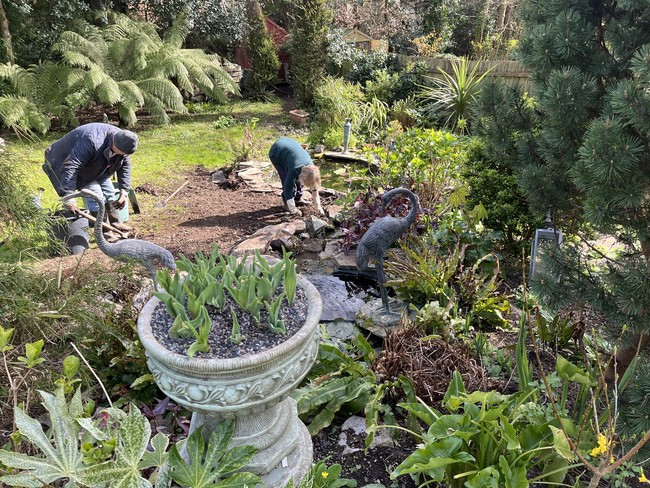
Anne & Headley’s Garden – Late Spring Update
Following our recent visit, the garden is in very good condition and moving well into the main growing season. The focus now is on consistent feeding, early pest control, and setting up systems that will support strong growth through summer and into early autumn.
Below is a summary of the key jobs and priorities to carry out over the coming weeks.
Feeding Programme (Start Now)
The most important task now is to begin a regular feeding routine. A high potash fertiliser — liquid tomato food — should be applied every three weeks from now until the end of September. Apply using an inline hose feeder to ensure even coverage across the garden.
This should be applied to:
- Borders and perennial planting
- Shrubs
- Fruit trees
Regular feeding will significantly improve flower production, fruit development, and overall plant strength and resilience. For a full overview of how and why liquid tomato feed works across the garden, see the GardenAdvice guide: Using Liquid Tomato Feed for Borders and Flowering Plants.
Tip: A hose-end feeder attachment makes the job much quicker and ensures consistent dilution. Ask your GardenAdvice team member to set up the correct dilution rate for your specific feeder. https://gardenadvice.co.uk/plant-hose-end-feeder-and-sprayer/
High Nitrogen Feeding (Selected Plants)
In addition to the general feeding programme, certain plants will benefit from a high nitrogen feed, such as Miracle-Gro (approximately 24% nitrogen). Apply every three weeks alongside the main programme to encourage strong leafy growth and support recovery and vigour in key plants.
Damaged and moved Rhodo
Bay Trees
High nitrogen feeding is particularly useful after heavy pruning or where plants have been under stress. It promotes rapid new stem and leaf production, helping plants re-establish quickly.
A specific list of plants for high nitrogen treatment will be added separately by your GardenAdvice team member.
Slug & Snail Control
As soil temperatures begin to rise, now is the ideal time to apply slug nematodes. These microscopic organisms are watered into the soil and target slugs naturally, without harming other wildlife or beneficial insects.
Application guidance:
- Apply when the soil is consistently moist
- Water the area before and after application if conditions are dry
- Apply during the cooler part of the day – early morning or late evening – to reduce drying out
- Nematodes are most effective at soil temperatures between 5°C and 30°C
Nematodes work by tracking slugs through slime trails and infecting them, providing long-term protection as new generations cycle through the soil. Early application prevents population build-up and protects emerging growth before damage occurs.
For a full explanation of the process and application method, see: Natural Slug Control with Nematodes — and the GardenAdvice Slug Nematodes product and advice page.
Apple Trees: Pest Control & Underplanting
Protecting developing fruit at this stage of the season is essential. Two straightforward steps will significantly reduce the risk of pest damage:
Codling Moth Control
Install pheromone traps in the apple trees as soon as possible. These work by attracting male moths, disrupting mating cycles and reducing larval damage to the fruit. They are chemical-free, easy to install, and should remain in place throughout the growing season.
For full guidance on identifying and managing codling moth, see: How to Control Codling Moth.
Underplanting with Calendula
Sow calendula seeds around the base of the apple trees, either directly into the soil to form a light planting ring, or start in pots and transplant once established. Calendula is a powerful companion plant that attracts beneficial insects, improves biodiversity, and adds seasonal colour.
It also has the added benefit of deterring certain insects around seating areas — so planting a few in pots near the patio is well worth doing.
Front Garden: Pruning & Maintenance
Euonymus
The euonymus has produced green reverted shoots that need to be removed cleanly. These plain green shoots are more vigorous than the variegated growth and will take over the plant if left. Prune them out at the base of the stem, cutting back to the main framework of the plant.
Rhododendrons
As flowering finishes, remove spent flower heads by pinching or snapping them off at the base of the flower stem. Known as deadheading or ‘rhododendron deadheading’, this simple task prevents the plant putting energy into seed production and encourages stronger, more prolific flowering next year.
Avoid cutting into the woody stem – the new growth buds for next year sit just below the old flower cluster and will be damaged if you cut too far back. See: Growing Rhododendrons: Advice and Aftercare.
Mulching (Key Job)
Mulching is one of the highest-value tasks you can do in the garden at this time of year and should be carried out as soon as possible.
Method:
- Lay cardboard over the soil surface first – this creates an additional weed barrier and biodegrades naturally
- Apply a layer of spent mushroom compost over the top, approximately 5–10cm deep
- Before applying, scatter a light dressing of Growmore fertiliser at around one handful per square metre – this replaces nutrients the decomposing mulch will use from the soil
Benefits:
- Suppresses annual weeds by blocking light from reaching weed seeds
- Retains soil moisture, reducing irrigation needs through summer
- Improves soil structure and fertility as the compost breaks down
- Earthworms incorporate it into the soil over time, further improving drainage and texture
- Reduces maintenance workload significantly through the season
Note: Spent mushroom compost is slightly alkaline. Avoid using it around acid-loving plants such as rhododendrons, pieris, or azaleas – use well-rotted horse or farmyard manure for those instead.
For more on mulching technique and materials, see: Mulching Flower Borders with Spent Mushroom Compost and Mulching to Reduce Weeding in Garden Borders.
Propagation (Optional but Recommended)
This is a good time to take softwood cuttings from suitable shrubs and perennials. The process is straightforward and highly effective when carried out correctly.
Key points:
- Select stems that are semi-ripe – not too young and floppy, and not fully woody
- Take cuttings around 10cm long, cutting just below a leaf node
- Remove the lower leaves, leaving just two or three at the top
- Insert into a 60/40 mix of perlite and peat-free compost
- Use a heated propagator on a windowsill to maintain soil temperature of 18–24°C
- Keep compost moist but not waterlogged; maintain humidity around the cuttings
- Roots typically develop within four to six weeks
Full guidance on softwood cutting technique: Growing Shrubs from Softwood Cuttings.
Guidance on using heated propagators: How to Use Heated Propagators to Create Rooted Plant Cuttings.
Greenhouse Growing
With temperatures improving, the greenhouse offers excellent conditions for heat-loving crops. Melons and grapes are well worth growing on, and the greenhouse environment gives them the sustained warmth needed to crop reliably in the UK.
Growing tips:
- Ensure good ventilation – open roof vents and doors on warm days to prevent excess humidity and fungal issues
- Water consistently – irregular watering causes fruit to split or develop blossom end rot
- Maintain warm, stable overnight temperatures – aim for a minimum of 15–18°C
- Train melon stems up vertical supports and pinch out the growing tip after 5–6 leaves to encourage lateral fruiting shoots
- Hand pollinate melon flowers using a soft brush if natural pollinator access is limited
Lawn Improvement: Clover Option
Consider overseeding the lawn with a white clover mix. Clover is increasingly recommended as a sustainable lawn component for its practical benefits:
- Maintains green colour during dry spells when grass goes dormant
- Fixes atmospheric nitrogen through root bacteria, reducing the need for lawn fertiliser
- Improves soil structure with deep roots
- Attractive to bees and pollinators through the summer
Overseed into existing grass by raking the surface lightly, broadcasting the seed at the recommended rate, and keeping the area moist until established. Clover is best sown in spring or early autumn when soil temperature is warm enough for germination.
Pond Maintenance
Blanket weed (filamentous algae) will begin growing more rapidly as temperatures rise and light levels increase. Regular removal is the most effective method of keeping it under control.
Method:
- Use a cane or stick to twist and gently lift the weed from the water in a rotating motion
- Remove it carefully to avoid disturbing aquatic plants such as lilies or marginals
- Leave the removed weed on the pond edge for 24 hours before composting – this allows any small invertebrates to return to the water
Regular removal prevents the weed from shading out other aquatic plants and depleting oxygen levels in the water. Avoid using chemical treatments, which can harm wildlife and beneficial pond organisms.
For information on wildlife pond management: Cultivating Wildlife Through a Garden Pond.
Drainage Improvements
In areas where the ground remains persistently wet, installing simple perforated drainage pipework will make a significant difference to soil conditions, plant health, and access.
Basic installation method:
- Dig a trench at least 30cm deep in the problem area, angled to fall away from the garden
- Lay perforated drainage pipe (50–75mm diameter) in the base of the trench
- Backfill around and above the pipe with clean gravel or crushed stone to within 15cm of the surface
- Top with a layer of topsoil or turf
- Direct the outlet to a soakaway, ditch, or suitable drainage point
Even a short length of drainage pipe can transform a wet corner. If the problem area is significant or close to boundaries or structures, discuss options with your GardenAdvice team member before beginning.
Summary
The garden is well set up — the key now is consistency.
By maintaining a regular feeding schedule, acting early on pests, applying mulch, and making small structural improvements, the garden will continue to develop strongly and perform at a high level throughout the summer.
If you have any questions about any of the tasks above, your GardenAdvice team member is available to advise — and you can always ask Helene, the GardenAdvice AI gardening assistant, for instant guidance on any gardening question