Clover And Moss In Your Lawn?
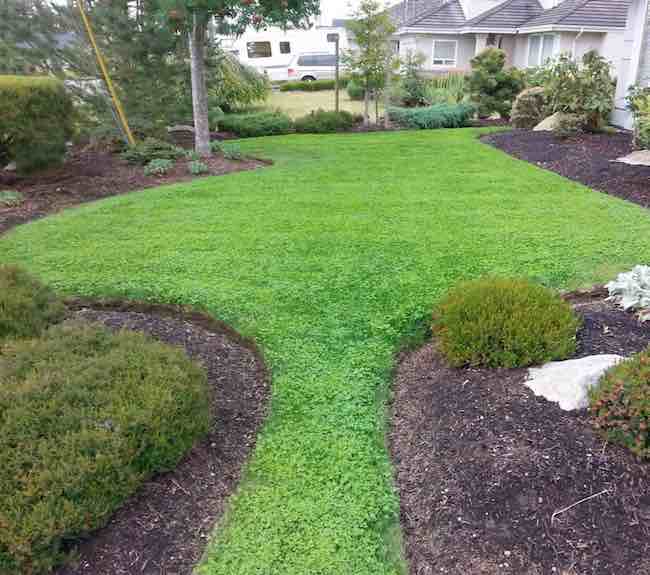
Creating a clover lawn might be a solution to moss in your lawn
Is Clover and Moss in Your Lawn a Problem – or a Sign of Change?
Finding moss or clover in your lawn is often seen as a problem, but in reality both are indicators of what is happening in the soil and how the lawn is coping with its environment. In some cases they highlight an issue that needs correcting, and in others they may actually offer a practical solution for modern lawns.
Why Moss Appears in Lawns
Moss rarely invades a lawn unless the grass is already under stress. One of the most common causes is soil pH becoming too low (too acidic) over time.
Lawns are regularly fertilised, often for many years, and most lawn fertilisers gradually acidify the soil. While grass does grow best in slightly acidic conditions, ideally at a pH of around 6.0 to 6.25, problems start when the pH drops below 6.
When soil becomes too acidic:
-
Grass growth is suppressed
-
Nutrient uptake becomes less efficient
-
Moss, which tolerates acidic conditions far better than grass, begins to thrive
This is why moss often appears even in lawns that are regularly fed and mown.
Correcting the Problem
The solution isn’t just removing the moss — it’s correcting the cause. Testing the soil pH is the first step. Where acidity is too high, applying garden lime will gently raise the pH back into the ideal range for grass, allowing it to recover and out-compete the moss.
Once the pH is corrected, moss removal (by scarifying or raking) followed by overseeding will give much longer-lasting results.
What About Clover in Lawns?
Clover tends to appear in lawns where grass is thin or where nitrogen levels are lower. Traditionally it has been viewed as a weed and, if unwanted, it can be controlled with a selective lawn weed killer.
However, clover leaves are quite waxy, which means:
-
Weed killers may not penetrate effectively on the first application
-
Two treatments are often needed for full control
That said, attitudes to clover are changing.
Clover, Climate Change and Modern Lawns
With wetter winters and warmer, drier summers becoming increasingly common in the UK, clover is now being seen by many gardeners as an advantage rather than a problem.
Clover offers several benefits:
-
It stays greener during hot, dry periods
-
It copes well with wet winters and compacted soils
-
It improves soil health by fixing nitrogen
-
It helps maintain lawn colour when grass struggles in summer
For this reason, many people are now choosing to keep clover in their lawns, or even actively encourage it.
The Clover Lawn Option
Rather than removing clover, it’s worth considering whether a mixed grass and clover lawn might be a better long-term solution. Overseeding with additional clover seed can:
-
Improve year-round colour
-
Increase resilience to weather extremes
-
Reduce the need for high levels of fertiliser
This approach creates a more sustainable lawn that is better suited to modern UK conditions.
A Change in Thinking about lawns
Moss and clover shouldn’t automatically be treated as enemies. Moss usually signals an underlying soil issue — most commonly excessive acidity — that needs correcting. Clover, on the other hand, may either be controlled or embraced, depending on the type of lawn you want and how it is used.
Understanding why they are present allows you to make better decisions, whether that’s restoring a traditional grass lawn or adapting it into a more resilient, climate-friendly surface.
To Test your lawn soil pH you can get a Soil Testing Kit from a Garden centre or our Soil Testing Service.
Click Here
As another one of our wide range of services here at GardenAdvice the GardenAdvice Team is offering The Garden Visiting Service to provide you with expert gardening advice at home.
For further information:
Click Here