How To Deal With Thinning Conifer Hedges.
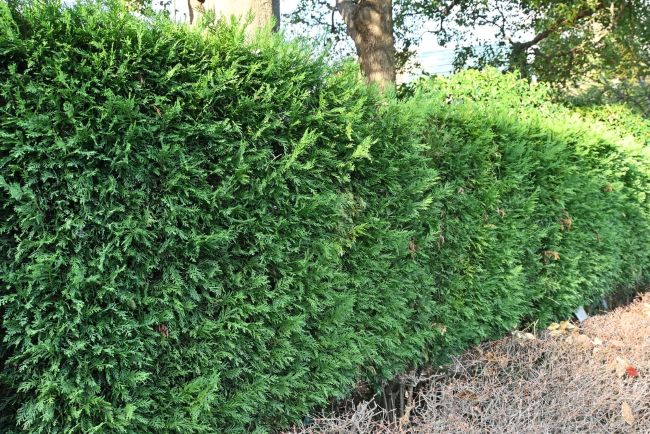
Leylandii Hedge
Managing and Reviving Thinning Conifer Hedges
As the UK climate continues to warm and weather patterns become more erratic, conifer hedges—particularly Leylandii and other fast-growing species—are becoming increasingly vulnerable to stress, fungal infections, and general die-back. Combined with the fact that many conifer species have a natural lifespan of around 30 years, it’s common to see mature hedges starting to thin out, especially at the base. While correct pruning, watering, and feeding can extend a hedge’s life, many established conifers will still decline naturally with age.
Why Conifer Hedges Thin Out
Several factors contribute to thinning, especially lower down:
- Reduced light penetration as the hedge matures
- Root congestion, limiting the plant’s ability to take up nutrients
- Climate stress, including drought, warmer winters, and heavy rainfall
- Fungal infections, such as Pestalotiopsis and Phytophthora
- Incorrect pruning, particularly cutting back into old wood which cannot regenerate
Because most conifers cannot reshoot from old brown wood, thinning tends to worsen unless managed proactively.
Planting at the Base to Restore Density
For hedges that have become open at the bottom but are otherwise healthy, we often recommend underplanting with shade-tolerant, easily clipped species that will fill the gaps and restore a dense, green appearance.
Best Plants for Filling the Base
- Lonicera nitida (Shrubby Honeysuckle)
A tough, reliable shrub that tolerates shade, clipping, and poor soil. It knits together quickly and forms a dense, evergreen layer beneath conifers. - Taxus baccata (Yew)
A slow-growing but highly adaptable evergreen that copes well with dry shade beneath established conifers. Yew responds well to pruning, allowing you to mould it into the hedge line over time.
Both options grow happily underneath conifers and provide long-term structure while allowing the original hedge to remain in place.
Replacing Bare Sections Using Bamboo
Where conifers are thinning more extensively—or where whole sections have died back—replacement planting may be the most practical option. One of the most effective strategies we use is integrating bamboo into the gaps.
Why Bamboo Works
- Grows strongly in reduced light
- Establishes quickly to fill empty spaces
- Provides dense evergreen coverage
- Can eventually take over as a new hedge structure
- Tolerates pruning and shaping once mature
Bamboo grows up through the thinning conifers, gradually masking the die-back. Over time, the old conifers can be reduced or removed, leaving a cohesive evergreen screen.
Recommended Bamboo Varieties
All of the following are clump-forming Phyllostachys varieties appropriate for screening:
- Golden Bamboo – Phyllostachys aureocaulis
Upright, bright golden canes, excellent for adding colour and height. - Black Bamboo – Phyllostachys nigra
Attractive ebony canes that darken with age; ideal for feature screening. - Green Bamboo – Phyllostachys bissettii
One of the toughest and densest varieties; perfect for replacement hedging.
These species are non-invasive when managed correctly and can be shaped to match the existing hedge line.
Long-Term Management Tips
To improve the lifespan of both existing conifers and replacement planting:
- Feed annually with a balanced slow-release fertiliser
- Mulch heavily to improve soil moisture and microbial health
- Prune lightly but regularly, avoiding cutting into old wood on conifers
- Monitor for fungal infections and treat early
- Water deeply during prolonged dry periods—a growing issue in UK summers
With proper care and strategic replanting, thinning conifer hedges can be restored or transitioned into a new, longer-lasting evergreen screen.