Growing Cut Flowers In Your Garden
The Complete Guide to Growing Easy Cut Flowers in Your Garden
There’s something deeply satisfying about cutting flowers from your own garden to fill your home with colour and fragrance. Whether you’re a complete beginner or an experienced gardener, growing cut flowers is easier than you might think. This guide will take you through everything you need to know to create a productive cutting garden.
Understanding Propagation Methods
Different flowers require different approaches. Here’s how to propagate each type successfully:
From Seed (Most Economical)
Sweet Peas, Cosmos, Zinnias, Sunflowers, Cornflowers, Nigella, Ammi majus, Rudbeckia
These annual and biennial flowers are best grown from seed, giving you the most plants for your money. Seeds can be sown directly outdoors or started indoors for earlier flowers.
From Bulbs, Corms & Tubers (Plant Once, Enjoy for Years)
Dahlias (tubers), Anemones (corms), Alliums (bulbs)
These storage organs contain all the energy the plant needs to produce spectacular flowers. Plant them at the right time and they’ll reward you year after year (with dahlias needing winter protection).
From Cuttings (Maintain Your Favourites)
Carnations & Pinks (Dianthus), Phlox, Chrysanthemums
Taking cuttings allows you to multiply your favourite plants and maintain specific varieties indefinitely.
By Division (Easy Multiplication)
Astrantia, Achillea, Chrysanthemums, Asters
Established perennial clumps can be divided every few years, giving you more plants while rejuvenating the parent.
As Young Plants (Quick & Easy)
Snapdragons, Scabious, Eucalyptus
Some plants are simply easier and more reliable when purchased as young plants from garden centres or specialist nurseries.
Your Cut Flower Growing Calendar
Autumn (September-November)
- Plant: Allium bulbs, Anemone corms, Sweet Pea seeds (for early flowers)
- Sow: Cornflowers, Ammi majus (for strong plants)
- Divide: Astrantia, Achillea, Asters
- Lift & Store: Dahlia tubers after first frost
Winter (December-February)
- Plan: Order seeds and tubers
- Prepare: Beds for spring planting
- Start: Sweet Pea seeds in deep pots (February)
Spring (March-May)
- Plant: Dahlia tubers (late April/May), Anemone corms (March)
- Sow indoors: Cosmos, Zinnias, Snapdragons (March-April)
- Sow outdoors: Sunflowers, Cornflowers (April-May)
- Take cuttings: Chrysanthemums, Phlox
- Divide: Phlox, Astrantia, Achillea
- Buy & plant: Young plants of Scabious, Eucalyptus
Summer (June-September)
- Sow: Quick succession sowings of Cosmos, Zinnias
- Take cuttings: Carnations & Pinks, Phlox (June-July)
- Harvest: Everything! Regular cutting encourages more flowers
- Deadhead: Keep plants productive
Plant Profiles
Sweet Peas
The quintessential British cut flower, prized for their incredible fragrance and butterfly-like blooms. Grow them up supports and pick daily for maximum production. Choose scented varieties over exhibition types for the best vase performance.
Anemones
These jewel-like flowers emerge on elegant stems in early spring. Plant corms in groups for impact. The De Caen and St Brigid varieties are particularly good for cutting.
Alliums
Purple pompoms on tall stems create architectural drama. They last weeks in the vase and dry beautifully. ‘Purple Sensation’ is reliable and prolific.
Dahlias
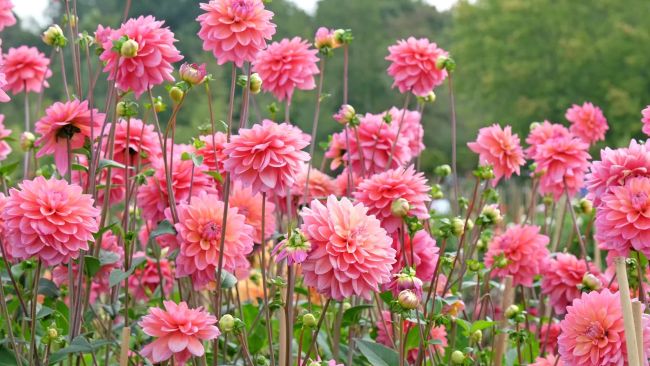
The absolute stars of the cutting garden, flowering prolifically from July until frost. Choose dinner-plate varieties for statement blooms, or ball and pompon types for abundant smaller flowers. They need staking, regular watering, and feeding but repay the effort a thousand-fold.
Cosmos
Incredibly easy annuals that flower non-stop once they start. The more you cut, the more they produce. ‘Sensation Mixed’ and ‘Purity’ are classic varieties.
Zinnias
Heat-loving annuals that thrive in sunny spots. They hate wet conditions, so grow them in well-drained soil and avoid overhead watering. ‘Benary’s Giant’ series offers the best cut flower stems.
Sunflowers
From giant single heads to branching multi-stemmed varieties, there’s a sunflower for every arrangement. Try ‘Velvet Queen’ for rich burgundy tones or ‘ProCut’ series for cut flower production.
Cornflowers
Traditional cottage garden annuals in blues, pinks, and whites. They’re tough, drought-tolerant, and flower for months. Sow successionally for continuous supply.
Snapdragons
Vertical spires in every colour imaginable. They fill gaps in arrangements beautifully and last well in the vase. Pinch out growing tips when young to encourage branching.
Scabious
Delicate pincushion flowers on wiry stems. They’re magnets for butterflies and bees. ‘Fama’ series offers excellent cut flower varieties.
Nigella (Love-in-a-mist)
Feathery foliage and jewel-like flowers followed by beautiful architectural seed pods. Both flowers and seed heads are valuable for arrangements. Self-seeds readily.
Carnations & Pinks (Dianthus)
Intensely fragrant with a spicy clove scent. They’re long-lasting in the vase and come in gorgeous colours. Border carnations are easier than perpetual-flowering types.
Astrantia
Understated elegance with starry flowers in whites, pinks, and reds. They tolerate partial shade, making them valuable for those tricky spots. ‘Roma’ and ‘Venice’ are superb varieties.
Phlox
Cottage garden stalwarts with fragrant flower clusters. They prefer moist soil and will reward you with weeks of colour. Watch for powdery mildew in dry conditions.
Achillea (Yarrow)
Flat flower heads in a rainbow of colours that are workhorses in arrangements. They dry superbly for winter displays. ‘Terracotta’ and ‘Paprika’ are stunning varieties.
Chrysanthemums
Traditional autumn flowers in warm tones. Early-flowering outdoor varieties are best for cutting gardens. Disbudding produces larger blooms, or leave natural for sprays.
Asters
Late-season saviours that bridge the gap into autumn. Choose tall varieties like Aster novi-belgii for cutting. They’re vital for late-flying pollinators too.
Rudbeckia
Cheerful golden daisies that flower prolifically. ‘Goldsturm’ is a reliable perennial, while ‘Indian Summer’ offers huge annual blooms.
Ammi majus
Often called “false Queen Anne’s Lace,” this delicate white flower is the perfect filler in arrangements – an economical alternative to gypsophila.
Eucalyptus
Aromatic silvery foliage adds a modern touch to arrangements. Grow as an annual or coppice established plants hard each spring to encourage juvenile foliage.
Flowering Times Table
| Plant | Mar | Apr | May | Jun | Jul | Aug | Sep | Oct | Nov |
|---|---|---|---|---|---|---|---|---|---|
| Sweet Peas | ● | ● | ● | ● | |||||
| Anemones | ● | ● | ● | ||||||
| Alliums | ● | ● | |||||||
| Dahlias | ● | ● | ● | ● | |||||
| Cosmos | ● | ● | ● | ● | |||||
| Zinnias | ● | ● | ● | ● | |||||
| Sunflowers | ● | ● | ● | ● | |||||
| Cornflowers | ● | ● | ● | ● | ● | ||||
| Snapdragons | ● | ● | ● | ● | |||||
| Scabious | ● | ● | ● | ● | ● | ||||
| Nigella | ● | ● | ● | ||||||
| Carnations & Pinks | ● | ● | ● | ● | |||||
| Astrantia | ● | ● | ● | ● | |||||
| Phlox | ● | ● | ● | ||||||
| Achillea | ● | ● | ● | ● | |||||
| Chrysanthemums | ● | ● | ● | ||||||
| Asters | ● | ● | ● | ||||||
| Rudbeckia | ● | ● | ● | ● | ● | ||||
| Ammi majus | ● | ● | ● | ● |
Top Tips for Success
Choose a sunny spot – Most cut flowers need at least 6 hours of direct sun
Prepare the soil well – Dig in plenty of compost and ensure good drainage
Stake early – Support plants before they need it
Feed regularly – Cut flowers are hungry plants; feed weekly once flowering begins
Pick correctly – Cut in the morning when stems are turgid, place immediately in water
The more you cut, the more they produce – Regular harvesting encourages more flowers
Succession sow annuals – Sow cosmos and zinnias every 2-3 weeks for continuous supply
Don’t be afraid to experiment – Try new varieties each year to discover your favourites
Growing your own cut flowers transforms your relationship with your garden. There’s an incomparable satisfaction in walking out with a basket and returning with armfuls of beauty. Start with a few easy annuals this year, and you’ll soon find yourself planning a dedicated cutting garden.