Identifying fruiting buds on Apple Trees
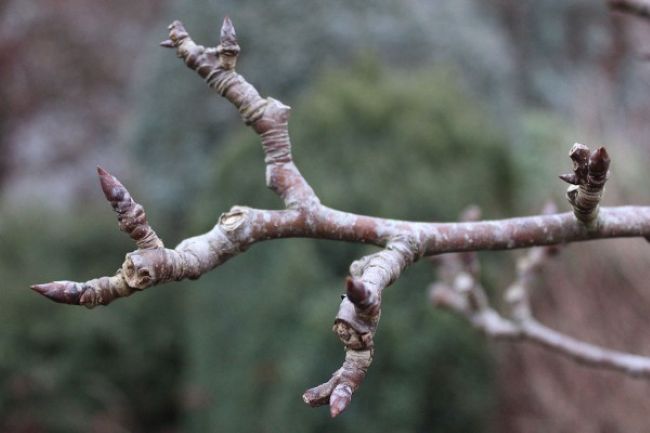
Fruiting buds or sprurs on apple tree
Fruiting Buds in Apple Trees: How to Identify Them and Encourage More Fruit
Understanding fruiting buds is one of the most important skills in pruning apple trees. Correct identification allows you to prune with confidence, creating a tree structure that reliably produces flowers — and therefore fruit — year after year.
What Are Fruiting Buds?
Fruiting buds (often called spurs) are the buds that produce apple blossom in spring and fruit later in the year. They are very different in appearance from leafy or extension (summer) buds.
Key characteristics of apple fruiting buds:
- Short, stubby shoots
- Often sit on older wood (2–3 years old or more)
- Frequently show ring-like ridges at the base (these are scars from previous years’ growth)
- Buds are rounder and plumper than leaf buds
- Typically clustered rather than spaced along long stems
Once established, fruiting spurs can remain productive for many years if treated well.
Summer Shoots vs Fruiting Spurs
Summer shoots (extension growth) are long, flexible stems produced during the growing season. Their purpose is vegetative growth rather than fruiting.
Summer shoot characteristics:
- Long, straight growth
- Smooth bark with no rings at the base
- Buds are smaller and pointed
- Produced in spring and summer
- Do not carry fruit in their first year
These shoots are essential — they are the future fruiting wood — but need managing.
How Fruiting Buds Develop
Apple trees do not produce fruiting buds instantly. It takes time and correct pruning.
- Year 1: A summer shoot grows vigorously
- Year 2: If growth is controlled, buds begin to change character
- Year 3: The shoot develops into a spur with fruiting buds
The aim of pruning is to slow vigorous growth and encourage bud transformation, rather than endless extension.
Pruning to Encourage Fruiting Buds
The objective when pruning an apple tree is to create:
- A strong, open framework
- Plenty of light and air
- A high proportion of fruiting spurs
Summer pruning
- Prune current-season shoots back by around one third
- Best done mid to late summer
- Reduces vigour and signals the tree to form fruiting buds rather than more leafy growth
Winter pruning
- Focus on structure and balance
- Avoid heavy pruning on very vigorous trees (this can encourage more shoot growth instead of fruiting)
- Preserve short, stubby spur systems
Over time, this approach builds a tree covered in productive fruiting wood.
Fruiting Buds = Flowers = Apples
Every apple begins as a flower, and every flower comes from a fruiting bud. A tree with plenty of well-lit, well-spaced spurs will:
- Flower more reliably
- Set fruit more evenly
- Be easier to manage and harvest
This is why identifying and protecting fruiting buds is so important during pruning.
Watering and Climate Considerations
With changing climate patterns, spring conditions are becoming more unpredictable.
After flowering, apples are especially vulnerable to fruit drop, particularly during dry springs.
Good practice:
- Light, consistent watering during dry spells helps trees retain fruit
- Focus on watering the root zone, not the trunk
- Avoid overwatering — waterlogged soil reduces oxygen and can cause fruit drop or root stress
The goal is steady support, not excess.
Final Notes
Pruning apple trees is not about cutting hard — it’s about understanding how the tree grows and responds. By recognising the difference between summer shoots and fruiting buds, and pruning accordingly, you guide the tree toward what you want: a balanced structure loaded with blossom and fruit.