Using Weeping Willow and Golden Willow to Stabilise Banks
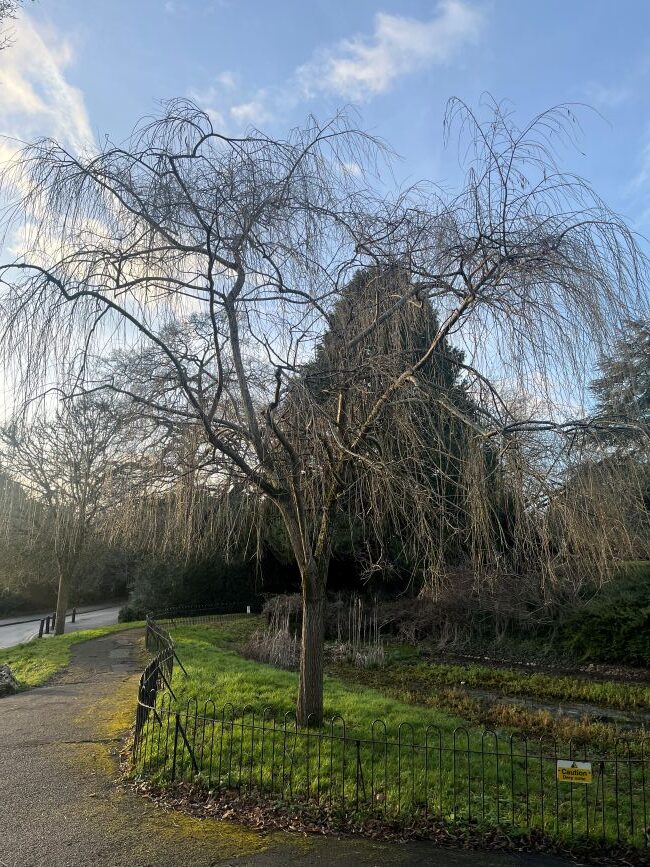
Weeping Willow
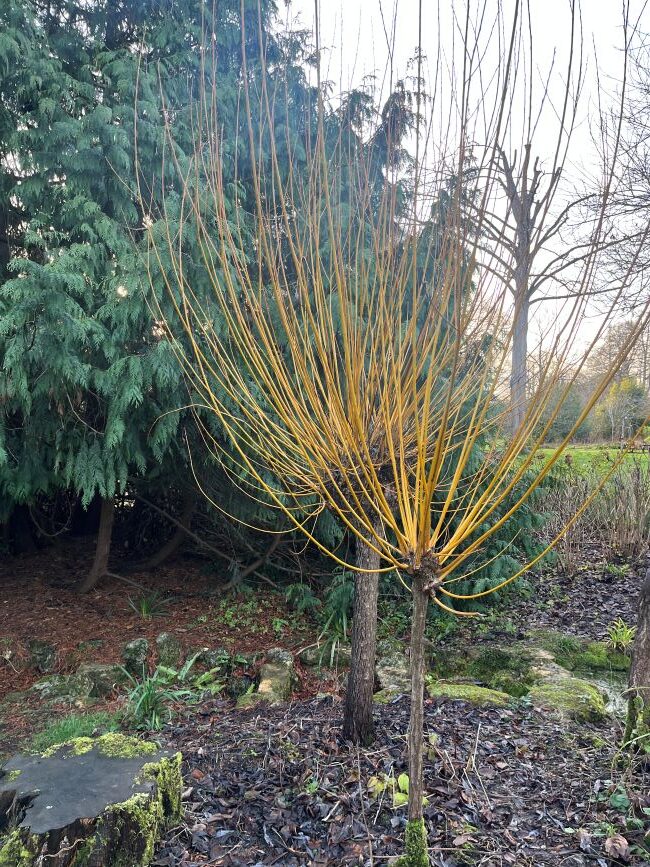
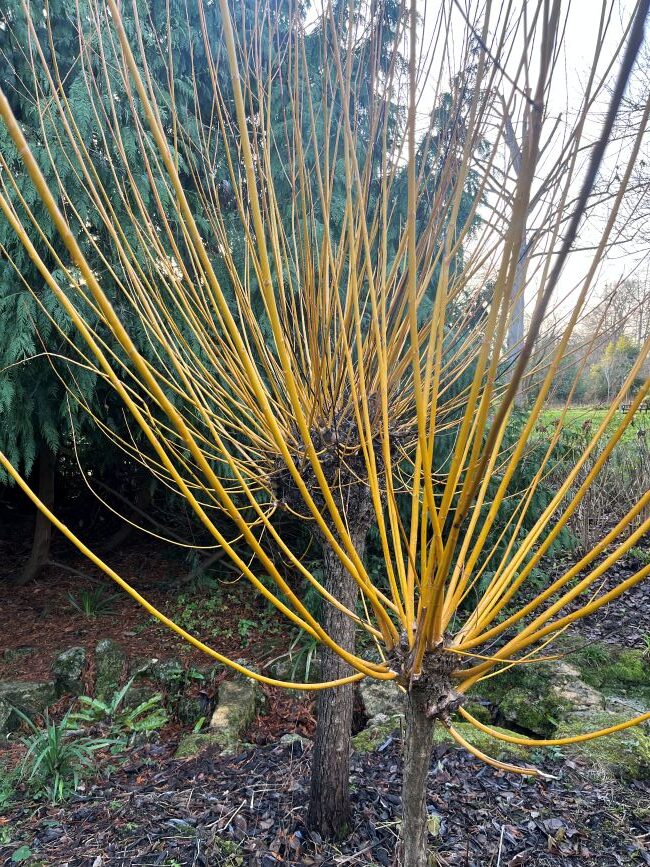
Golden Willow (Salix alba var. vitellina)
Willows have been used for centuries to stabilise riverbanks, railway embankments, drainage ditches, and other vulnerable banks. Among the most effective species for this purpose are Weeping Willow (Salix babylonica and related hybrids) and Golden Willow / Yellow-stemmed Willow (Salix alba var. vitellina). Their rapid growth, strong root systems, and ability to root from cut wood make them ideal for natural, low-impact bank stabilisation.
Why Willow Is Effective for Bank Stabilisation
Willows possess a number of characteristics that make them uniquely suited to stabilising unstable ground:
- They root very readily from hardwood cuttings
- They produce dense, fibrous root systems that bind soil together
- They tolerate wet, compacted, and disturbed soils
- They grow quickly, providing early reinforcement to eroding banks
Once established, willow roots form a living matrix within the bank, reducing erosion caused by flowing water, rainfall, vibration (such as from rail traffic), and soil movement.
The Use of Large Hardwood Cuttings
One of the most effective and traditional methods of willow bank stabilisation is the use of large hardwood cuttings, sometimes called live stakes or posts.
How the Technique Works
- Dormant willow rods or branches are cut during winter when the tree is not in leaf.
- These cuttings are typically:
- 50 mm to 100 mm in diameter
- 1.5 to 3 metres long, depending on bank depth and conditions
- The cuttings are driven directly into the bank using:
- A post driver
- A sledgehammer
- Or mechanical assistance on large projects
- At least two-thirds of the cutting is placed below ground to reach moist soil.
- The exposed top section then produces new shoots, while the buried section roots along its entire length.
As the willow grows, the roots penetrate deeper and spread laterally, physically reinforcing the bank and dramatically reducing soil loss.
Weeping Willow for Large, Open Banks
Weeping willow is particularly suitable for large riverbanks and wide embankments where there is ample space. Its extensive root system is extremely effective at holding soil together, especially on water margins subject to seasonal flooding.
However, due to its eventual size and spreading habit, weeping willow is best used where:
- There are no nearby structures
- Long-term tree growth can be accommodated
- Periodic inspection and management are possible
Golden Willow (Salix alba var. vitellina)
Golden willow, often sold as Golden Willow or Yellow-stemmed Willow, is especially valued for both its functional and visual qualities.
Key Identification Features
- Very bright golden–yellow to orange stems in winter
- Strong, upright rods emerging from a pollarded head
- Smooth, flexible shoots traditionally used for basketry and weaving
- Vigorous regrowth following cutting or pollarding
Advantages for Bank Stabilisation
Golden willow is exceptionally well suited to bank work because it:
- Responds well to pollarding or coppicing, keeping trees compact
- Produces large quantities of straight rods for repeat use
- Establishes quickly from hardwood cuttings
- Provides effective stabilisation with easier long-term control than weeping willow
For railway banks, drainage channels, and managed river corridors, golden willow is often the preferred option.
Management: Pollarding and Coppicing
Both weeping willow and golden willow respond well to traditional management:
- Pollarding keeps growth above browsing level and reduces wind throw
- Coppicing encourages dense regrowth and continuous root reinforcement
- Regular cutting maintains visibility and reduces structural risk
Managed correctly, willow can remain effective for decades without becoming oversized or unstable.
Important Considerations and Potential Problems
While willow is extremely useful, it must be used with care.
Drainage and Sewer Pipes ⚠️
Willow roots are highly moisture-seeking. In areas with old clay sewage or drainage pipes, roots can:
- Enter through small cracks or joints
- Expand within the pipe
- Cause blockages and structural failure
For this reason, willow should never be planted near buildings, drains, or legacy clay pipe systems without careful assessment.
Size and Weight
Unmanaged willows can become large and heavy. On soft or saturated soils, this may increase the risk of:
- Leaning
- Root plate failure
- Bank damage if trees collapse
Regular inspection and management are essential.
A Proven, Natural Solution
Using weeping willow and golden willow as living bank stabilisation is a proven, sustainable, and low-carbon technique. By driving large hardwood cuttings directly into the bank, land managers can create a living reinforcement system that strengthens over time rather than degrading.
When species choice, spacing, and long-term management are properly considered, willow provides one of the most effective natural solutions for stabilising riverbanks, railway embankments, and other vulnerable slopes.