
Nematodes for slug control
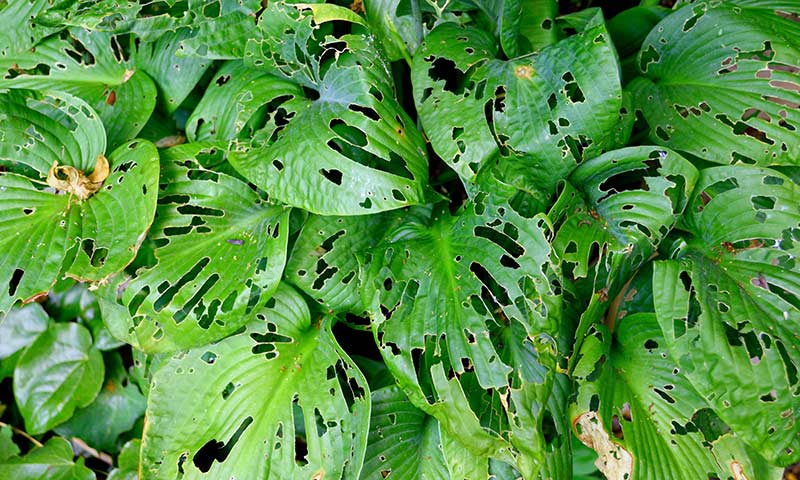
Slug damage
Slugs are one of the most common garden pests in the UK and can quickly damage young vegetable plants, hostas, delphiniums, seedlings, salad crops, and many ornamental plants. In damp conditions, slug damage can become severe very quickly, particularly during spring and autumn when young growth is soft and vulnerable.
Traditional slug pellets can create problems for pets, wildlife, and beneficial insects. For this reason, many gardeners are now turning to natural biological slug control using nematodes, which offers a much safer and environmentally friendly solution.
What Are Slug Nematodes?
Slug nematodes are microscopic natural organisms that live within the soil. The species commonly used for slug control, Phasmarhabditis hermaphrodita, actively searches for slugs beneath the soil surface.
Once inside the slug, the nematodes release naturally occurring bacteria which stop the slug feeding. The slug then dies underground, where the nematodes reproduce before moving on to infect more slugs in the surrounding soil.
One of the major advantages of slug nematodes is that they are completely safe for:
- Children
- Pets
- Birds
- Hedgehogs
- Frogs
- Bees
- Wildlife gardens
- Beneficial insects
This makes them ideal for organic gardening and wildlife-friendly gardens.
When to Apply Slug Nematodes
The best times to apply slug nematodes are:
- Spring, when young slugs become active
- Early autumn, while soil temperatures remain warm
- During damp, mild weather conditions
Slug nematodes generally require soil temperatures above 5°C to work effectively.
Because nematodes move through moisture in the soil, it is very important that the soil remains damp both before and after application.
How to Apply Slug Nematodes
Slug nematodes are normally supplied as a concentrated powder which is mixed with water before use.
They can be applied using:
- A watering can with a coarse rose
- A hose-end feeder
- A garden sprayer suitable for biological treatments
For best results:
- Water the area before application
- Apply during the evening or on cloudy days
- Keep the soil moist for at least 7–14 days afterwards
- Target damp shady areas where slugs are most active
Nematodes are particularly useful because they work below the soil surface, helping control hidden slug populations that traditional pellets often miss.
Combining Nematodes with Other Slug Control Methods
The most effective slug control usually involves combining several methods together.
At GardenAdvice we often recommend:
- Encouraging hedgehogs and ground beetles
- Using beer traps to monitor slug activity
- Applying gravel or sharp grit barriers
- Companion planting with calendula and marigolds
- Improving overall plant health through feeding
Healthy plants are often less susceptible to slug damage. Regular feeding with balanced fertilisers and high-potash liquid feeds can help plants recover more quickly from pest attacks.
You can read more about feeding plants here:
<a href=”https://gardenadvice.co.uk/growmore-fertiliser/”>Growmore Fertiliser Guide</a>
Slug Nematodes for Vegetable Gardens
Slug nematodes are especially useful for protecting:
- Lettuce
- Salad crops
- Hostas
- Dahlias
- Delphiniums
- Young vegetable seedlings
- Strawberries
- Herbs
- Border plants
They are particularly effective where plants are grown in moist soil conditions or amongst dense planting where slugs naturally hide during the daytime.
Advantages of Using Slug Nematodes
- Safe for wildlife and pets
- Suitable for organic gardening
- Targets slugs naturally
- Works below ground level
- Reduces repeated infestations
- No harmful chemical residues
- Helps maintain a balanced garden ecosystem
Unlike traditional slug pellets, nematodes form part of a natural biological control system which works with nature rather than against it.
Related GardenAdvice Articles
Natural Slug Control with Nematodes
Controlling Slugs in the Garden