Mastering Shrub Propagation: Grow Your Own Using a DIY Polytunnel
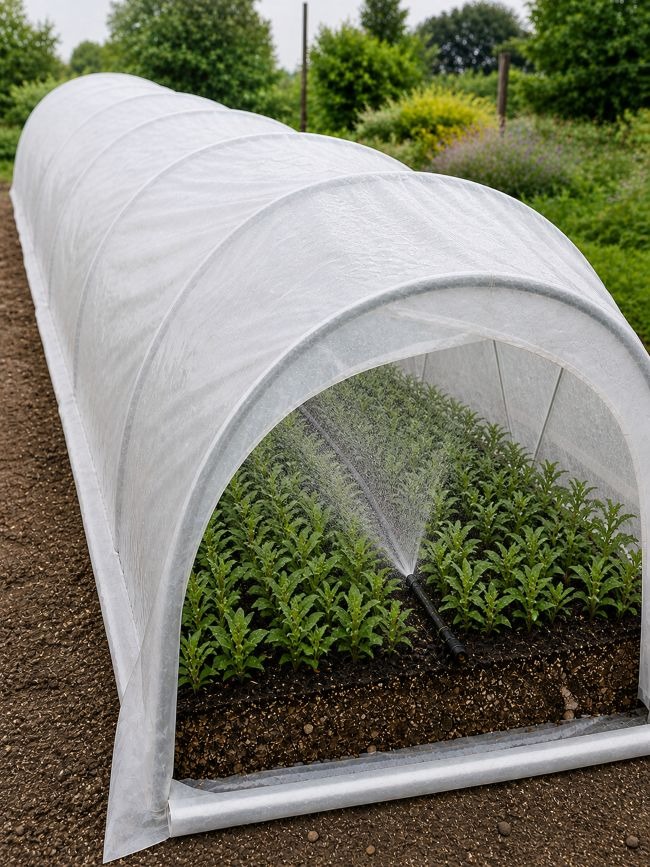
Growing Shrubs from Cuttings Using a Simple DIY Polytunnel
If you want to grow shrubs for your own garden — or produce plants on a semi-commercial scale — one of the most cost-effective and reliable methods is combining a low, row-style polytunnel with semi-ripe cuttings. This setup keeps costs down, requires minimal equipment, and once in place, largely looks after itself.
Why Use a DIY Polytunnel?
A purpose-built propagation structure need not be expensive. With bent wire hoops, a length of milky white plastic sheeting (decorator’s plastic works well), a simple soil mix, and a drip irrigation line, you can create an ideal growing environment. The result is a sealed, humid atmosphere that is perfect for rooting cuttings with minimal ongoing attention.
The slightly opaque plastic plays a specific role here: it diffuses light rather than concentrating it, which prevents overheating while maintaining the high humidity that triggers root development.

A Well-Established Low Polytunnel Setup
This image shows rows of cuttings at the rooting stage, with a drip irrigation line running along the bed—this simple addition keeps moisture consistent without disturbing the cuttings.
Step 1: Preparing the Ground
Select a strip of ground roughly 3 metres long and 0.5 metres wide, on as level a surface as you can find. Before building the structure, remove or suppress any grass or weeds beneath it—options include using cardboard sheeting, light cultivation, or a covering of opaque plastic. Properly preparing the ground is essential, as weeds can compete with the new cuttings in the humid environment.
Step 2: Building the Structure
Push wire hoops into the ground at even intervals along the length of the bed. Aim for a height of 30 to 50 centimetres; a low profile concentrates humidity around the cuttings, creating an optimal rooting environment. Drape the plastic sheeting over the hoops and secure the edges with soil, timber battens, or ground pegs to create a fully sealed enclosure.
Step 3: The Rooting Medium
Inside the tunnel, mix equal parts horticultural grit (or sharp sand) and compost, and lay this to a depth of around 10 to 15 centimetres. The grit provides drainage to prevent basal rot, while the compost retains moisture and nutrients for the cuttings during rooting. Achieving the right balance is more crucial than the specific materials used; you need a mix that drains freely but does not dry out too quickly.
Step 4: Adding Irrigation
Before inserting cuttings, run a leaky hose or porous seep pipe down the centre of the bed. This allows for even watering along the full length without opening the tunnel repeatedly and disturbing the cuttings. A single connection to a tap or water butt is all that is needed, and the system can run briefly when conditions require it.
Step 5: Taking and Inserting Cuttings
This method suits a wide range of shrubs, including Ligustrum (privet), forsythia, fuchsia, lavender, and most semi-ripe shrubs. Take cuttings when the new season’s growth has firmed slightly but is not fully woody — typically from midsummer into early autumn. Aim for lengths of 7 to 15 centimetres, remove the lower leaves cleanly, and insert directly into the rooting mix.
- Spacing can be close; a 3 metre by 0.5 metre tunnel can accommodate up to around 1,000 cuttings.
- This figure gives you a sense of the productive potential of a modest structure.
Step 6: Seal and Leave
After inserting the cuttings, thoroughly water via the seep hose and close the plastic completely. At this point, the tunnel becomes a self-contained environment. Moisture transpired by the cuttings recirculates within the sealed space, maintaining the humidity necessary for rooting. There is no need for routine ventilation or feeding at this stage.
Aftercare
For the first four to six weeks, check occasionally that the rooting medium has not dried out. However, resist the temptation to open the tunnel more than necessary, as each opening allows humidity to escape, impeding the rooting process. When you begin to see signs of new growth at the tips, the cuttings are developing roots, and you can gradually open the tunnel to acclimatize the plants before potting on.
Conclusion
The real appeal of this system is its simplicity. The initial setup takes just a few hours, the material costs are low, and once closed, it demands very little of your time. For anyone looking to stock a new garden with shrubs or propagate plants at scale, this DIY polytunnel method is hard to beat.