GardenAdvice Gardening Calendar 3rd week in March 2026

The middle of March marks the true acceleration into the spring growing season. With daylight hours rapidly increasing, this week is crucial for setting up your garden for summer success. Focus on giving beds and borders a foundational feed to support the coming growth spurt and starting tender, heat-loving vegetables indoors. Continue to check the soil conditions, only working the ground when it is no longer waterlogged, and prepare for the major planting tasks ahead.
Key Tasks for the Week Ahead (Mid-March)
Mid-March is a key turning point in the gardening calendar, as soil conditions begin to improve and plants prepare for active growth. With longer days and rising temperatures, this is the ideal time to prepare beds, start sowing, and put early-season maintenance in place. Focusing on these essential tasks now will set the foundation for a productive and healthy garden in the months ahead.
- General Garden Feeding: Apply a general-purpose granular fertiliser, such as Growmore, evenly across beds and borders at a rate of approximately one handful per square metre. This provides a balanced supply of nutrients to support root development and early growth before plants fully emerge. It is best applied to moist soil and lightly worked into the surface. More guidance can be found in our Growmore fertiliser guide.
- Start Tender Vegetables Indoors: Sow heat-loving crops such as tomatoes, cucumbers, peppers, and courgettes indoors using a heated propagator or a bright, warm windowsill. Early sowing allows these plants to establish well ahead of planting out after the last frost. Use a fine seed compost and maintain consistent moisture to encourage strong germination. For more advice, see growing your own vegetables and fruit.
- Plant First Early Potatoes and Onion Sets: If the soil is workable and not waterlogged, plant chitted first early potatoes and onion sets directly outdoors. Potatoes should be planted in trenches or individual holes, while onion sets can be pushed gently into prepared soil. Early planting gives crops a longer growing season and can result in better yields.
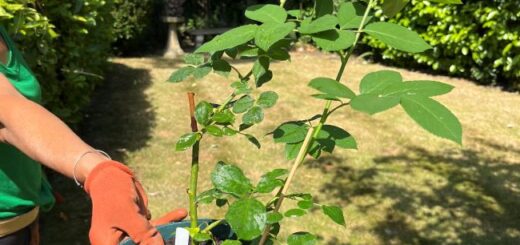
- Prune and Train Climbers: Complete any outstanding winter pruning of deciduous climbers such as wisteria by cutting back side shoots to two or three buds. At the same time, tie in and position new stems of climbing roses and other trained plants onto wires or supports. Establishing a well-spaced framework now improves air circulation and promotes better flowering later in the season.
- Plant Asparagus Crowns: Establish new asparagus beds by planting crowns in well-prepared, free-draining soil. Space the crowns evenly in shallow trenches and cover lightly with soil. Asparagus is a long-term crop, so careful initial planting and soil preparation are essential for strong, productive plants in future years.
- Protect Fruit Trees from Pests: Install pheromone traps in apple and plum trees now to monitor and control pests such as codling moth and plum moth. These traps are a highly effective, chemical-free way of disrupting breeding cycles and reducing fruit damage later in the season. Early installation significantly improves results. Learn more in our codling moth control guide.
- Tidy Lawns and Apply Lime: During dry spells, brush away worm casts from the lawn surface once they have dried and crumble easily. If your lawn shows signs of moss or excessive thatch, apply granulated garden lime to help raise soil pH and encourage natural breakdown of organic matter. This improves lawn health and reduces moss over time. Further information is available in our lawn care and soil pH guide.
- Prune Summer-Flowering Shrubs: Cut back summer-flowering shrubs such as Buddleja, which flower on new wood, before active growth begins. Pruning now encourages vigorous new shoots that will carry flowers later in the season, while also helping to maintain shape and size.
- Sow Hardy Annuals Outdoors: Directly sow hardy vegetables and flowers such as peas, carrots, beetroot, and spring onions outdoors. Where possible, use cloches or horticultural fleece to warm the soil and protect seedlings from cold winds and late frosts. This will improve germination rates and give plants a strong early start.