GardenAdvice Gardening Calendar 1st Week in February 2026
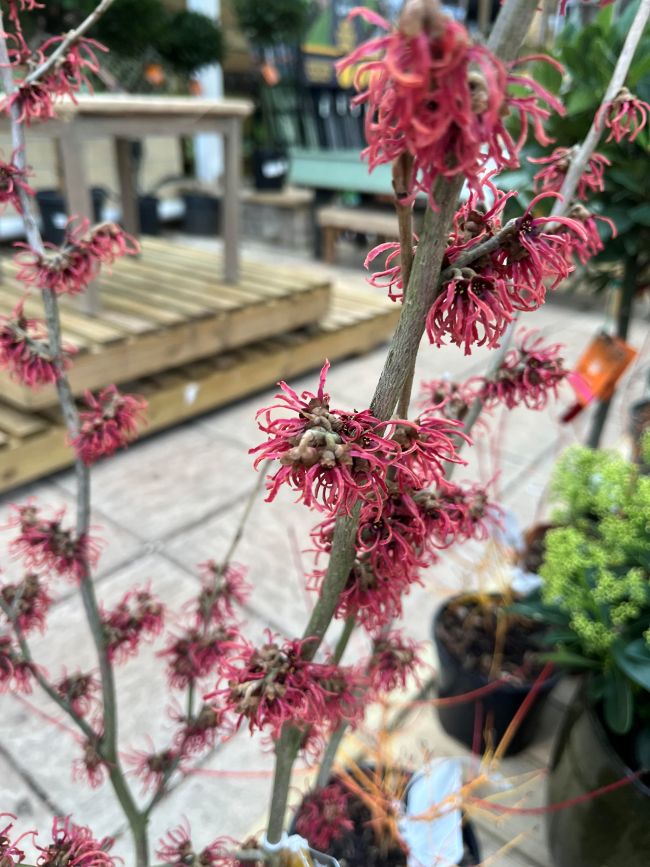
Hamamelis Twilight – Winter Flowering Witch Hazel
The GardenAdvice Calendar highlights key gardening tasks and solutions based on our latest advice to members. For the first week of February, make the most of early season opportunities to prepare for spring growth and begin key sowings under protection.
Pruning Bush and Climbing Roses
- February is prime time for rose pruning before new growth begins.
- Bush roses (Hybrid Teas and Floribundas):
- Remove any dead, diseased, or damaged wood first
- Cut back main stems by approximately one-third to one-half
- Make 45-degree angled cuts about 6mm above an outward-facing bud
- Remove crossing branches to improve air circulation
- Climbing roses:
- Remove older brown stems to encourage new green growth
- Tie in new stems horizontally along supports to encourage more flowers
- Prune side shoots back to 2-3 buds for Hybrid Teas, 5-6 buds for other varieties
- After pruning, feed with Growmore or Top Rose fertilizer and apply fresh mulch around the base.
Dividing Snowdrops (In the Green)
- Snowdrops should now be emerging with shoots 50-75mm high.
- This is called “moving in the green” – dividing while actively growing.
- How to divide:
- Lift clumps carefully with a fork
- Gently tease apart individual bulbs, keeping roots intact
- Replant immediately at the same depth they were growing
- Water in well to settle soil around roots
- Moving “in the green” gives much better establishment than planting dry bulbs.
- Create natural drifts by dividing and spreading throughout shady areas.
Sowing Sweet Peas
- Now is an excellent time to sow sweet peas for summer flowering.
- Sowing method:
- Chip hard seed coats with a knife or rub with sandpaper to aid germination
- Soak seeds overnight in water
- Sow in deep pots or root trainers (sweet peas develop long root systems)
- Use multipurpose compost mixed with a little John Innes
- Keep on a cool windowsill – they don’t need heat
- Once seedlings reach 100mm high with 4-6 leaves, pinch out growing tips to encourage bushy growth.
- Move outside to harden off once well-established.
Early Seed Sowing – Peppers, Chillies, and Aubergines
- February is the time to start heat-loving crops that need a long growing season.
- Peppers and chillies:
- Sow in small pots or modules with seed compost
- Keep warm (20-25°C ideal) – use heated propagator or warm windowsill
- Germination can take 2-3 weeks
- Pot on when seedlings have two true leaves
- Aubergines: Follow the same method as peppers – they need similar conditions.
- Don’t worry if you miss the window – young plants available from garden centres later in spring.
Planting Shallots and Garlic
- Early February is the final opportunity for planting shallots and garlic sets.
- Shallots:
- Plant individual sets 15-20cm apart in rows
- Push sets into well-prepared soil so the tip is just showing
- Protect from birds with netting or fleece if necessary
- Garlic:
- Plant individual cloves 10-15cm apart, pointed end up
- Plant 25mm deep in well-drained soil
- In heavy soil, plant in raised beds or ridges
- Both crops prefer full sun and well-drained soil with plenty of organic matter.
Chitting Seed Potatoes
- Order seed potatoes now if you haven’t already – supplies can run low.
- Begin chitting (sprouting) early varieties.
- How to chit:
- Place potatoes rose-end up (end with most eyes) in egg boxes or seed trays
- Position in a cool, bright, frost-free location (10-15°C ideal)
- Short, sturdy shoots will develop over 4-6 weeks
- Early varieties ready to plant in late March; second earlies and maincrop in April.
- Chitting gives potatoes a head start and can increase yields.
Hellebores in Flower
- Hellebores (Lenten roses) are now coming into their prime flowering period.
- Care for flowering hellebores:
- Remove old, tatty leaves from last year to showcase flowers
- Feed with liquid tomato fertilizer (high potash) to support flowering
- Mulch around plants with well-rotted compost or leaf mould
- Ensure soil remains moist but not waterlogged
- Hellebores thrive in partial shade and make excellent companions for snowdrops.
- Garden centres have good selections of hellebores in flower – plant now for instant impact.
Forced Bulbs and Indoor Colour
- Garden centres have excellent displays of forced spring bulbs in pots.
- Top choices for indoor colour:
- Hyacinths – wonderfully fragrant, ideal for indoor enjoyment
- Iris reticulata – compact, early-flowering, intense blue-purple blooms
- Daffodils and narcissus – ‘Tête-à-Tête’ and ‘Paperwhites’ particularly good
- Early tulips – many varieties already showing colour
- Bring pots indoors while flowering, then move outside after blooms fade.
- After flowering, plant bulbs out in the garden for future years.
Bare Root Planting – Final Opportunities
- Last few weeks for planting bare root trees, shrubs, and hedging.
- Priority planting:
- Fruit trees (apples, pears, plums, cherries)
- Rose bushes and hedging roses
- Hedging plants (beech, hornbeam, hawthorn, mixed native hedging)
- Ornamental trees and shrubs
- Bare root stock is significantly cheaper than container-grown plants.
- Heel in any remaining stock if ground is frozen – plant when conditions improve.
- Water in well after planting and stake trees securely.
Winter Fruit Tree Pruning
- Continue winter pruning of established apple and pear trees.
- Key pruning tasks:
- Remove dead, diseased, or crossing branches
- Thin out crowded growth for better air circulation
- Cut back last year’s vigorous summer shoots to 2-3 buds
- Create an open goblet shape for free-standing trees
- Remove water shoots (vigorous vertical growth)
- Pruning encourages formation of fruiting spurs for this year’s crop.
- Apple and pear flower buds are plump and rounded; leaf buds are flatter and pointed.
Lawn Care – Moss Treatment
- Moss thrives in winter when lawns are wet and compacted. Plus soil pH which is to low
- Moss is caused by:
- Poor drainage and wet conditions
- Low soil pH (acidic soil below pH 6.0)
- Compacted soil with poor air circulation
- Shade and lack of sunlight
- Treatment for moss:
- Apply lime, granulated lime, or bio-lime to raise soil pH if soil pH is lower than 6.25
- Ideal lawn pH should be above 6.25
- Consider applying lawn sand once moss turns black (after 2-3 weeks), scarify lawn to remove it
- Rake vigorously with a wire garden rake to pull moss out of turf
- Overseed bare patches with lawn seed
- Improving drainage and pH prevents moss returning.
- Avoid walking on lawns when frosted – grass blades will snap and turn brown.
Leylandii Hedge Problems
- Many Leylandii hedges suffering from fungal diseases and climate stress.
- Browning areas caused by fungal infections won’t recover.
- Consider gradual transition:
- Plant yew trees at base between existing Leylandii plants
- Over 3-5 years, gradually prune back Leylandii as yew establishes
- Yew is much more resilient to UK climate changes
- Creates a permanent, long-lived hedge
- Alternatively, remove struggling Leylandii and replant with mixed native hedging.
Preparing for Spring Slugs and Snails
- Although temperatures are still cool, slug and snail populations will surge as weather warms.
- Get organized now:
- Order nematodes for biological control (work when soil reaches 5°C)
- Set up beer traps in vulnerable areas
- Create toad and frog homes using upturned pots with entrance holes
- Encourage natural predators (hedgehogs, ground beetles, thrushes)
- Check hostas and other susceptible plants for early damage
- Being prepared prevents damage to emerging perennials and new spring growth.
Winter Interest Plants
- Garden centres have excellent selections of winter-flowering plants.
- Plants for winter colour:
- Witch hazel (Hamamelis) – fragrant spider-like flowers in yellow, orange, or red
- Winter-flowering heathers – provide colour and evergreen structure
- Winter jasmine (Jasminum nudiflorum) – cheerful yellow flowers on bare stems
- Winter-flowering viburnum – V. x bodnantense has pink fragrant blooms
- Cornus (Dogwood) stems – brightly coloured red, yellow, or black stems
- Plant now for instant winter garden interest.
Planning Vegetable Garden and Crop Rotation
- Early February is ideal for planning this year’s vegetable garden.
- Planning tasks:
- Draw garden layout showing beds and paths
- Plan crop rotation to prevent soil-borne diseases
- Order seeds early for best variety selection
- Calculate successional sowings for continuous harvests
- Consider companion planting combinations
- Review last year’s garden diary – what worked well? What struggled?
- Plan for vertical growing (runner beans, peas, cucumbers) to maximize space.
Greenhouse and Cold Frame Maintenance
- Clean greenhouse glass inside and out to maximize light penetration.
- Essential maintenance tasks:
- Remove dead plant material and debris
- Wash pots and seed trays with horticultural disinfectant
- Check for overwintering pests (aphids, whitefly, spider mites)
- Repair or replace damaged glass panes
- Check heating systems are working efficiently
- Ventilate on mild days to reduce humidity and prevent fungal diseases.
- Insulate with bubble wrap if expecting prolonged cold periods.
Feeding Camellias and Rhododendrons
- Camellias and rhododendrons beginning to flower or show flower buds.
- Feed with liquid tomato fertilizer (high potash) to support blooms.
- Care for acid-loving plants:
- Ensure soil pH is acidic (pH 5.0-6.0)
- Mulch with ericaceous compost or pine needles
- Use rainwater for watering when possible (tap water often alkaline)
- Remove faded flowers to direct energy into next year’s buds
- Well-fed plants produce stronger blooms and better bud set for next season.
Protecting Tender Plants
- Check plant protection regularly during cold snaps and windy weather.
- Key protection tasks:
- Wrap terracotta pots with bubble wrap or hessian to prevent cracking
- Move container-grown tender plants to sheltered spots near house walls
- Check fleece hasn’t blown off protected plants
- Ventilate cold frames on mild days to prevent fungal diseases
- Cover emerging spring bulbs with fleece or cloches if severe frost forecast
- Monitor weather forecasts and protect vulnerable plants before cold arrives.
Wildlife Gardening
- Continue supporting garden wildlife during lean winter months.
- Wildlife care:
- Keep bird feeders topped up with high-energy foods (sunflower seeds, fat balls, nyjer seeds)
- Provide fresh water daily; break ice on ponds and bird baths
- Leave seed heads on perennials for birds and beneficial insects
- Resist tidying too much – wildlife needs shelter and food sources
- Install nest boxes now ready for spring breeding season
- Creating wildlife-friendly habitats brings natural pest control to your garden.
GardenAdvice Plant Offers
- Wisteria – Large specimen plants approximately 2-3 metres high available now.
- Winter Cornus stems – Brightly coloured stems for instant winter impact.
- Check GardenAdvice Plant Shop for seasonal offers.
GardenAdvice Plant Swap & Free Plants
- Plant Swap: Many plants available for exchange this week.
- GardenAdvice Gardening Course Members: Receive 12 free plants without needing to swap.
Contact your MyGardenTeam advisor for details on plant swap arrangements.