Non Flowering Narcissus/Daffodils.
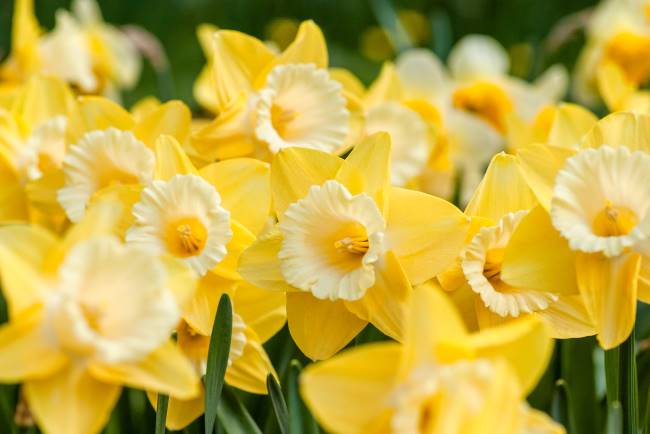
Why Aren’t My Daffodils Flowering? How to Fix Non-Flowering Daffodils
There’s nothing more disappointing than waiting eagerly for your daffodils to bloom in spring, only to be met with plenty of green leaves but no flowers. If your daffodils are producing foliage but refusing to flower, you’re not alone – and fortunately, it’s a problem that’s usually quite straightforward to fix.
The Most Common Culprit: Premature Cutting
The single biggest reason daffodils fail to flower is that the foliage was cut back too early the previous year. It’s an understandable mistake. After the flowers have faded, those floppy, yellowing leaves can look rather untidy, and many gardeners are tempted to trim them back to keep the garden looking neat. However, this well-intentioned tidying is exactly what prevents flowers from forming for the following spring.
Why the Leaves Matter So Much
After daffodils finish flowering, the leaves continue working hard for several more weeks. Through photosynthesis, they’re busy converting sunlight into energy and sending it back down into the bulb. This energy is what allows the bulb to create next year’s flower bud deep inside itself. When you cut the leaves back too soon, you interrupt this vital process, leaving the bulb without enough stored energy to produce flowers.
Think of it like this: the leaves are the bulb’s solar panels and food factory rolled into one. Remove them prematurely, and the bulb goes into next year undernourished and unable to flower.
The Solution: Feed and Wait
If your daffodils aren’t flowering, here’s what you need to do to get them back on track:
Feed Them Now
At this time of year (late winter to early spring), give your daffodils a good feed with a general fertiliser such as Growmore. Apply it according to the packet instructions around the base of the plants. This feeding provides essential nutrients that help strengthen the bulbs and support the development of next year’s flowers.
Allow Natural Dieback
When your daffodils finish flowering this year – even if they’re only producing leaves – resist the urge to cut anything back. Let the foliage die back completely naturally. This means waiting until the leaves have turned yellow and are coming away easily from the bulb, which typically takes about six weeks after flowering (or after the time when flowers would have appeared).
Yes, the yellowing leaves won’t look particularly attractive, but this patience is essential for recovery. Only once the foliage is truly dead should you remove it.
Other Potential Causes
While premature cutting is the main culprit, there are a few other reasons daffodils might not flower:
Overcrowding – Bulbs that have been in the ground for many years can become congested, competing for nutrients and space. If your clumps look very dense, consider lifting and dividing them in late summer after the foliage has died back.
Too Much Shade – Daffodils planted under trees may have flowered well initially, but as the tree canopy has grown, increased shade can reduce flowering. Daffodils prefer sunny or lightly shaded spots.
Poor Soil – Very poor or depleted soil can leave bulbs without the nutrients they need. Regular feeding helps address this.
Planting Depth – Bulbs planted too shallowly may produce leaves but struggle to flower. Daffodils should generally be planted at a depth of about three times the height of the bulb.
Getting Results
With proper feeding now and allowing natural dieback this year, you should see your daffodils return to flowering next spring. It’s a simple case of giving the bulbs what they need: nutrients and time to complete their natural cycle.
Remember: a few weeks of less-than-perfect aesthetics is a small price to pay for years of beautiful spring blooms. Your patience will be rewarded with daffodils that come back stronger and more floriferous each year.