
Restoring a garden in Sidcup with GardenAdvice
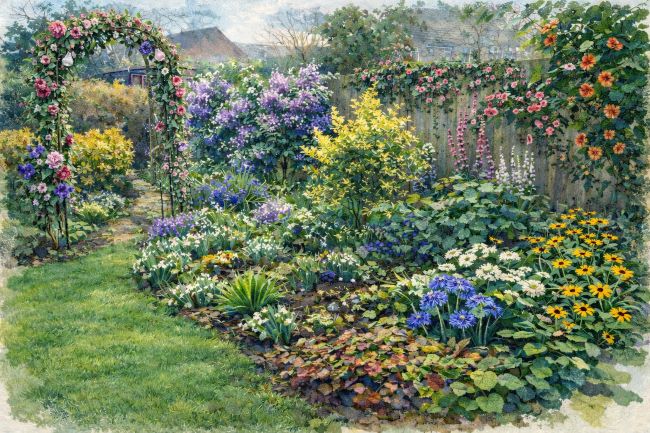
illustration of flower border how it will look this summer
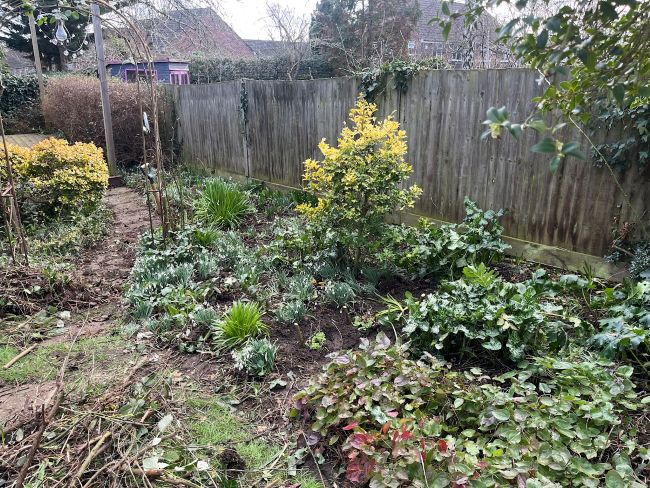
Flower border under restoration in February
Restoration Over Renovation: How a Sidcup Couple Are Bringing Their Garden Back to Life
When Sonia and Ben moved into their Sidcup home, they inherited more than just four walls and a roof – they acquired a garden with a story. The previous owners had clearly loved and tended their outdoor space, creating established borders filled with agapanthus, snowdrops, roses and daylilies. But time and neglect had taken their toll, with aggressive polygonum taking over sections of the borders and ivy scrambling unchecked up the fences.
Many new homeowners faced with an overgrown garden might reach for the spade and start from scratch. But Sonia and Ben chose a different path, one guided by patience, respect for what came before, and expert advice from GardenAdvice.co.uk’s MyGardenTeam service.
A Partnership Built on Knowledge
The couple’s journey began with a one-day gardening course from GardenAdvice.co.uk, which gave them the confidence to tackle their garden restoration project. This was followed by ongoing support through the MyGardenTeam service, which provides personalised guidance tailored to their specific garden’s needs.
Rather than prescribing a complete makeover, their garden advisor championed a philosophy that has become central to the project: restoration over renovation.
“This is anti-instant gratification gardening,” explains their personalised garden plan on their MyGardenTeam online section. “Good gardens evolve, they aren’t created overnight. Working with what exists is more sustainable and satisfying.”
Why Not Start From Scratch?
The decision to restore rather than replace was both practical and philosophical. As their garden advisor noted, the garden wasn’t massively out of control – the bones of a good garden were still present. Starting from scratch would have been wasteful, destroying established plants with years of growth, expensive to replant entirely, and would set them back three to five years while new plants established.
More importantly, it would destroy the garden’s existing character and history. “This garden has a history,” the restoration plan emphasises. “We’re continuing its story, not starting a new book.”
The Work Begins: Editing, Not Erasing
Recent photographs on Sonia and Ben’s garden page show their side border in the early stages of restoration. The images capture the methodical work of weeding and thinning existing plants – the kind of careful, labour-intensive work that reveals the quality of what lies beneath the overgrowth.
Their restoration strategy follows a clear order of priorities. First came the weed control, using spot treatments with Roundup rather than blanket spraying, carefully targeting polygonum shoots as they emerge between the precious snowdrops. The ivy climbing the high-quality timber fence is being systematically sprayed and left to die back before being carefully teased away, allowing the fence to be assessed and repaired rather than replaced.
Enhancing What Works
The restoration isn’t just about removal – it’s about enhancement and repositioning. Foxgloves are being moved to the back of the border against the fence line, creating better structure. The existing rose arches are being retrained, with plans to add complementary climbers like Clematis ‘Jackmanii’ and sweet peas for extended seasonal interest.
The couple are also learning to spread their garden’s wealth. Daylilies and hellebores that are thriving in one area will be carefully relocated to spread colour throughout the garden. New additions like asters, yellow rudbeckia and white chrysanthemums will extend the flowering season and create better colour distribution.
The Patience Principle
Perhaps the most valuable lesson from Sonia and Ben’s project is the importance of patience. Their mulching plan, for instance, is phased and ongoing rather than a single weekend blitz. Cardboard will be laid over cleared areas, topped with mulch to suppress weeds gradually while improving the soil – a slow but sustainable approach.
Before every decision to remove or change something, they’re encouraged to ask: “Is this plant actually a problem, or just neglected?” and “Will I regret removing this in two years when it would have recovered?”
A Sustainable Model
The partnership between Sonia and Ben and GardenAdvice.co.uk represents a refreshing approach to garden renovation. Rather than the dramatic before-and-after transformations popular on social media, this is gardening by subtraction and refinement. It respects ecological systems already established, preserves habitat and soil structure, and allows the gardeners to learn their garden’s rhythms.
As their border slowly emerges from beneath the weeds, revealing snowdrops, agapanthus and other treasures, Sonia and Ben are discovering that restoration isn’t just about bringing a garden back – it’s about moving it forward with wisdom, working with nature’s pace rather than against it.
For anyone facing a similar challenge in their own garden, their story offers an important reminder: sometimes the best way to create the garden you want is to reveal the garden you already have.
Follow Sonia and Ben’s garden restoration journey: gardenadvice.co.uk/soniaandben
Interested in starting your own garden project? Find out more about GardenAdvice.co.uk’s one-day beginner gardening course and MyGardenTeam service at gardenadvice.co.uk


