
Description
Clematis armandii – evergreen clematis
Botanical name: Clematis armandii
Common names: Evergreen clematis, Armand clematis
Family: Ranunculaceae (buttercup family)
Plant type: Evergreen climber
Habit: Vigorous, twining/scrambling
Pot size: As supplied
Eventual size: Approx. 3–5m+ tall × 2–3m spread
Foliage: Long, glossy, leathery dark green leaves; evergreen
Flowers: Clusters of fragrant white flowers, early spring (March–April)
Scent: Fragrant flowers
Aspect / light: Full sun, in a sheltered position
Soil: Fertile, moist but well-drained; any pH
Hardiness: RHS H5 (hardy, to about −15°C) in a sheltered spot; USDA zones 7–9
Exposure: Sheltered; protect from cold, drying winds
Native range: China
Toxicity / pet & child safety: Toxic if eaten and the sap can irritate skin — harmful to people and pets; wear gloves when pruning
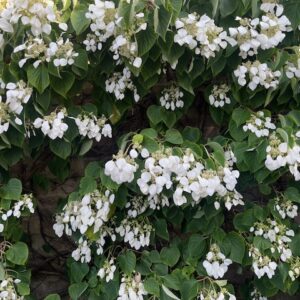
Clematis armandii is a vigorous evergreen clematis with long, glossy leaves and clusters of fragrant white flowers in early spring. Ideal for clothing a sheltered, sunny wall or fence with year-round cover.
GardenAdvice notes
One of the few evergreen clematis, this vigorous Chinese species is grown as much for its handsome, long, leathery leaves, which clothe a wall year-round, as for its early, sweetly scented white flowers. It belongs to pruning Group 1 (early-flowering), needing little pruning, and appreciates the shelter of a warm wall.
Growing & planting
Plant in fertile, moist but well-drained soil in full sun, in a sheltered spot protected from cold, drying winds, which can scorch the evergreen foliage. Keep the roots cool and shaded with a mulch or low planting. Provide a sturdy support — a wall with wires or strong trellis — as it becomes large and heavy. Set the crown a little below soil level.
Care & maintenance
As a Group 1 clematis, it needs little pruning: simply tidy and thin it, and cut back to fit its space, immediately after flowering in spring. Water well while establishing and in dry spells, and feed and mulch in spring. Being vigorous, it may need regular tidying to keep it in bounds on a wall.
Propagation
- Layering: Peg down a stem to root, then detach the following year.
- Cuttings: Take semi-ripe cuttings in summer, though they can be slower to root than deciduous types.
Pests & diseases
Generally trouble-free and rarely affected by clematis wilt. Its main issue is foliage scorch and browning from cold, drying winter winds, so a sheltered position is important. Aphids occasionally occur.
Uses in the garden
Superb for clothing a large sheltered wall, fence or pergola with evergreen cover and early scent, and for screening. Best given plenty of room, as it is vigorous.
Wildlife value
The early, fragrant flowers provide a valuable source of nectar for bees and other pollinators in early spring.
Toxicity & safety
Clematis is toxic if eaten and the sap can irritate skin, making it harmful to people and pets. Wear gloves when pruning and site it away from where pets might chew the stems.
GardenAdvice tip
Give armandii a warm, sheltered wall out of cold winds — its big evergreen leaves brown badly in a exposed, windy spot, which spoils its main attraction. It’s vigorous and heavy, so put up strong wires or trellis from the start, and prune it (just to tidy and restrain) straight after flowering, never in winter.
Our plants are guaranteed for 24 months for more details Click Here



Reviews
There are no reviews yet.