
Description
Prunus lusitanica ‘Angustifolia’ – Portuguese laurel (hedging)
Botanical name: Prunus lusitanica ‘Angustifolia’
Common names: Portuguese laurel
Family: Rosaceae
Plant type: Evergreen shrub for hedging
Habit: Dense, upright, bushy
Pot size: 5 litre pot
Eventual size: Up to about 3–5m tall if unpruned; readily kept lower as a hedge; moderate growth
Foliage: Glossy, dark green, narrow leaves on contrasting red-purple stems; evergreen
Flowers: Slender spikes of small, fragrant creamy-white flowers in early summer, followed by small dark purple berries
Scent: Flowers fragrant
Aspect / light: Full sun to partial shade
Soil: Most well-drained soils; tolerates chalk and lime; any pH
Hardiness: RHS H5 (hardy, to about −15°C); USDA zones 7–9
Exposure: Sheltered or exposed; tolerant
Native range: Species native to Spain and Portugal
Toxicity / pet & child safety: Toxic if eaten — the leaves, stems and berries contain cyanide-releasing compounds and are harmful to people and pets; clippings are also toxic
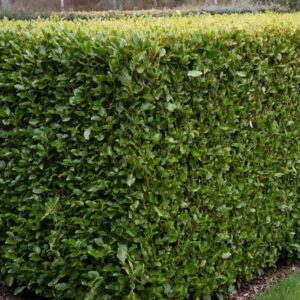
Prunus lusitanica ‘Angustifolia’, Portuguese laurel, is a handsome, refined evergreen hedging plant with glossy dark green narrow leaves on red stems. Tough and lime-tolerant, it makes a superb dense hedge.
GardenAdvice notes
A more elegant and hardier alternative to cherry laurel, Portuguese laurel is a handsome evergreen with glossy dark green leaves set off by contrasting red-purple stems, and fragrant creamy flower spikes in early summer. This narrow-leaved form is especially refined. Tough, lime-tolerant and drought-resistant once established, it makes an excellent dense formal hedge or screen and also a fine specimen or topiary plant.
Growing & planting
Plant in autumn or spring in most well-drained soils in full sun to partial shade — it tolerates chalk and lime well and copes with a range of conditions. For a hedge, space plants about 60cm apart. Water well while establishing; established plants are drought-tolerant.
Care & maintenance
Trim once or twice in summer to shape and maintain a dense hedge. Where possible, prune with secateurs rather than shears, cutting whole stems, as sliced leaves brown unattractively on all laurels. It responds well to hard pruning and can be renovated if overgrown. Feed and mulch in spring. Dispose of clippings safely, as they are toxic.
Propagation
- Cuttings: Take semi-ripe cuttings in summer.
Pests & diseases
Generally trouble-free and more trouble-resistant than cherry laurel. It can occasionally suffer from honey fungus or leaf-spot, but is a tough, reliable hedge.
Uses in the garden
Excellent as a dense, formal or informal evergreen hedge, screen or windbreak, as topiary, and as a specimen shrub, tolerant of chalk, shade and exposure.
Wildlife value
The fragrant early-summer flowers are attractive to bees and other pollinators, the berries feed birds, and the dense evergreen cover provides valuable nesting and roosting habitat.
Toxicity & safety
Portuguese laurel is toxic if eaten — the leaves, stems and berries contain cyanide-releasing compounds and are harmful to people and pets, and the clippings are also toxic. Site it away from where children or pets might chew it, and dispose of clippings safely rather than leaving them where animals could eat them.
GardenAdvice tip
Portuguese laurel is a smarter, hardier, more refined choice than the common cherry laurel — glossier, with handsome red stems, and happy on chalk. One tip that makes a real difference: trim it with secateurs, cutting whole shoots, rather than shears, because shears slice the leaves in half and the cut edges brown unattractively. Do keep clippings away from pets and livestock, as they’re toxic.
Our plants are guaranteed for 24 months for more details Click Here



Reviews
There are no reviews yet.