
Description
Ligustrum ovalifolium ‘Aureum’ – golden privet (hedging)
Botanical name: Ligustrum ovalifolium ‘Aureum’
Common names: Golden privet
Family: Oleaceae
Plant type: Semi-evergreen shrub for hedging
Habit: Dense, upright, bushy
Pot size: 3 litre pot
Eventual size: Up to about 3–4m tall if unpruned; readily kept lower as a hedge; fast growth
Foliage: Bright golden-yellow leaves, often with a green centre; semi-evergreen, holding much of its foliage in mild winters
Flowers: Small creamy-white flowers in summer if left unclipped, followed by black berries
Scent: Flowers lightly scented
Aspect / light: Full sun to partial shade
Soil: Most soils; tolerant; any pH
Hardiness: RHS H6 (hardy, to about −20°C); USDA zones 5–8
Exposure: Sheltered or exposed; very tolerant
Native range: Species native to Japan
Toxicity / pet & child safety: The berries are toxic if eaten and can cause stomach upset in people and pets; the foliage may also cause mild upset if eaten
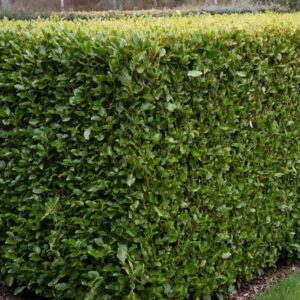
Ligustrum ovalifolium ‘Aureum’, golden privet, is a fast, tough semi-evergreen hedging plant with bright golden-yellow foliage. Cheerful and adaptable, it makes a bright, dense hedge in sun or partial shade.
GardenAdvice notes
A bright golden-leaved form of the familiar hedging privet, ‘Aureum’ is fast, tough and adaptable, making a cheerful, dense hedge that lights up a boundary. Semi-evergreen, it holds much of its golden foliage through mild winters, tolerates a wide range of soils and conditions including pollution and shade, and clips well into a formal hedge.
Growing & planting
Plant in autumn or spring in almost any soil in full sun to partial shade — the gold colour is brightest in good light. It is remarkably tolerant of poor soils, pollution and exposure. For a hedge, space plants about 30–45cm apart. Water well while establishing.
Care & maintenance
Trim two or three times in the growing season, from late spring to early autumn, to keep a dense, formal, bright hedge; regular clipping also removes flowers and the subsequent berries. It is very tough and can be cut back hard to renovate. Feed and mulch in spring for vigorous growth. Remove any plain green shoots to keep the gold colour.
Propagation
- Cuttings: Take semi-ripe cuttings in summer or hardwood cuttings in autumn — privet roots very easily.
Pests & diseases
Generally trouble-free and tough. Privet can occasionally suffer from honey fungus, and aphids or leaf spots may appear, but it is a very reliable, resilient hedge.
Uses in the garden
Excellent as a bright, fast, formal or informal hedge and screen, in sun or partial shade, tolerant of urban and exposed sites; the gold foliage makes a cheerful boundary or backdrop.
Wildlife value
If allowed to flower, the summer blooms are attractive to bees and other pollinators, and the berries feed birds; the dense foliage offers valuable nesting and roosting cover.
Toxicity & safety
Golden privet berries are toxic if eaten and can cause stomach upset in people and pets, and the foliage may cause mild upset if eaten. Regular clipping of a hedge usually removes flowers and berries; where berries do form, discourage children and pets from eating them.
GardenAdvice tip
Golden privet is a tough, fast, cheerful hedge that lights up a boundary and tolerates almost anything — poor soil, pollution, shade and exposure. Keep the gold brightest by giving it good light and snipping out any plain green shoots that appear, and clip it two or three times over summer for a dense, formal finish.
Our plants are guaranteed for 24 months for more details Click Here



Reviews
There are no reviews yet.