
Description
Griselinia littoralis – New Zealand broadleaf (hedging)
Botanical name: Griselinia littoralis
Common names: New Zealand broadleaf, kapuka
Family: Griseliniaceae
Plant type: Evergreen shrub for hedging
Habit: Dense, upright, bushy
Pot size: 3 litre pot
Eventual size: Up to about 3–4m tall if unpruned; readily kept lower as a hedge; moderate to fast growth
Foliage: Glossy, leathery, apple-green oval leaves; evergreen
Flowers: Insignificant; grown for its foliage and as a hedge
Scent: Not scented
Aspect / light: Full sun to partial shade
Soil: Most well-drained soils; tolerates sandy and coastal soils; any pH
Hardiness: RHS H4 (hardy, to about −10°C); best in coastal and mild gardens; USDA zones 8–10
Exposure: Excellent for coastal and mild gardens; needs shelter in cold inland areas
Native range: Species native to New Zealand
Toxicity / pet & child safety: Griselinia is generally regarded as non-toxic to people and pets.
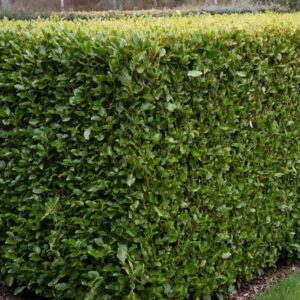
Griselinia littoralis is a fast, dense evergreen hedging plant with glossy apple-green leaves. Superb for coastal and mild gardens, it makes an excellent windbreak and bright evergreen screen.
GardenAdvice notes
A popular and fast-growing evergreen shrub, New Zealand broadleaf is prized for its glossy, fresh apple-green foliage and its excellent tolerance of coastal conditions and salt-laden winds. It makes a dense, bright evergreen hedge or windbreak, clips well, and is one of the best hedging plants for seaside and mild gardens, though it needs shelter in cold inland areas.
Growing & planting
Plant in autumn or spring in most well-drained soils in full sun to partial shade. It is outstanding for coastal and mild gardens, tolerating salt-laden winds, but needs a sheltered spot in cold inland areas, where hard winters can damage it. For a hedge, space plants about 45–60cm apart. Water well while establishing.
Care & maintenance
Trim to shape once or twice in the growing season, from late spring to late summer, to keep a dense hedge. It responds well to clipping and can be cut back to renovate if it becomes bare. Water in dry spells while young; established plants are fairly drought-tolerant. Feed and mulch in spring for vigorous growth.
Propagation
- Cuttings: Take semi-ripe cuttings in summer or hardwood cuttings in autumn.
Pests & diseases
Generally trouble-free. In cold inland gardens, hard frosts and cold winds can scorch or damage the foliage, which is its main limitation. Otherwise robust and healthy, especially near the coast.
Uses in the garden
Excellent as a fast, dense evergreen hedge or screen, especially in coastal and mild gardens, as a windbreak, and as a glossy evergreen backdrop; also good as an informal specimen shrub.
Wildlife value
The dense evergreen foliage provides valuable shelter, nesting sites and roosting cover for birds throughout the year.
Toxicity & safety
Griselinia is generally regarded as non-toxic to people and pets.
GardenAdvice tip
Griselinia is one of the best hedges for a coastal or mild garden — it shrugs off salt winds that would scorch many evergreens and grows fast into a dense, glossy, apple-green screen. Its one weakness is cold: in a hard-winter inland garden it can be damaged, so save it for milder or seaside spots, and trim it once or twice over summer to keep it dense.
Our plants are guaranteed for 24 months for more details Click Here



Reviews
There are no reviews yet.